

Aerospace Testing InternationalAerospace Testing International
  • News
    • A-E
      • Acoustic & Vibration
      • Avionics
      • Data Acquisition
      • Defense
      • Drones & Air Taxis
      • Electric & Hybrid
      • EMC
      • Engine Testing
      • Environmental Testing
    • F-L
      • Fatigue Testing
      • Flight Testing
      • Helicopters & Rotorcraft
      • High Speed Imaging
      • Industry News
    • M-S
      • Materials Testing
      • NDT
      • Simulation & Training
      • Software
      • Space
      • Structural Testing
      • Supplier News
    • T-Z
      • Technology
      • Telemetry & Communications
      • Weapons Testing
      • Wind Tunnels
  • Features
  • Magazines
    • June 2026
    • March 2026
    • Dec 2025 / Jan 2026
    • Showcase 2026
    • August / September 2025
    • June 2025
    • Archive Issues
    • Subscribe Free!
  • Opinion
  • Webinars
  • Events
    • All Events
    • Aerospace Test & Development Show
  • Podcasts
  • Videos
  • Suppliers
    • Supplier Spotlights
    • Press Releases
    • Technical Papers
LinkedIn YouTube X (Twitter)
Subscribe to magazine Subscribe to email newsletter Media Pack
Aerospace Testing InternationalAerospace Testing International
  • News
      • Acoustic & Vibration
      • Avionics
      • Data Acquisition
      • Defense
      • Drones & Air Taxis
      • Electric & Hybrid
      • EMC
      • Engine Testing
      • Environmental Testing
      • Fatigue Testing
      • Flight Testing
      • Helicopters & Rotorcraft
      • High Speed Imaging
      • Industry News
      • Materials Testing
      • NDT
      • Simulation & Training
      • Software
      • Space
      • Structural Testing
      • Supplier News
      • Technology
      • Telemetry & Communications
      • Weapons Testing
      • Wind Tunnels
  • Features
  • Magazines
    1. June 2026
    2. March 2026
    3. Dec 2025 / Jan 2026
    4. Showcase 2026
    5. August / September 2025
    6. June 2025
    7. Archive Issues
    8. Subscribe Free!
    Featured
    16th June 2026

    In this issue: June 2026

    Online Magazines By Ben Sampson
    Recent

    In this issue: June 2026

    16th June 2026

    In this issue: March 2026

    24th March 2026

    In this issue: December 2025/January 2026

    23rd December 2025
  • Opinion
  • Webinars
  • Events
    • All Events
    • Aerospace Test & Development Show
  • Podcasts
  • Videos
  • Suppliers
    • Supplier Spotlights
    • Press Releases
    • Technical Papers
LinkedIn YouTube X (Twitter)
Aerospace Testing InternationalAerospace Testing International
Drones & Air Taxis Opinion

What happens when autonomous aircraft fail?

Luis Mejias, Queensland University of Technology and Jonathan Roberts, Queensland University of TechnologyBy Luis Mejias, Queensland University of Technology and Jonathan Roberts, Queensland University of Technology16th June 20265 Mins Read
Share LinkedIn Twitter Facebook Email
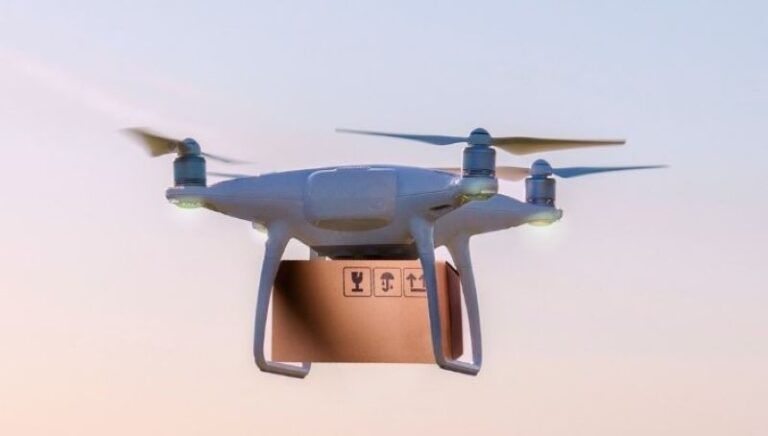
Artist's illustration of a delivery drone
Artist's illustration of a delivery drone (Image: CAA)

It was clear that something had gone seriously wrong with the thousand-strong swarm of drones twinkling above Darling Harbour during the Vivid Sydney festival last month. Many suddenly started flying out of formation. Almost 90 fell from the sky and into the dark water below.

Thankfully no one was injured. Yet the drone show failure, which has been blamed on radio interference, highlighted a challenge facing all autonomous aircraft: what happens when things go wrong?

This is an important question, given autonomous air taxis that fly passengers above traffic and autonomous drones that deliver packages across cities could become a familiar sight within the next decade. In the United States, for example, drone delivery company Wing recently announced it is expanding its partnership with Walmart across seven more cities.

These technologies will occasionally experience failures. But an aircraft cannot simply pull over to the side of the road. So safety depends not only on preventing failures but on ensuring aircraft can respond safely when they occur.

Designed to tolerate some failures

Modern autonomous aircraft have a range of features to ensure that no single failure leads to the loss of the aircraft. These include multiple motors, distributed propulsion, backup flight computers and software that can tolerate faults.

But even highly reliable and resilient technologies can and will fail in unexpected ways. A minor software problem, a faulty sensor or a sudden change in conditions may not be serious on their own. But together they can create larger challenges.

Cities create further risk. Changing winds around buildings, interruptions to navigation signals and large numbers of aircraft operating in the same area can all make it harder to manage unexpected events.

In a conventional aircraft, a pilot is responsible for handling emergencies. If a serious problem occurs, they draw on their training and experience to assess the situation, identify a suitable landing site and guide the aircraft to the ground while minimising risk to people nearby.

In the case of autonomous aircraft, that responsibility shifts from the pilot to the aircraft itself. Autonomous systems must be able to recognise a problem, assess the available options and decide what to do next. For example, where is the safest place to land? Could people, vehicles or buildings be put at risk? Can the aircraft safely reach the chosen location?

These are not simply technical questions. They are decisions with real-world consequences. Responding to emergencies is therefore not just a backup procedure. It becomes a fundamental part of how autonomous aircraft operate safely.

A system that must see, decide and act

For an autonomous aircraft to respond safely to an emergency, it must do three things very quickly.

First, it needs to understand its surroundings. It must identify possible landing locations while taking account of people, vehicles, buildings and other hazards. This information may be incomplete or constantly changing.

Next, it must decide which option carries the lowest risk. The safest landing site is not always the closest one, and there may be no perfect solution. Instead, the system must choose the option most likely to minimise harm.

Finally, it must safely guide the aircraft to that location. This can be particularly challenging if the aircraft is already experiencing a fault or operating in difficult weather conditions.

These tasks can’t be treated separately. They must work together as a single safety system, making decisions and responding in real time as events unfold.

Planning for things to go wrong

Much of the current focus in industry and regulation is on preventing failures through rigorous testing, certification and backup systems. This is important, but it is only part of the safety challenge.

There’s far less discussion about what happens after a failure occurs. How quickly can an aircraft identify a safe place to land? Can it continue to operate safely if some of its systems are no longer working as intended?

The most resilient systems are not necessarily those that never experience problems. They are the ones that can recognise emerging issues, adapt to changing circumstances and reduce risk before a situation becomes critical.

In this view, an emergency landing is not a last-minute response. It is a capability that is planned for throughout the flight and ready to be used whenever needed.

Safety is judged on the worst day

Autonomous aircraft have the potential to make transport faster, cleaner and more accessible. But its long-term success will depend on more than technology or economics.

It will depend on whether the public can trust these systems to respond safely when things go wrong.

The recent drone incident at Vivid Sydney festival offers a useful reminder. The failure itself became headlines, but the more important question was how the system responded. The drones did not simply disappear from the sky. Safety procedures were activated and, most importantly, nobody was injured.

As autonomous aircraft become more common over our cities, similar questions will arise. The future of autonomous aircraft will not be decided by how well they perform under normal conditions. It will be decided by how they handle the rare situations that nobody wants, but everyone expects to be planned for.The Conversation

Luis Mejias, associate professor in Aerospace and Autonomous Systems, Queensland University of Technology and Jonathan Roberts, professor in Robotics, Queensland University of Technology

This article is republished from The Conversation under a Creative Commons license. Read the original article.

Share. Twitter LinkedIn Facebook Email
Previous ArticleUS Air Force combines operational and developmental flight testing on B-21 Raider program
Next Article B-52 crashes at Edwards killing eight during radar test flight
Luis Mejias, Queensland University of Technology and Jonathan Roberts, Queensland University of Technology

Related Posts

Defense

The new technologies in the UK defence investment plan

6th July 20266 Mins Read
Data Acquisition

How new sensing technologies are combating ice accretion on aircraft wings

23rd June 20263 Mins Read
Opinion

The debrief: Boeing 787 – when the wing bent but the model didn’t

1st April 20263 Mins Read
Latest Posts
Two people standing at a workstation watching a wide curved screen that displays a simulated airport, with an autonomous aircraft in flight and another on the runway

Wisk and NASA test one supervisor for three autonomous aircraft

24th July 2026
Front view of the Thunder autonomous tiltrotor in a darkened hangar, its two rotor discs shown as glowing green circles, with sensor and weapons pods mounted on the nose

Archer reveals dual-use VTOL aircraft at Farnborough Air Show

23rd July 2026

MTU Flying Fuel Cell clears supply tests before demonstrators

22nd July 2026
Supplier Spotlights
  • Precision Filters, Inc. (PFI)
  • Evolution Measurement
  • CALCULEX
  • Hottinger Brüel & Kjær
  • AVL List GmbH
  • Tekna
  • InnovMetric
  • CGM CIGIEMME S.p.A.
  • SET GmbH
  • Tyto Robotics
    Tyto Robotics Inc.
  • Bartington Instruments
    Bartington Instruments
  • Ametek
    AMETEK Programmable Power
  • Delta Information Systems logo
    Delta Information Systems
  • Helling GmbH
    Helling GmbH
  • Matec Instrument Companies, Inc.
    Matec Instrument Companies, Inc.
  • Endevco
  • Ipetronik
    IPETRONIK GmbH & Co. KG
  • VJ Technologies
  • Durr NDT
    DÜRR NDT GmbH & Co. KG
  • Dewesoft
  • Bruker Alicona Dimensional metrology & surface roughness measurement
    Bruker Alicona
  • Vzlu
    VZLU – Czech Aerospace Research Centre
  • ATG Advanced Technology Group
    ATG – Advanced Technology Group
  • Dytran Instruments, Inc.
  • Kistler Group
    Kistler Group
  • Diversified Technical Systems (DTS)
  • Scanivalve Corporation
  • G Systems
  • CEC Vibration Products LLC.
  • dSPACE
  • Safran Data Systems
  • Photron
  • YXLON International
  • Telspan Data
  • TotalTemp Technologies, Inc.
  • Vector Informatik GmbH
  • Vibration Research
  • TEST-FUCHS
  • Siemens Digital Industries Software
    Siemens Digital Industries Software
  • PCB Piezotronics, Inc.
  • Testia
  • Treo – Labor für Umweltsimulation GmbH
  • W5 Engineering
  • National Institute for Aviation Research
  • North Star Imaging
  • MK Test Systems Ltd.
  • Intertek
  • I.N.C.A.S. – NATIONAL INSTITUTE FOR AEROSPACE RESEARCH “ELIE CARAFOLI”
  • FMV Test & Evaluation
  • Glenn L Martin Wind Tunnel
  • GRAS Sound & Vibration
  • Elsys AG
  • EMCCons DR. RAŠEK GmbH & Co.KG
  • European Test Services (ETS) B.V.
  • Chemetall GmbH logo
    Chemetall GmbH
  • Curtiss-Wright
  • Data Physics Corporation
  • AOS Technologies AG
  • Airmo Inc. Pressure Technologies
    Airmo Inc.® Pressure Technologies
Our Social Channels
  • Twitter
  • YouTube
  • LinkedIn
Getting in Touch
  • Subscribe To Magazine
  • Contact Us
  • Meet the Team
  • Media Pack
Related Topics
  • Aircraft Interiors
  • Business Jet Interiors
FREE WEEKLY NEWS EMAIL!

Get the 'best of the week' from this website direct to your inbox every Wednesday

© Copyright 2026 Mark Allen Group. All rights are reserved, including those for text and data mining, AI training, and similar technologies.
  • Cookie Policy
  • Privacy Policy
  • Terms & Conditions

Type above and press Enter to search. Press Esc to cancel.