

The USA’s FAA and the Department of Transportation have broken ground on a dedicated research range at the Mike Monroney Aeronautical Center in Oklahoma City to develop the procedures, data and standards needed to integrate vertical-lift aircraft its the national airspace.
The Vertical Procedures and Analysis Range (V-PAR) will give the agency and its partners a single campus for flight testing, data analysis, standards and procedure development, human factors research and workforce training. It is intended to accelerate the safe and scalable integration of emerging aviation technologies such as electric vertical take-off and landing (eVTOL) aircraft.
“The V-PAR is a critical step in helping the FAA better understand how to integrate advanced air mobility aircraft safely into the National Airspace System,” said Steven Bradbury, deputy secretary of the Department of Transportation. “This facility will strengthen our ability to conduct research, train people, and support the future of aviation.”
The US$8.3 million range is located on the west side of the Mike Monroney campus, adjacent to Will Rogers World Airport and close to existing radar and aviation infrastructure. The initial build-out will include a touchdown and liftoff area, a taxiway, a verticraft apron with two parking spaces, a covered verticraft shelter, an observation and operations building and electric aircraft charging capability.
The facility will support research into vertiport operations, arrival and departure routes, wake turbulence, downwash and outwash, radiofrequency interference, and emergency planning and flow simulations. Future expansions may add further landing sites, a secondary vertipad and a short takeoff and landing runway.
“As advanced air mobility technologies continue to evolve, the FAA must ensure they meet the same high safety standards expected throughout the National Airspace System,” said Chris Rocheleau, deputy administrator of the FAA. “The V-PAR will help us gather the data and operational insights needed to support their safe integration into the nation’s airspace.”
V-PAR has been in planning since 2021, with Congress appropriating an initial US$6 million in 2024 and the FAA awarding the design contract to C.H. Guernsey, supported by vertiport specialist Heliplanners. Maguire O’Hara Construction was awarded the construction contract in March 2026.
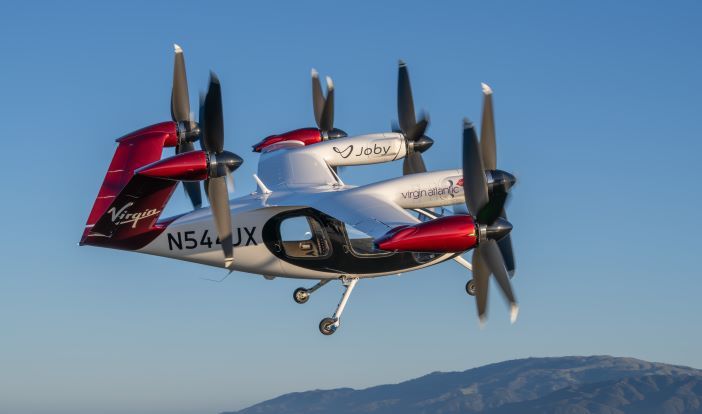
The range is closely aligned with the FAA’s eVTOL Integration Pilot Program (eIPP), which in March 2026 selected eight projects across 26 states to operate eVTOL aircraft in controlled airspace ahead of full type certification. Oklahoma is among the states where front-runners including Joby Aviation are cleared to begin early operations, and a V-PAR kickoff meeting in March 2026 brought together FAA divisions, manufacturers, academia and state, local, tribal and territorial partners to coordinate the work. State-led efforts to develop repeatable flight procedures for these aircraft are gathering pace, as seen in a parallel program in Virginia testing instrument-flight procedures across a network of airfield and vertiport nodes.