

Engineers in the USA have designed, built and flight-tested a concept nuclear weapon flight test vehicle in five months using AI and additive manufacturing, a process that would conventionally have taken around two years.
The vehicle, named Aires Tide, was created as a technology demonstrator rather than for production. it was developed by Sandia National Laboratories in collaboration with Los Alamos National Laboratory, Lawrence Livermore National Laboratory and the Kansas City National Security Campus.
Once launched into the atmosphere, Aires Tide measures the heat and vibrations that a nuclear weapon would experience on its path to a target. The combination of AI and additive manufacturing is intended to increase the tempo of scientific flight tests that gather data relevant to the US nuclear stockpile.
The vehicle is the first demonstration of the Genesis Mission, a US Department of Energy initiative to link national laboratory supercomputers through AI tools and AI-enabled systems. The National Nuclear Security Administration (NNSA) led the development.
The team used AI tools to design the vehicle’s internal shape and structure, including the placement of components such as sensors and power buses. AI also helped engineers optimize the structure’s ability to handle heat and stress, which are among the principal challenges for aerospace technologies.
Two of the NNSA’s flagship supercomputers, Venado at Los Alamos and El Capitan at Lawrence Livermore, were used to enable the design, according to the NNSA. El Capitan was verified as the world’s fastest supercomputer in November 2024 at 1.742 exaflops, while Venado is built around Nvidia GH200 Grace Hopper Superchips for AI workloads.
The fuselage was printed on a Velo Sapphire XC machine, which uses a laser powder bed fusion The 11ft-tall (3.4m) cone-shaped structure was produced as seven nested pieces that were separated and reassembled.
Printing the pieces simultaneously rather than one at a time reduced time and cost, and the entire structure was printed in less than six days, said Sandia. Several vehicles were created across the project, beginning with a carbon fiber composite prototype printed in January, alongside smaller-scale versions printed, assembled and tested at Sandia.
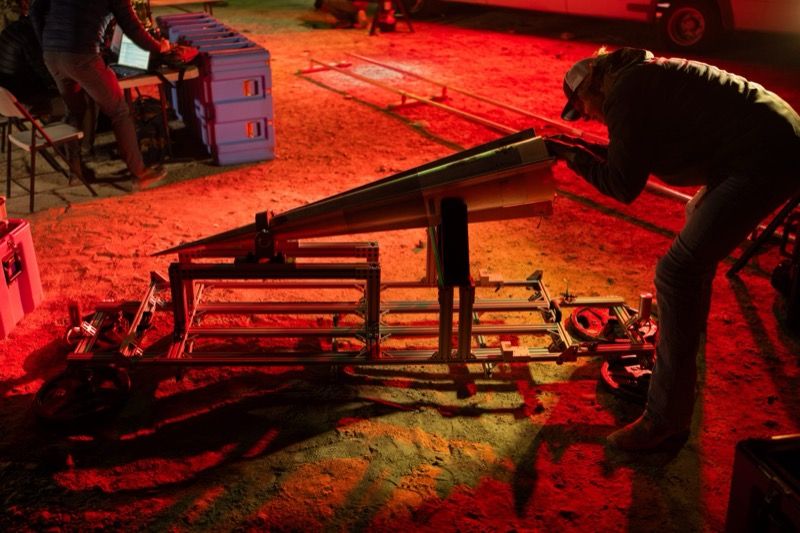
The final version is made of Inconel. It was printed at the New Mexico Operations site of Sandia’s Center for Advanced Manufacturing and Innovation, which opened in February.
Similar processes have been used elsewhere in aerospace, including a QinetiQ flight test of a 3D-printed recycled titanium component and a large additively manufactured fuselage produced by Saab and Divergent.
“Artificial intelligence helps us move faster and reach better solutions in both our technical and operational work,” said Sandia National Laboratories director Laura McGill. “It makes us more effective, freeing our engineers, scientists and other staff across the Labs to focus on the critical, high-value work we do best. That ultimately allows Sandia to serve the nation even better.”
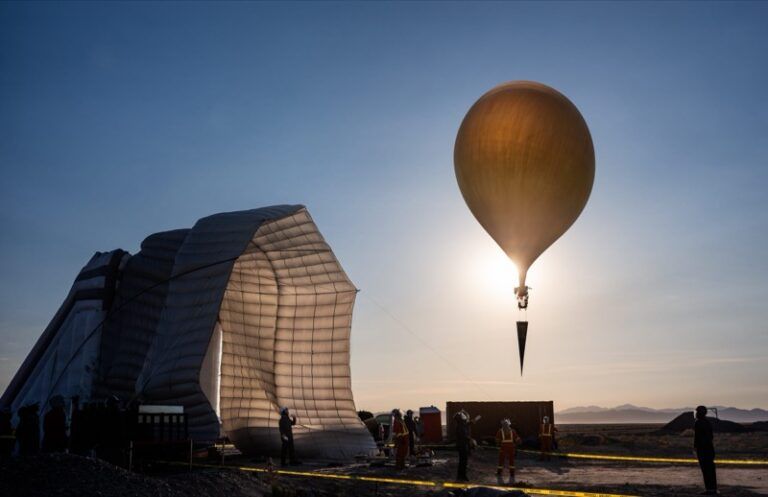
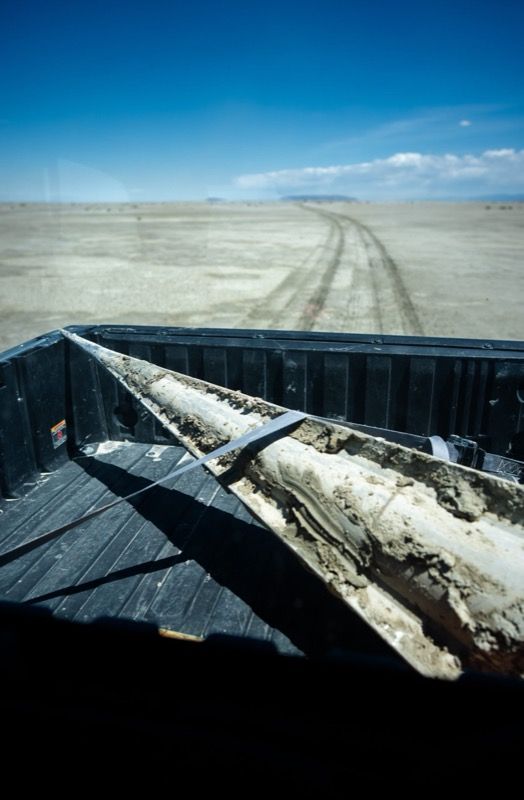
The national laboratory researchers designed, built and tested Aires Tide between October 2025 and March 2026. Sandia completed a drop test of a 1:2 scale version on May 19 at the US Army Dugway Proving Ground in Utah.
NNSA scientists conducted two flight tests in May, dropping the vehicle from 32,000ft (9,750m) at Dugway, according to the NNSA. Data from the tests will be used to refine future systems developed using the same design and manufacturing model.
“With Aires Tide, we’re producing these vehicles in weeks, at 15 times lower costs than traditional methods,” said Deborah Frincke, deputy laboratories director of integrated security missions. “This agility is crucial as we respond to evolving threats in our national security landscape.”
Sandia said the vehicle signifies how a concept can progress from an idea to prototyping, testing and real-world impact at speed, the laboratory said.