


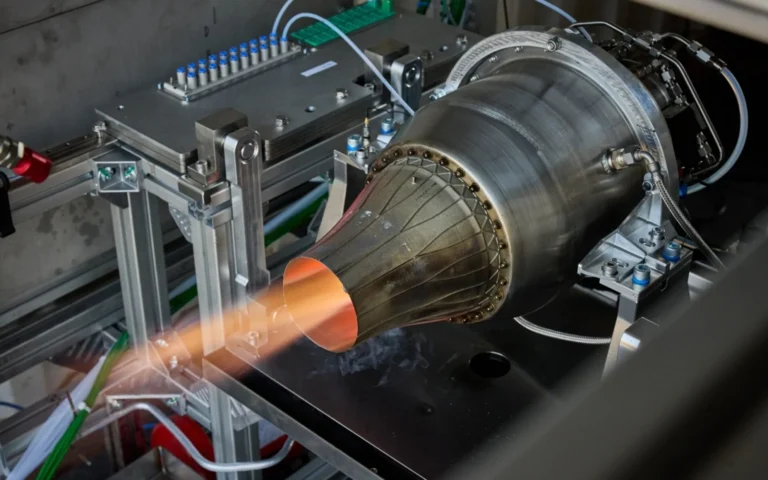
UK start-up Alloyed has taken a military drone turbojet engine from concept to flight in under seven months, funded by the Ministry of Defence to build a sovereign propulsion capability.
The engine is part of a new family of digitally manufactured turbojets co-developed with the Ministry of Defence (MoD), spanning a thrust range of around 6.7-450lbf (30-2,000N) for uses from small drones to larger aircraft. Designed, built and tested in the UK, the engines rely on digital design and additive manufacturing to compress a development cycle that traditionally runs for years.
Two engines have entered production: a 300N-class design known as the A300 has completed flight testing and is now in UK serial production, while the larger 1100N-class A1100 reached flight-ready status from an initial concept in under seven months.
The program has also established a UK-based digital design and modeling approach intended to bring new variants into production in months rather than years, said the MoD.
New military jet engines have typically taken far longer to mature. However, armed forces around the world are developing low cost collaborative combat aircraft (CCA), a new type of unmanned aircraft designed to run alongside piloted fighter jets at a fast pace.
CCA programs, such as BAE System’s Brontanax revealed at this year’s Farnborough Air Show, require production engines within a few years rather than the decade or longer that clean-sheet powerplants have usually required.
Demand for low-cost, off-the-shelf engines to power such uncrewed platforms is outstripping supply, pushing GE Aerospace, Honeywell, Pratt & Whitney and Rolls-Royce to fast track the development of new designs.
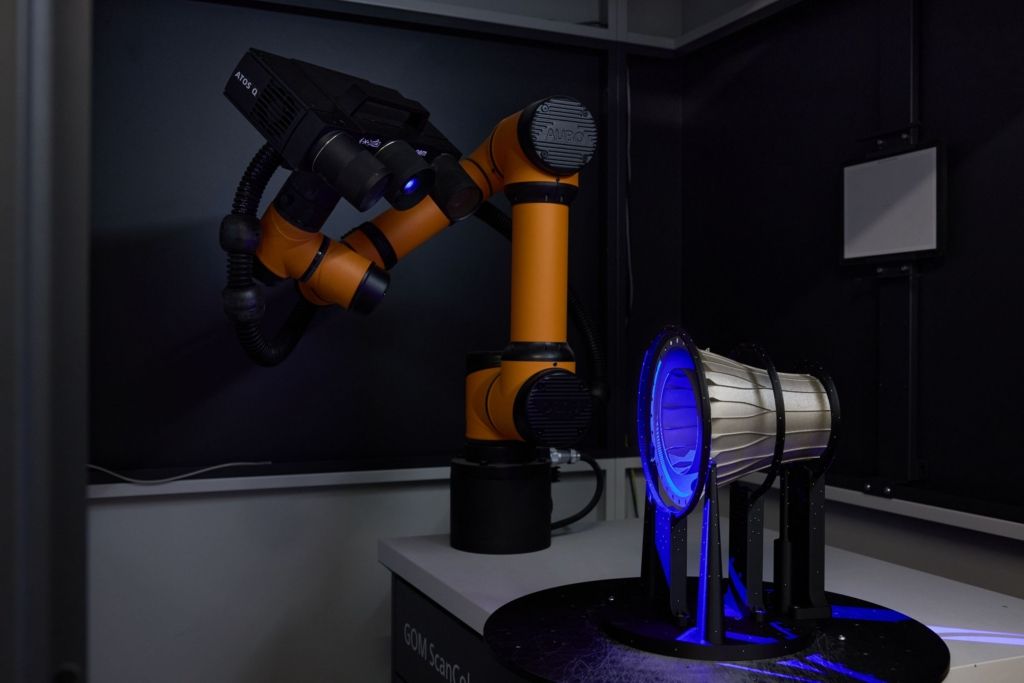
The program is part of a wider push to strengthen domestic production and reduce reliance on overseas propulsion supply chains in the UK and Europe. The MoD used a co-development model, where it matched investment with Alloyed for the new engine family, a different approach than traditional military procurement which would see the ministry specifies a finished product before buying it.
Michael Holmes, CEO of Alloyed, said, “Working alongside the Ministry of Defence has enabled Alloyed to bring to bear its world-leading metals technologies to mature and demonstrate advanced propulsion systems at remarkable pace while building a lasting capability in the UK. This programme shows the power of combining defence expertise, digital engineering and industrial innovation.”
Luke Pollard, the UK’s minister for defence readiness and industry, said, “Taking a jet engine from concept to flight-ready in just a matter of months shows how defence and industry can work together to deliver capabilities at the speed required by today’s world.”
The program has created more than 60 engineering and advanced manufacturing jobs, with a further 45 expected over the next year as production expands. It draws on a UK supply chain of more than 40 companies, mostly small and medium-sized enterprises.