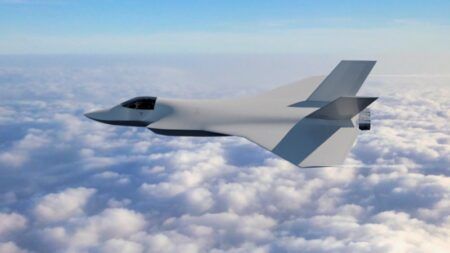


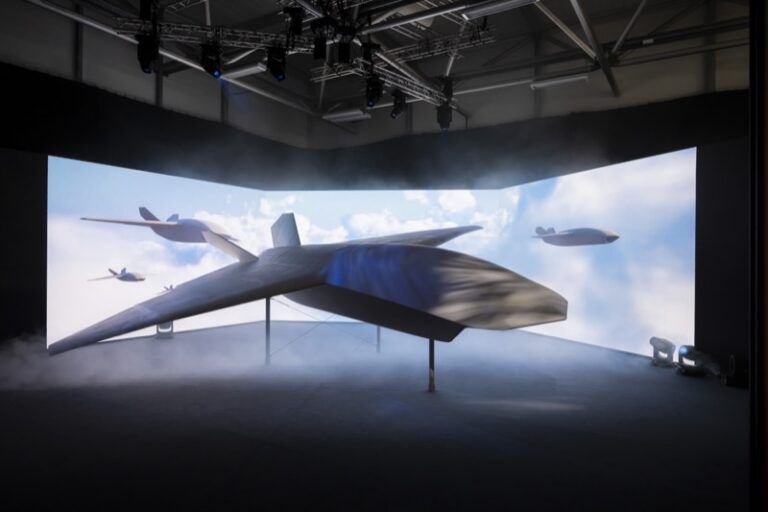
- BAE Systems unveiled Brontanax, the UK’s first uncrewed autonomous collaborative combat aircraft (CCA), at the Farnborough International Airshow on July 22, 2026.
- The aircraft was designed and built at BAE Systems’ Warton site in Lancashire, involving more than 500 employees and over 75 UK-based suppliers, and is self-funded through the company’s own research and development.
- Brontanax is designed to fly alongside crewed fighters such as Typhoon, carrying electronic warfare and precision-strike payloads, with entry into service planned before 2030.
- Testing runs from “power on” by the end of the third quarter of 2026 to ground trials in the first half of 2027 and flight trials at a Royal Air Force site in UK airspace in the second half of 2027 – described by BAE as a national first.
- Brontanax feeds the RAF’s Storm Fighter program, backed by £300 million (about US$400 million) through the UK Defence Investment Plan and central to the ambition of becoming Europe’s first sixth-generation air force.
- The current engine is a Williams unit and BAE is working with Rolls-Royce on the Orpheus engine, though recent reports indicate a possible US engine and associated ITAR export implications
BAE Systems has unveiled Brontanax, the UK’s first uncrewed autonomous collaborative combat aircraft, at the Farnborough International Airshow.
Designed and built at BAE Systems’ Warton site in Lancashire and similar in size to a BAE Hawk jet, the aircraft is intended to fly alongside crewed fighters such as the Typhoon, adding combat mass at lower cost. The collaborative combat aircraft (CCA) will provide electronic warfare and precision-strike capabilities against airborne and ground targets, with entry into service planned before the end of the decade.
Brontanax has so far been self-funded through internal research and development. More than 500 BAE Systems employees have worked on the aircraft alongside over 75 UK-based companies and small and medium-sized enterprises.
The aircraft is being prepared for ground-based testing at Warton ahead of flight trials in UK airspace. Brontanax should reach “power on” by the end of Septmeber 2026, move to ground trials in the first half of 2027 and progress to flight trials at a Royal Air Force (RAF) site in the second half of the year.
Fast-track to CCA capability
Speaking at the Farnborough Air Show on 22 July, FalconWorks managing director Dave Holmes said, “This is where the UK will demonstrate it can fly an autonomous uncrewed platform of this scale and size. To do that we need everybody working in concert, including regulators, who are also on the journey with us. That will also be a national first.”
BAE Systems has framed Brontanax as more than a technology demonstrator. Sir Gerry Mayhew, the company’s senior military advisor, said, “This is not a prototype, this is an operational platform that will start to evolve from its first flight in the coming 12 months.”
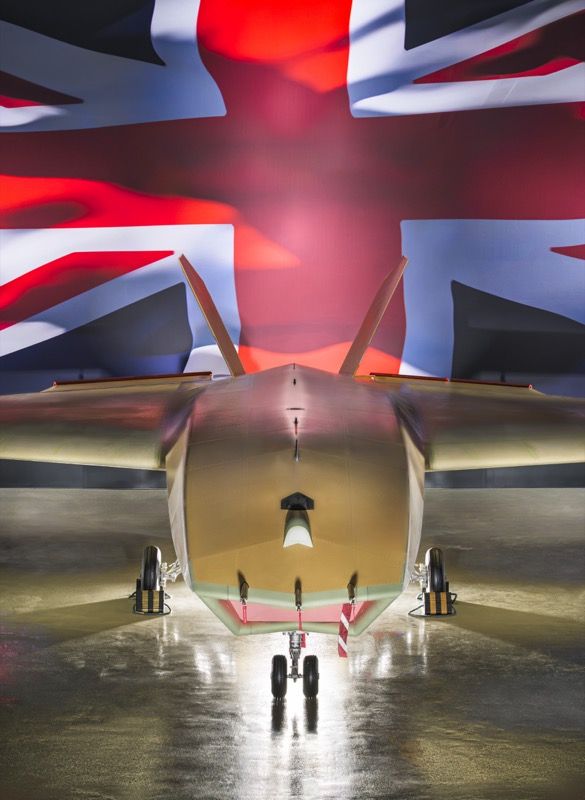
The Royal Air Force (RAF) wants an initial operational capability fielded before 2030, and Brontanax is positioned to be part of the Storm Fighter program, the UK’s sovereign autonomous CCA effort backed by £300 million (about US$400 million) through the Defence Investment Plan. UK Defence Secretary Wes Streeting and Chief of the Air Staff Air Marshal Sir Harv Smyth both attended the unveiling, framing the aircraft as part of the RAF’s ambition to become Europe’s first sixth-generation air force.
Supply chain evolves and engine debate
The company has developed the aircraft with an open architecture and modular design so it can be adapted as threats evolve. The current engine is a Williams unit, with BAE Systems working with Rolls-Royce on its indigenous Orpheus engine for the future.
Holmes said Brontanax’s cost needed to be “in the order of 25% of the equivalent of buying a crewed asset.”
Suppliers have moved quickly to support the prototype. GKN Aerospace said it had completed the engineering, manufacture and full integration of flight-ready wings, fins and control surfaces for Brontanax, produced at its composite facility in Cowes on the Isle of Wight.
Rupert Dix, GKN Aerospace’s senior vice president of defense, said, “This is the latest example of GKN Aerospace’s ability to turn complex, clean-sheet designs into flight-ready reality at an unprecedented pace.”
Questions have since emerged over the aircraft’s engine with reports that Rolls-Royce is absent from the supplier list and that Brontanax may rely on a US-built engine, such as the Williams International FJ44, after the UK manufacturer’s options were considered too expensive.
A US engine would bring the aircraft under International Traffic in Arms Regulations (ITAR), potentially requiring US approval for some future exports – problematic for a platform promoted as a sovereign UK capability.