

Scotland-based Aurora Avionics is to supply electronic control and power distribution systems for a self-consuming rocket engine being developed by European aerospace company Alpha Impulsion.
The agreement covers the Engine Control Unit (ECU) and Power Distribution Unit (PDU), which will manage the engine’s operational functions and distribute electrical power during flight.
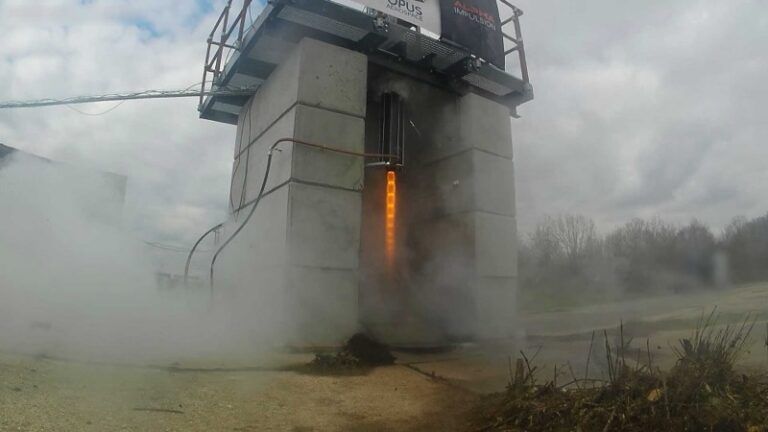
European startup Alpha Impulsion is developing an autophage engine, a propulsion concept in which the launch vehicle’s own structure is consumed during flight and used as propellant. The approach aims to reduce the deadweight carried during a mission, potentially lowering the cost of delivering payloads into space.
Founded in 2022, Alpha Impulsion has teams in France and Italy and is drawing on expertise from across Europe’s aerospace sector as it develops the technology.
Marius Celette, CEO at Alpha Impulsion said, “Our focus is on challenging established approaches to propulsion and creating systems that can make future European space missions more efficient and commercially viable.”
Myles Bax, commercial lead at Aurora Avionics, said, “Alpha Impulsion is taking a different approach to rocket propulsion, with the potential to reduce complexity and cost while making better use of the vehicle itself. Our role is to give its engineers a dependable electronic backbone for the engine, controlling its operation and distributing power where it is needed.”
Aurora Avionics will apply its experience in guidance, control and flight electronics to develop the ECU and PDU around the requirements of the Alpha Impulsion engine.
The company is also working with Spain’s Pangea Aerospace, which is developing an innovative aerospike engine.
The ECU will act as the central control system for the engine, processing information and managing commands needed for safe and accurate operation. The PDU will distribute electrical power between components, helping ensure each part of the propulsion system receives power throughout operation.
Oren Smith-Carpenter, CEO of Aurora Avionics, said the agreement adds propulsion control to a growing range of applications for the company’s technology.
He said, “By creating avionics that can work across different programmes instead of starting again for every vehicle, we can help companies concentrate their time and investment on the technology that makes their mission unique.”