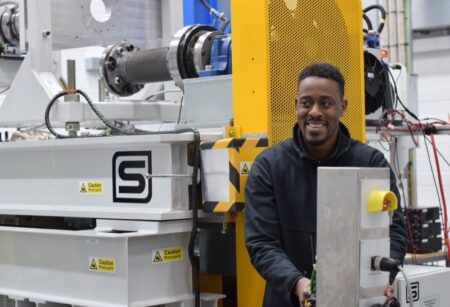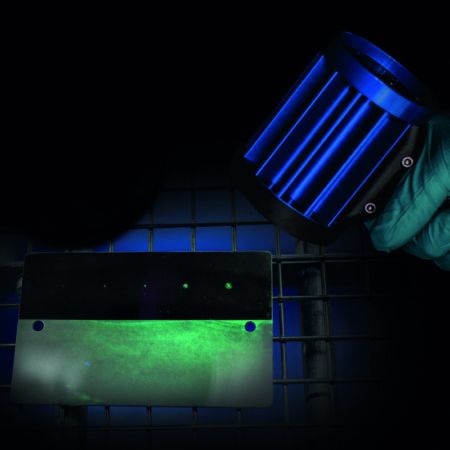


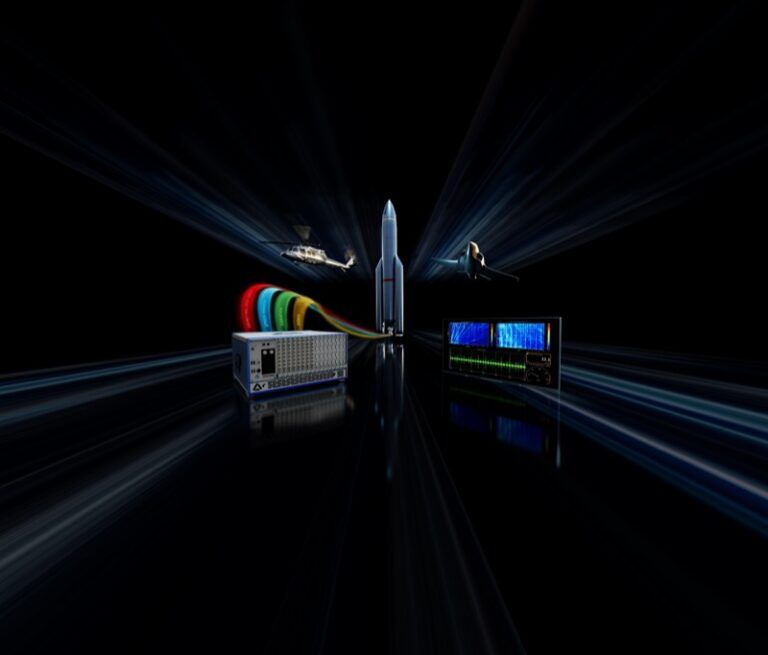
Whether validating aircraft components, turbines, engines, launch vehicle stages or propulsion systems, engineers work with test articles that are costly, complex and perform tests which are often impossible to repeat under identical conditions. When a critical event occurs, the measurement system must be ready. More importantly, it must keep running even if parts of the infrastructure fail.
This is why redundant system design has become a decisive requirement for modern aerospace testing. High-channel-count data acquisition is no longer only about collecting vibration, pressure, strain, temperature or bus data with high accuracy and synchronicity. It is about ensuring that every relevant signal is captured, stored safely, and remains available to operators in real time across distributed test environments. Most importantly, redundancy has become a critical requirement to guarantee that no valuable measurement data is lost, even in the event of a system failure.
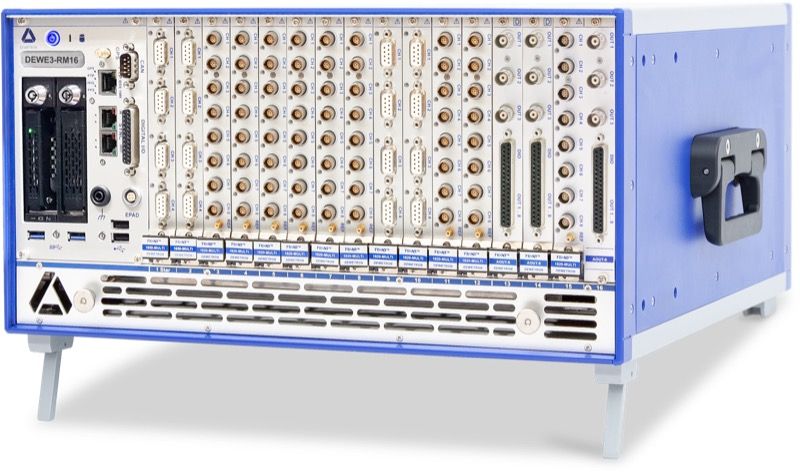
A recent propulsion-test application shows what this means in practice. The customer needed a vibration data acquisition system for propulsion testbeds used for liquid, cryogenic and semi-cryogenic stage and engine-related testing. There were strict requirements in that each testbed had to be split across three independent Dewetron data acquisition systems (DEWE3-RM4 chassis), equipped with Input/Output signal conditioning-modules (TRION3-1820-MULTI-AOUT). Four redundant Master PCs were required, connected through two parallel LAN networks. Two Master PCs were positioned in the measurement chamber and two in the control room approximately 500 m away. Measurement data also had to be distributed to four monitoring PCs.
For this kind of test, redundancy is a vital part of the measurement architecture. If a Master PC fails, recording must continue. If a path is interrupted, the network must remain available. Local data storage must be available at any time. Operators in the control room still need visibility, while the acquisition system close to the testbed must continue capturing high-speed data.
To meet these requirements, Dewetron developed Multi-Master Mode and Redundant Master Mode for Oxygen-Net. This allows several master clients receiving all data to be integrated into one coordinated measurement setup, while redundant master operation helps maintain recording continuity under failure conditions. In the configuration described, high-speed measurement data is locally stored on the DEWE3 data acquisition systems and is transferred in parallel to all master clients as well as to multiple monitor clients.
Dewetron measurement systems are well-suited for aerospace testing because they are designed for precise, synchronized data acquisition across many signal types, from analog sensors to digital and avionics-related data sources. The modular hardware approach allows systems to scale from compact setups to very high channel counts, while their measurement software Oxygen provides configuration, visualization, processing, recording and export in one intuitive software environment.
For test and validation engineers this means less complex setups, more confidence during the test and reliable data. A propulsion firing, vibration campaign or structural validation run may last only minutes, but the value of the captured information can define months of engineering decisions. Missing data is not acceptable and redundancy protects that value.
Dewetron combines precision measurement hardware with flexible software architectures that adapt to real-world test requirements enabling aerospace teams working at the edge of performance to deliver synchronized data, resilient operation and confidence.