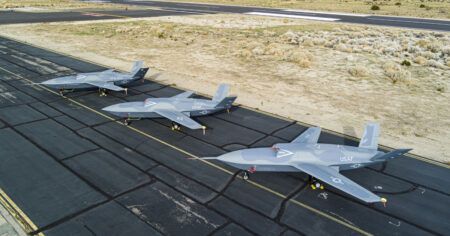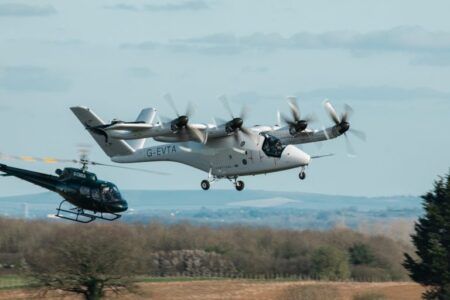


Los Angeles-based startup Hydroplane has been awarded a Phase 2 Small Business Innovation Research contract by the US Army to advance its hydrogen fuel cell electric propulsion system for helicopters and cargo drones.
The Phase 2 effort will focus on scaling and integrating Hydroplane’s propulsion technology for deployment in vertical lift platforms. The company is developing a modular 200kW hydrogen fuel cell powerplant architecture designed as a drop-in replacement for conventional turboshaft and piston engines, offering an alternative to battery-electric approaches that are limited by energy density constraints.
The system uses liquid hydrogen to achieve range and payload performance comparable to or exceeding conventional powerplants, according to the company. The electric drivetrain also provides reduced noise and thermal detectability compared with combustion engines, characteristics relevant to military operations requiring low observability.
Dr. Anita Sengupta, founder and CEO, said, “Hydroplane is honored to continue supporting the U.S. Army in advancing next-generation propulsion technologies. This Phase 2 award highlights how small business innovation can drive rapid, cost-effective deployment of cutting-edge solutions that directly enhance mission capability and operational success.”
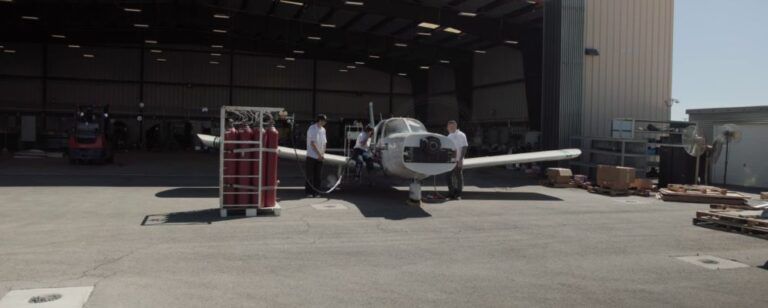
Sengupta, a former NASA Jet Propulsion Laboratory engineer whose work included the ion propulsion system for the Dawn asteroid mission and the supersonic parachute that landed the Curiosity rover on Mars, founded Hydroplane in 2020. The company previously demonstrated its fuel cell system by powering a full-scale gyrocopter rotor to flight speeds during the US Army’s xTech 8 competition and also holds Small Business Innovation Research (SBIR) contracts with the US Navy and US Air Force.