

More than a year behind its original schedule, NASA’s first crewed lunar mission in over half a century has tested the patience of its supporters and the resolve of its engineers in equal measure.
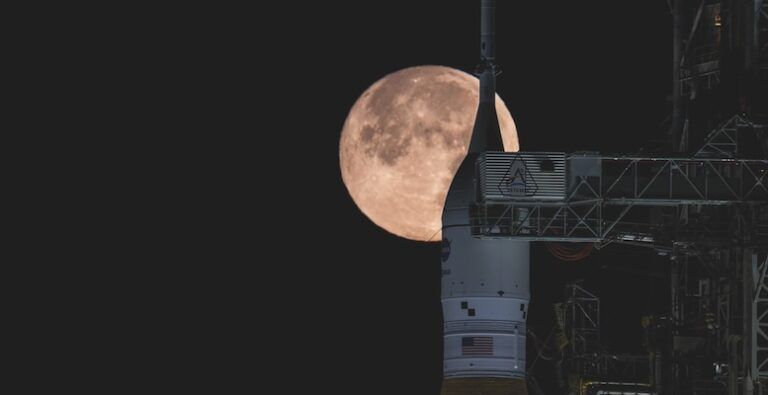
At the time of publishing, Artemis II’s Space Launch System (SLS) rocket and the Orion spacecraft are hours before a potential launch window. This comes after fixes made after an interrupted helium flow in the rocket’s Interim Cryogenic Propulsion Stage (ICPS) was discovered during routine repressurization on February 21, just two days after a successful second wet dress rehearsal (WDR).
That setback was the latest in a succession of problems – heat shield anomalies, battery qualification failures, life support system rework – that pushed the mission from its original late-2024 target.
The rocket inheritance
The SLS traces its origins to a NASA Authorization Act of 2010, which directed the agency to develop a heavy-lift vehicle reusing the Space Shuttle’s workforce, infrastructure and propulsion systems.
SLS’s core stage, manufactured by Boeing, uses the 27.5ft (8.4m) diameter tank from the Space Shuttle. This feeds four Aerojet Rocketdyne (now L3Harris) RS-25 engines – modified Space Shuttle main engines – each of which produces 512,000 lbs of thrust. Two five-segment solid rocket boosters built by Northrop Grumman complete the SLS and supply roughly 75% of the vehicle’s 8.8 million lbs of liftoff thrust, making Block 1 the most powerful rocket ever to fly.
Despite being inherited from the Shuttle program, none of this was developed quickly for Artemis I. The RS-25 adaptation campaign at Stennis Space Center, Mississippi required 52 hot-fire tests between 2015 and Artemis I’s launch in 2022. The testing verified a new engine controller unit, lower liquid oxygen inlet temperatures, and sustained operation at 109% rated power level.
Booster qualification testing was completed in 2015 and 2016, but it would take until March 18, 2021 for the Green Run – when all four RS-25s are integrated to the core stage and fired simultaneously.
Artemis I launched using SLS on November 16, 2022 after 10 years of development and successfully completed its 25.5-day uncrewed mission. But it also exposed a problem that would reshape the Artemis II schedule.
Heat shield cracking
Orion’s 16.5ft (5m) Avcoat ablative heat shield suffered unexpected cracking and fragmenting in 100 different places during reentry. An investigation traced the failure to Artemis I’s skip reentry trajectory. Thermal energy accumulated inside the Avcoat blocks between atmospheric dips. The material’s insufficient gas permeability also trapped ablation byproducts, building internal pressure. More than 100 arc jet tests at NASA Ames were necessary to replicate the mechanism.
However, Artemis II’s heat shield had already been installed before Artemis I ever flew. NASA decided not to replace it. Instead, engineers modified the reentry trajectory to a shorter, steeper skip that reduces dwell time in the thermal environment, allowing proper ablation and gas escape.
Administrator Jared Isaacman stated that he has “full confidence in the Orion spacecraft and its heat shield, grounded in rigorous analysis.” Manufacturing enhancements will be implemented for Artemis III onward.
For the testing community, this is a prime example of how flight data can reveal problems that ground testing and computer modeling cannot, as well as the trade-offs that must be made when redesigning a mission profile around existing hardware.
Orion testing
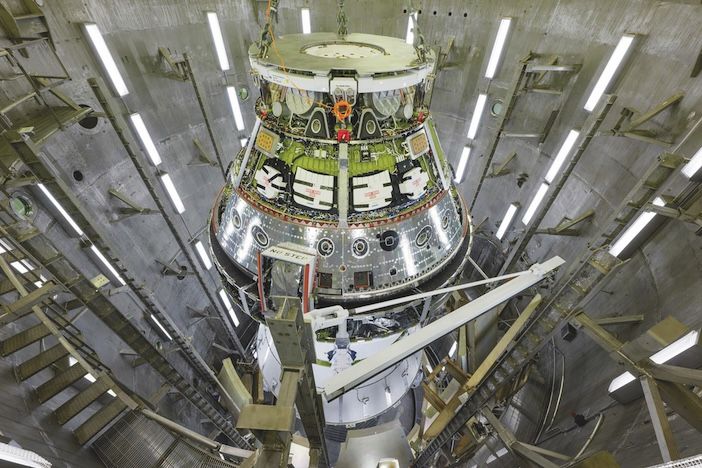
Orion’s transition to a crewed vehicle for Artemis II also revealed issues. Abort scenario analysis in late 2023 revealed that Orion’s batteries might not maintain requisite power levels during extreme SLS abort profiles. Supplier EaglePicher Technologies – the same company whose batteries saved the Apollo 13 crew – had to rebuild and requalify the units.
Separately, deformed sealing material on Environmental Control and Life Support System (ECLSS) valves caused overboard leakage, and a CO₂ removal control valve exhibited deficiencies. NASA said it “beat the ECLSS hard” through multiple failure-path testing before clearing the system.
Meanwhile, Core Stage-2 assembly was completed in September 2023. NASA elected not to conduct a second Green Run, relying instead on Artemis I data to clear the stage. However, in spring 2025, an RS-25 engine had to be replaced after a hydraulic leak was identified on a main oxidizer valve actuator.
Post-Artemis I flight data also drove aerodynamic modifications to SLS, including 7.5ft (2.2m) fin-like strakes flanking the booster forward attachment points, designed to steady it, and revised booster jettison timing that recovered 1,600 lbs of cargo capacity. Each of these fixes consumed months but addressed problems in the vehicle’s qualification envelope that might otherwise have been discovered in flight.
Close but no ignition
The full stack rolled out on January 17–18, 2026. The first WDR on February 2 loaded 700,000 gallons of cryogenic propellant, but a liquid hydrogen leak scrubbed the February launch window. A second WDR showed that the issue was resolved, but days later the ICPS helium repressurization issue was identified.
Engineers investigated the umbilical filter, a check valve, and a stage-side solenoid valve – drawing parallels to a similar helium check valve issue that delayed Artemis I. “Regardless of the potential fault, accessing and remediating any of these issues can only be performed in the Vehicle Assembly Building,” Isaacman said.
Valuable lessons
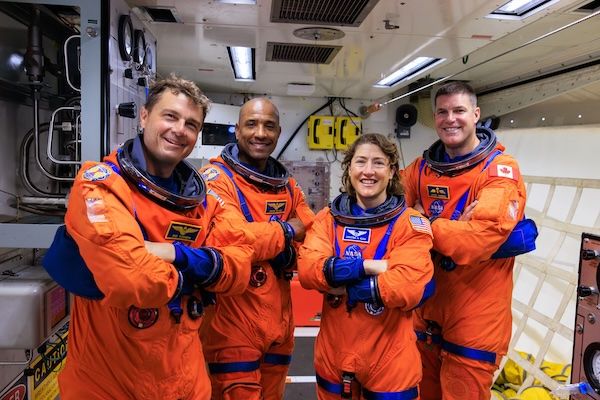
Artemis II is a pivotal moment for space exploration. The crew will fly farther from Earth than any humans in history. The mission will validate life support, crew displays, manual proximity operations and the modified skip reentry. All are prerequisites for future Artemis missions.
But the program is expensive. NASA’s Inspector General estimates Artemis has cost around US$93 billion so far. Each launch costs around US$4 billion. Isaacman is candid that SLS will not be used in the long term and that the goal is repeatable, affordable access to the Moon. SLS program manager John Honeycutt frames the value differently, arguing the impact of Artemis will be distinct from Apollo because the vision and mission are different.
Regardless, the engineering case is compelling. The heat shield investigation fundamentally advanced the understanding of ablative material behavior during skip reentry. The battery rework established new standards for power systems under abort loads. The ECLSS failures and fixes generated test heritage that will underpin crewed Orion flights for decades. The ongoing ICPS helium troubleshooting adds to a growing body of knowledge on cryogenic upper-stage ground operations. None of this data existed before the delays forced it into existence.
Artemis II is a mission where the margin between test heritage and operational reality is written in real time, anomaly by anomaly. Is it good value? Whether you measure its worth in dollars or data, the answer depends on the currency you value the most. The April window awaits.