

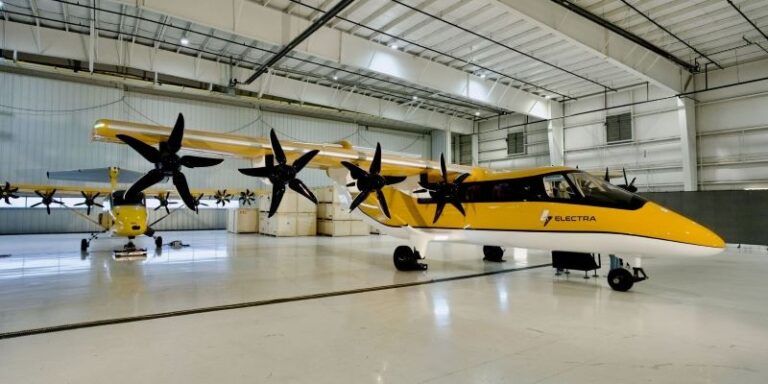
Electra has submitted an application to US regulator the FAA for Part 23 type certification of its nine-passenger EL9 hybrid-electric Ultra Short aircraft.
The nine-passenger hybrid-electric EL9 uses a distributed electric propulsion system to take advantage of an aerodynamic concept called blown lift. This effect enables take-offs and landings in distances of less than 150ft (45m).
The EL9 and many of its details was revealed around a year ago. Electra plans to use the EL9 for FAA certification flight tests in 2028 and and to have the aircraft enter service in late 2029 or early 2030.
The hybrid-electric EL9 will have a maximum speed of 230mph (370kmh), a maximum ferry range of 1,265 miles (2,035km) and a payload capacity of up to 3,000 lbs 1,360kg.
Certification pathway
Part 23 is for commercial passenger or cargo aircraft with 19 or fewer passengers and Electra’s application includes FAA Form 8110-12, the Project Specific Certification Plan (PSCP), and the EL9 Aircraft Specification, outlining the company’s proposed certification basis and approach to regulatory compliance.
Electra said it has been working on the submission with the FAA for several years through the regulator’s Emerging Technology Section of Policy and Standards.
Electra CEO Marc Allen said, “This certification application signals that the EL9 is fast becoming a reality and reflects the progress our team and the FAA have made together.
“The EL9 combines blown-lift with distributed electric propulsion to unlock air travel that takes people directly from where they are to where they want to go. We will continue to engage with the FAA to demonstrate that the EL9 is a reliable fixed-wing aircraft that will serve passengers, move cargo, and connect communities for many years to come.”
Work is ongoing to progress the EL9 through certification, including the acceptance of the PSCP, compliance and conformity plans, and detailing the test implementation phase of the Type Certification process, said Electra.