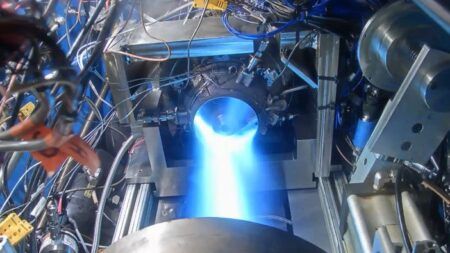



Toulouse, France-based company Beyond Aero has completed a key full-power ground test with the fuel cell power system that it intends to use in its BYA-1hydrogen-electric business jet.
Beyond Aero, which was founded in 2020, said it had completed a full-scale test campaign for its fuel cell propulsion system in its laboratory, validating the hydrogen-electric powertrain to TRL6.
The company plans to deliver its first BYA-1 hydrogen-electric CS23 light jet by 2030. The aircraft has a planned range of 1,500km (930 miles) and a cruise speed of 573 km/h (356mph).
The BYA-1 will use a low-temperature proton exchange membrane fuel cell stack with a capacity of 2.4MW to power two electric engines. Gaseous hydrogen will be stored at 700-bar in tanks integrated within the wingbox structure.
(TRLs) Technology Readiness Levels are a commonly used way of indicating the maturity of a technology during its development and runs from TRL1 (early R&D) to TRL9 (ready for use). Level 6 shows that the technology has been successfully demonstrated as working.
Toulouse testing laboratory
The testing took place at Beyond Aero’s new integrated hydrogen-electric powertrain lab in Toulouse, France, which the company claims is one of the world’s top three most powerful facilities of its kind. The laboratory can replicate three representative channels with different fuel cell providers, with a capacity reaching 1200 kW across channels.
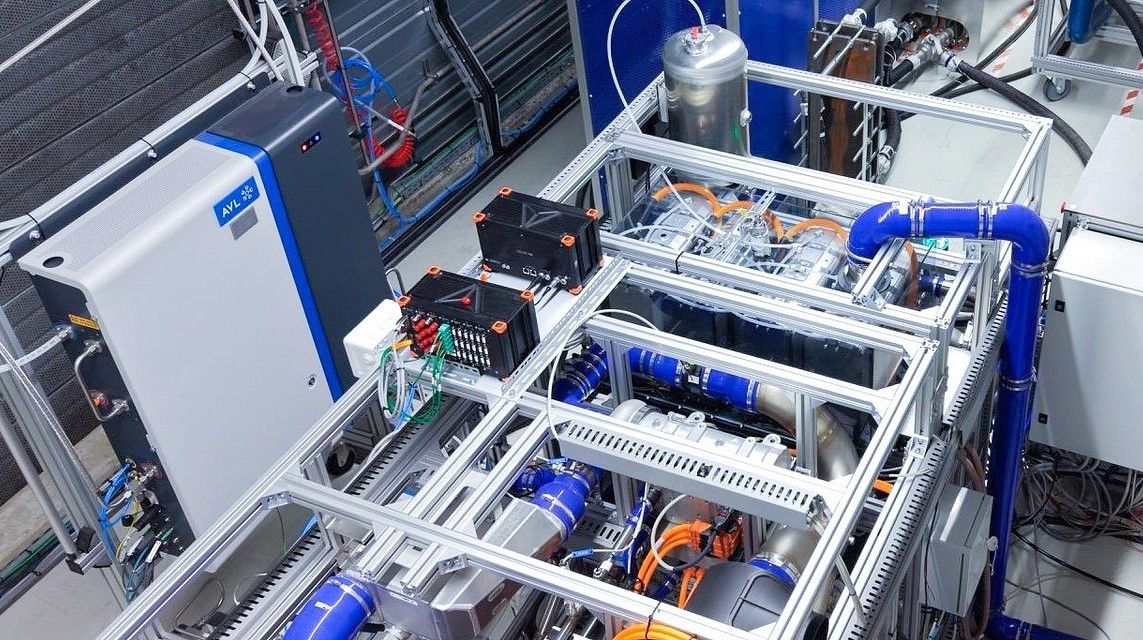
The laboratory also has the facilities needed to compress, fill, store, and use hydrogen gas at 700 bar with Type IV tanks, ensuring industrial-grade safety and scalability. In addition, the laboratory has flight-representative test benches for validation of system performance and certification-ready data gathering.
Eloa Guillotin, CEO of Beyond Aero said, “We’ve now reached TRL6, our hydrogen-electric propulsion works at full scale, with ground and in-flight data conditions. That’s 18 months of relentless teamwork, powered by an environment where ambition is matched by rigor and where every achievement is the result of collective determination. Leading such a talented, diverse, and purpose-driven team is both an honor and a responsibility.
Universal Hydrogen IP acquisition
Beyond Aero also announced this week that it has acquired Universal Hydrogen’s intellectual property, flight data and assets, including all of its flight test and digital data, strategic test bench components, including electric turbocompressors, and key personnel.
Partners on the project to develop Beyond Aero’s fuel cell propulsion include EKPO Fuel Cell Technologies, whose NM20 platform provides the energy-conversion part of the aircraft; FEV Aerospace, which is helping to develop the fuel cell system for stringent airworthiness and certification-ready performance; BrightLoop Converters, which is a specialist in high-performance aerospace DC-DC converters; and AVL, which is supplying the test center infrastructure and Dassault Systèmes for the virtual twins, aircraft, and powertrain.
Beyond Aero was also supported by Airbus Protect for safety analysis and certification services.
In addition, the company has begun talking with European aviation regulator EASA about providing test evidence and safety artifacts for the certification of hydrogen-electric propulsion via a pre-application contract.
“We have established an early and structured engagement with Beyond Aero on hydrogen propulsion technology. Our objective is to provide clarity on the applicable regulatory framework, address novel safety considerations, and ensure that certification activities progress in a consistent, structured and transparent manner,” said Gianluca Mele, program manager, EASA.