

UK aviation regulator the CAA reaffirmed its commitment to the development of hydrogen as a zero-emission fuel at the Aerospace Test & Development event this week.
Speaking at the industry event in Toulouse, France, Helen Leadbetter, technical strategy lead for zero-emission flight at the UK Civil Aviation Authority (CAA) said the regulator aims to certify hydrogen technologies for the aerospace sector in the future.
The CAA’s main program for the nascent zero-emissions technology is the £1.2 million Hydrogen Challenge, which is funded by the UK’s DfT (Department for Transport). The Challenge aims to support the development of the hydrogen sector and drive policy creation. It involves industry members and academics and is focused on creating hydrogen aircraft, hydrogen infrastructure and operations at airports, and airspace management.
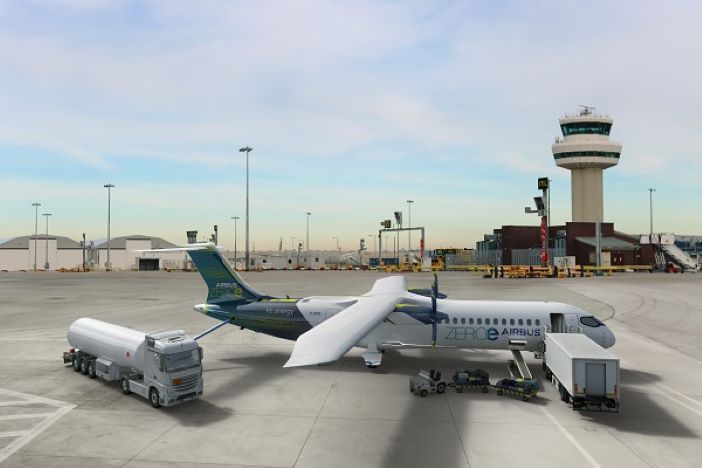
Originally launched in 2024, the second round of the Challenge was announced at the beginning of this year, shortly before Airbus said it was to scale back its hydrogen R&D activities, including its ZEROe program, which aimed to put a hydrogen-propulsion aircraft into service by 2035.
The CAA’s initiative includes sandbox exercises, gap analysis programs and policy recommendations to identify the challenges and opportunities in the hydrogen aviation ecosystem.
The sandbox challenge creates a controlled environment where companies can test new products and services with the regulator. It is addressing areas such as pilot training, ground operations and the re-planning of airspace to make it more efficient.
Leadbetter said, “The challenge has expanded within the last year, increasing from three to 13 organisations and now involves universities and airports to understand hydrogen and its impact on aircraft operations.”
According to Leadbetter, one of the main barriers to introducing hydrogen as a fuel is investment in the ecosystem and hydrogen fuel infrastructure at airports. She said, “There is a lot of negativity around hydrogen and the safety case around it. We are trying to show the general public that hydrogen is safe and must go through the same certification process as any aviation technology.”
Despite companies such as Airbus scaling back hydrogen fuel R&D, she added that there is still industry interest in its further development: “It [the Airbus scaling back] has had an impact by slowing down their technology development, but they’ve made it clear that they are not stopping and that they will move from hydrogen combustion to fuel cell as their initial entry into service product.
“There is still a lot going on and there are other companies are looking at using hydrogen for use in drones and other platforms.”
Find more information on the Aerospace Test & Development Show: https://aerotestdevelopmentshow.com/