


Beyond Aero has completed the preliminary design review of its BYA-I One hydrogen-electric business jet, confirming a shift from electric ducted fans to pusher-configured propfans as part of a redesigned propulsion architecture.
The Toulouse, France-based company said the preliminary design review (PDR) has validated the integration of hydrogen storage, electric propulsion, thermal management, fuel cell and safety systems into what it described as a certifiable architecture. The BYA-1 program now advances into detailed design and verification.
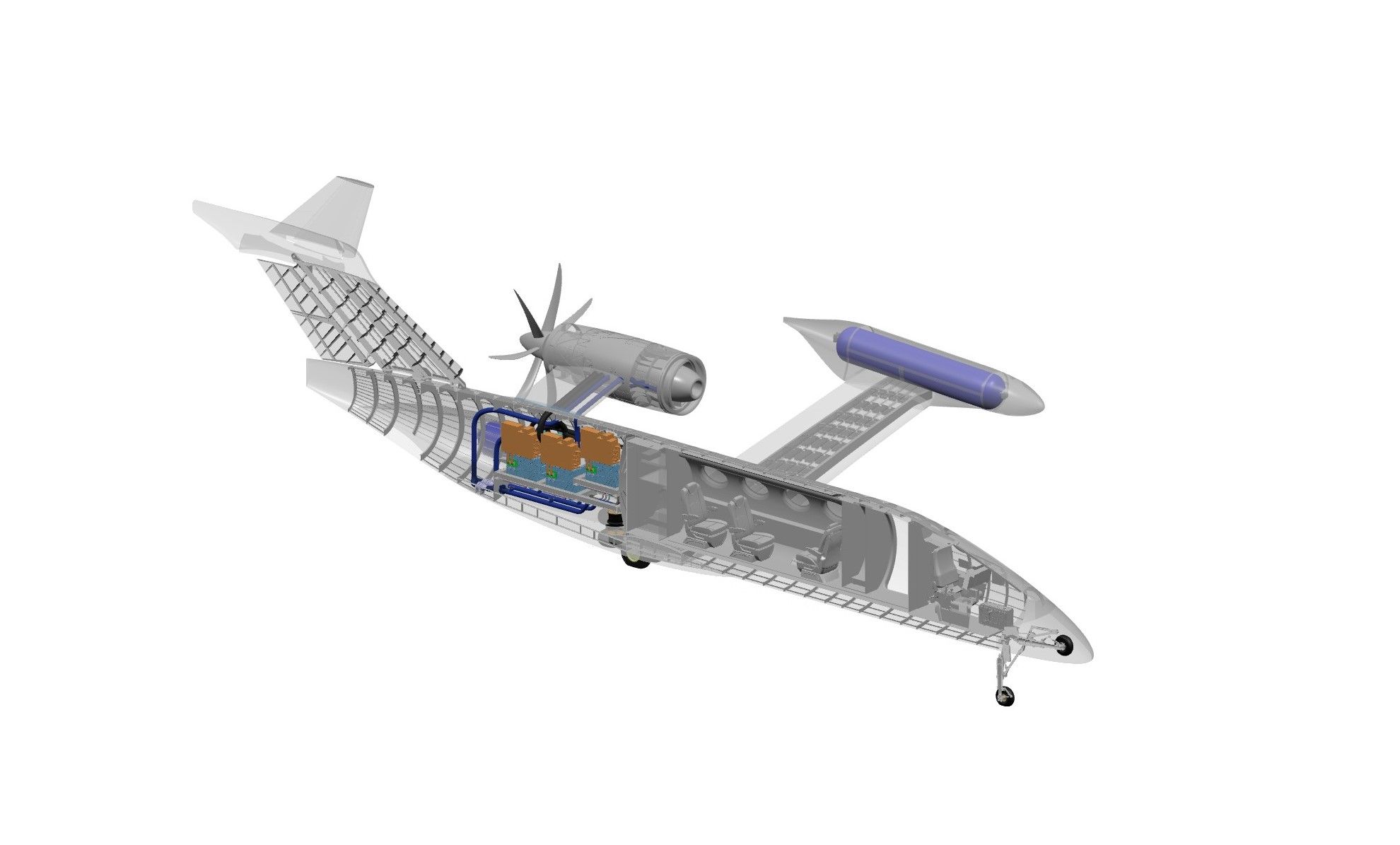
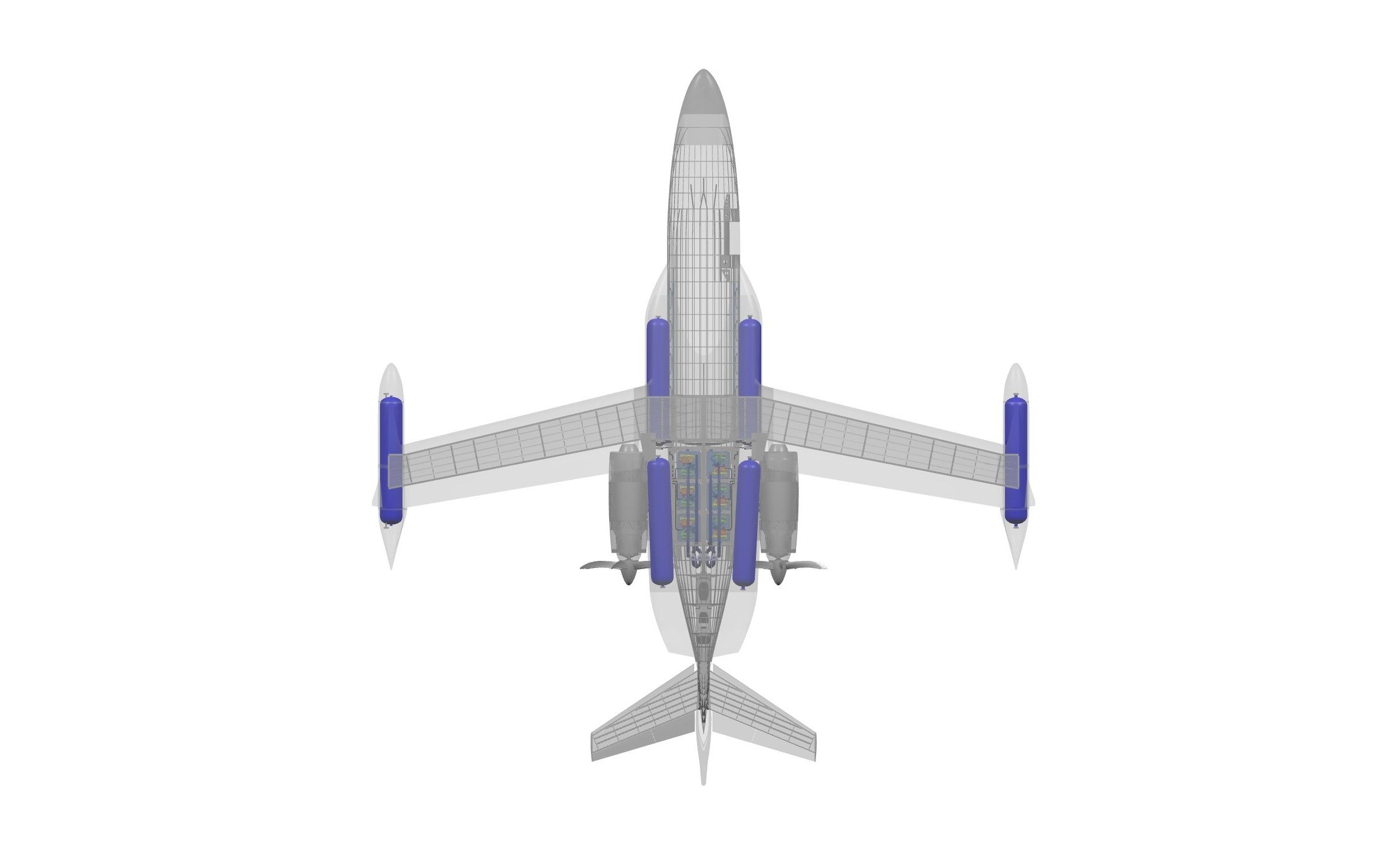
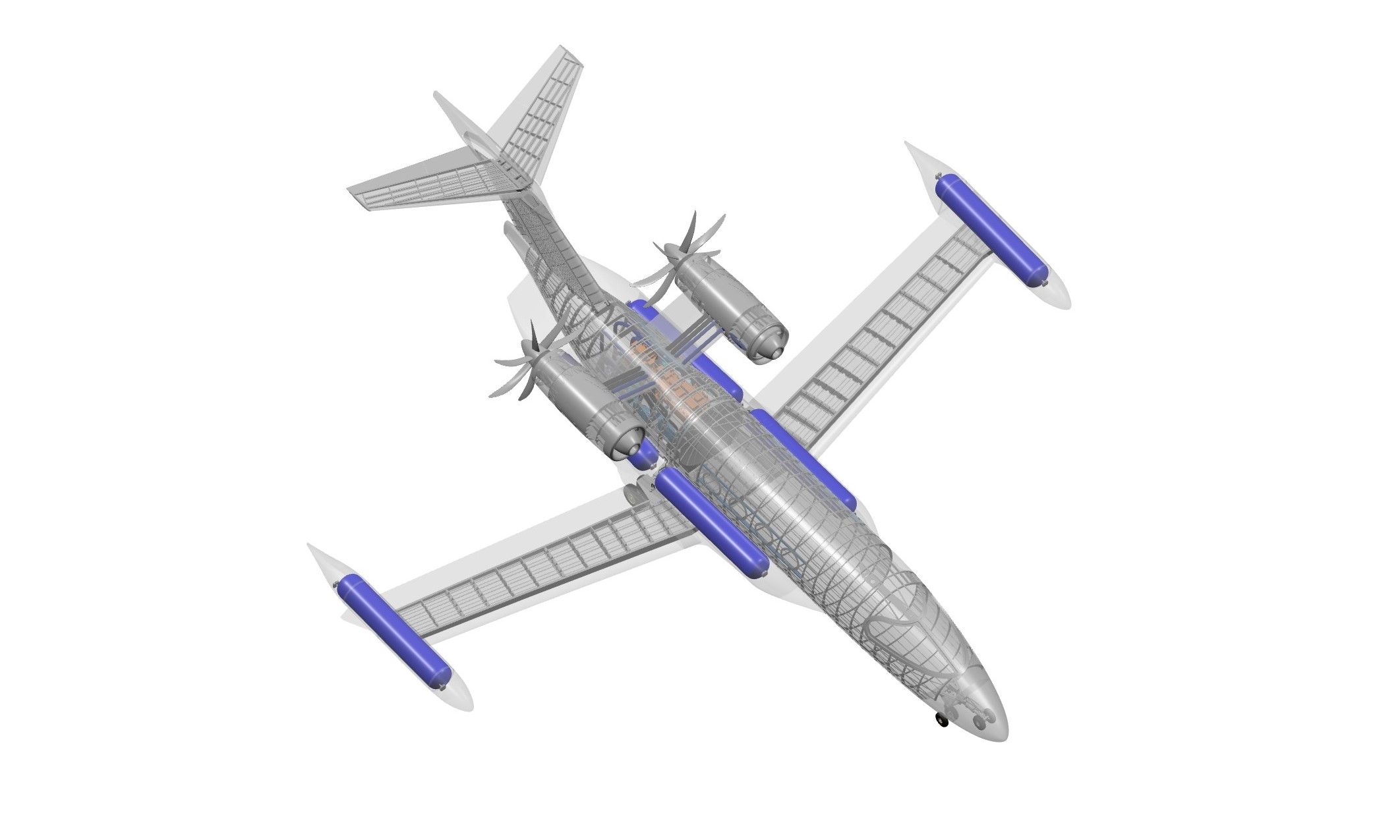
The BYA-I One uses a twin-propfan configuration powered by six 400kW fuel cells running on gaseous hydrogen (GH2) stored at 700 bar in externally mounted tanks above the wing structure. Total propeller shaft power is rated at 950kW.
The propfan layout marks a departure from the ducted-fan arrangement used in earlier iterations of the aircraft, a change that was confirmed through the PDR process.
The propfan was selected over a ducted fan for its ability to meet airworthiness and operational climb performance requirements in one-engine-inoperative conditions and hot-day temperatures, and to optimize specific fuel consumption in cruise, said Beyond Aero.
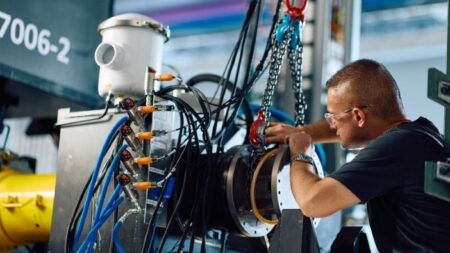
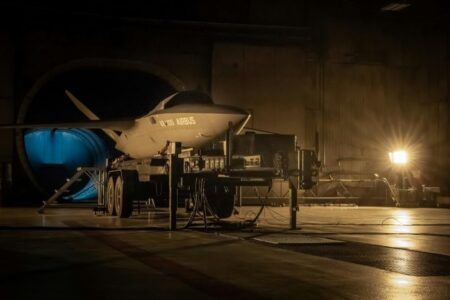
A recent wind tunnel test campaign has validated the aerodynamic assumptions underpinning the new configuration, confirming correlation between computational models and physical testing.
The aircraft is designed for a range of 920 miles (1,480km) at 345mph (556km/h), with a maximum speed of 414mph (667km/h) and a ceiling of 26,000ft. Maximum take-off weight is 21,164 lb (9,600kg), with a maximum payload of 1,675 lb (760kg) accommodating eight passengers and two pilots. Take-off ground roll is 2,378ft (725m).
Certification progress
Beyond Aero is pursuing certification under CS-25 and Part 25 transport-category standards from the European Union Aviation Safety Agency (EASA) and the Federal Aviation Administration (FAA). The company said it is executing a pre-application contract with EASA, and that a design organization approval application submitted in April 2024 has completed its first phase, with a second phase under way.
Luiz Oliveira, chief engineer at Beyond Aero, said, “The Preliminary Design Review confirms that the aircraft configuration and its major systems – propulsion, hydrogen storage, aerodynamics and avionics – have reached the level of maturity required to support a certifiable architecture. With this milestone completed, the program moves on schedule into detailed design and verification of the aircraft’s integrated systems.”
Eloa Guillotin, CEO of Beyond Aero, said, “The completion of the Preliminary Design Review demonstrates that a certifiable hydrogen-powered business aircraft is achievable. Our objective is to develop a new business aircraft tailored to the constraints of hydrogen-electric propulsion, while meeting the performance, safety, and operational standards expected in business aviation.”
The company said its hardware validation program includes completed flight testing of an 85kW sub-scale prototype, 800kW-class propulsion data validated through full-scale flight testing following its acquisition of Universal Hydrogen assets, and 1,200kW of total ground laboratory testing capacity. Industrial partners on the program include EKPO, FEV, AVL, Aeronnova, TAT Technologies, Airbus Protect and Bureau Veritas.
The GH2 storage architecture avoids cryogenic liquid hydrogen, using 700 bar gaseous storage compatible with both fixed and 350 bar mobile refueling systems. Beyond Aero said it has signed agreements with more than 10 airport operators and over 16 hydrogen production and distribution partners.