

Aerospace Testing InternationalAerospace Testing International
  • News
    • A-E
      • Acoustic & Vibration
      • Avionics
      • Data Acquisition
      • Defense
      • Drones & Air Taxis
      • Electric & Hybrid
      • EMC
      • Engine Testing
      • Environmental Testing
    • F-L
      • Fatigue Testing
      • Flight Testing
      • Helicopters & Rotorcraft
      • High Speed Imaging
      • Industry News
    • M-S
      • Materials Testing
      • NDT
      • Simulation & Training
      • Software
      • Space
      • Structural Testing
      • Supplier News
    • T-Z
      • Technology
      • Telemetry & Communications
      • Weapons Testing
      • Wind Tunnels
  • Features
  • Magazines
    • Dec 2025 / Jan 2026
    • Showcase 2026
    • August / September 2025
    • June 2025
    • March 2025
    • Dec 2024 / Jan 2025
    • Archive Issues
    • Subscribe Free!
  • Opinion
  • Webinars
  • Events
    • All Events
    • Aerospace Test & Development Show
  • Podcasts
  • Videos
  • Suppliers
    • Supplier Spotlights
    • Press Releases
    • Technical Papers
LinkedIn YouTube X (Twitter)
Subscribe to magazine Subscribe to email newsletter Media Pack
Aerospace Testing InternationalAerospace Testing International
  • News
      • Acoustic & Vibration
      • Avionics
      • Data Acquisition
      • Defense
      • Drones & Air Taxis
      • Electric & Hybrid
      • EMC
      • Engine Testing
      • Environmental Testing
      • Fatigue Testing
      • Flight Testing
      • Helicopters & Rotorcraft
      • High Speed Imaging
      • Industry News
      • Materials Testing
      • NDT
      • Simulation & Training
      • Software
      • Space
      • Structural Testing
      • Supplier News
      • Technology
      • Telemetry & Communications
      • Weapons Testing
      • Wind Tunnels
  • Features
  • Magazines
    1. Dec 2025 / Jan 2026
    2. Showcase 2026
    3. August / September 2025
    4. June 2025
    5. March 2025
    6. Dec 2024 / Jan 2025
    7. Archive Issues
    8. Subscribe Free!
    Featured
    23rd December 2025

    In this issue: December 2025/January 2026

    Online Magazines By Ben Sampson
    Recent

    In this issue: December 2025/January 2026

    23rd December 2025

    In this issue – Showcase 2026

    5th November 2025

    In this issue: August / September 2025

    3rd September 2025
  • Opinion
  • Webinars
  • Events
    • All Events
    • Aerospace Test & Development Show
  • Podcasts
  • Videos
  • Suppliers
    • Supplier Spotlights
    • Press Releases
    • Technical Papers
LinkedIn YouTube X (Twitter)
Aerospace Testing InternationalAerospace Testing International
Drones & Air Taxis Opinion

Academic insight: Solving cockpit design challenges for eVTOLs

Dr Mike BromfieldBy Dr Mike Bromfield18th March 20263 Mins Read
Share LinkedIn Twitter Facebook Email
Dr Mike Bromfield
Image: Myriad Business

Designing monitoring and alerting systems for electric and hybrid-electric aircraft is a considerable challenge. Researchers are tackling problems by applying human-centered design methods and using configurable Virtual Reality + Motion flight simulators.

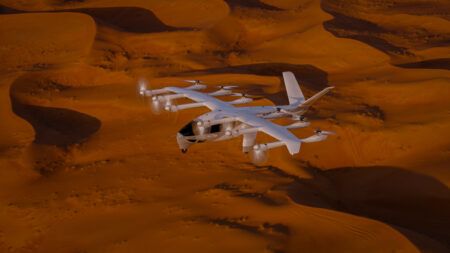
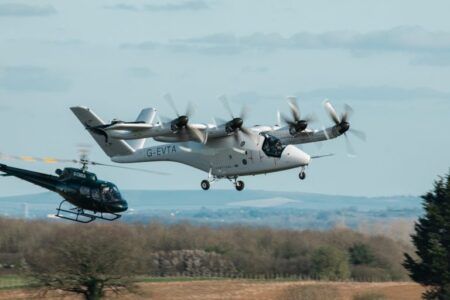
The market for electric aircraft is steadily growing. Companies are designing and manufacturing electric and hybrid aircraft for short-range conventional and vertical flight, enabled by innovation in battery and electric propulsion system technologies. Some electric aircraft use retrofitted electric propulsion systems. Other designs, including eVTOLs, are clean-sheet designs that use Distributed Electric Propulsion (DEP) systems.

eVTOL aircraft are continually evolving, reminiscent of the early days of pioneering, powered flight by the Wright Brothers and competitors. eVTOLs are not constrained by heavy engines or transmission gearboxes, electric motors can be placed anywhere on the wings, if the aircraft has them, the fuselage and/or the tail.

But DEP requires new control concepts, displays, and monitoring and alerting systems to maintain pilot situational awareness. Just like the Wright Brothers, accidents and incidents in early development and testing of these new vehicles have provided valuable lessons. Already, it has been possible to identify causal and contributory factors.

Operating these new electric and hybrid aircraft focuses the pilot’s attention on energy management to a far greater degree than before. Given the lower energy densities of current batteries compared to conventional fuels, designers have had to do more with less, making aerodynamic efficiency and weight-saving innovations crucial. The failure modes and effects for DEP are also far more complex than for a single engine. The loss of a propeller and/or motor in a DEP system can generate instability in pitch, roll and yaw – simultaneously.

Managing such a failure is highly complex for a human operator and requires stabilization systems and software to maintain safe flight. In such scenarios, adequate pilot awareness is needed so that if control is augmented or handed over completely, the pilot can manage the situation.

Ground testing of these new systems may be complex. Flight testing presents new challenges to flight crew, including the management of in-flight failures of these novel propulsion systems.

Stabilization systems, automation and AI will play increasingly important roles in future aircraft. Nevertheless, the transition from uncrewed to crewed flight testing requires an increased focus on Human-Centered Design (HCD), an approach that places real people at the center of problem-solving. HCD is needed in every phase of the design. Robust and reliable human machine interfaces are critical for safe flight.
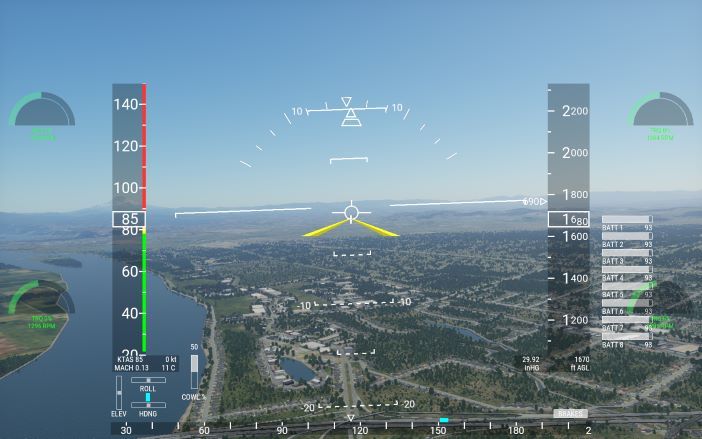
Virtual Reality and motion simulators are an important part of testing cockpit monitoring and alerting systems, such as Myriad’s VRM-2

Flight simulators able to accurately represent the real aircraft can be used to evaluate the performance and flying qualities of an aircraft and test failure modes in a safe environment. Future pilot training will also benefit from
high-fidelity modeling and simulation.

Understanding the human operator’s requirements is crucial for developing the safe, electric and hybrid-electric aircraft of the future. With increasing demand for electric and hybrid-electric aircraft to enhance mobility, research that uses human-centered design methods and flight simulators will help inform future cockpit design strategies to achieve acceptable levels of safety in this new emerging aviation sector.
Share. Twitter LinkedIn Facebook Email
Previous ArticleCollins begins megawatt-class hybrid-electric powertrain testing for future airliner engines
Next Article Beyond Aero completes preliminary design review of hydrogen business jet
Dr Mike Bromfield
  • Website

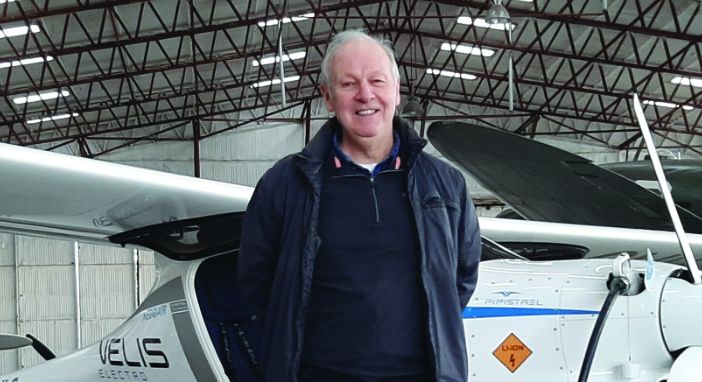
Mike Bromfield is an Aerospace Systems & Human Factors Engineer. He is an Honorary Associate Professor in Aerospace and Flight Safety Researcher at the University of Birmingham. He is a Chartered Engineer and Chartered Ergonomics/Human Factors Specialist affording insight into complex ‘human in the loop’ systems challenges. He is a Fellow of the Royal Aeronautical Society (RAeS), Member of Chartered Institute of Ergonomics & Human Factors (CIEHF) and Member of the International Society of Air Safety Investigators.

Related Posts

A Kratos Valkyrie uncrewed combat aircraft bearing Airbus markings on a ground support cradle inside a hangar facility
Defense

Airbus targets 2029 for loyal wingman drone delivery to German Air Force

17th March 20263 Mins Read
Artist's rendering of the SPRINT X-76 aircraft in flight, showing the stop-fold tiltrotor configuration with folded rotor blades and twin nacelles
Defense

DARPA names fold-away rotor aircraft X-76 ahead of 2028 first flight

12th March 20262 Mins Read
Alia-250
Drones & Air Taxis

USA launches nationwide eVTOL operational trials program

11th March 20263 Mins Read
Latest Posts
Rendered image of the Beyond Aero BYA-I One in flight over a coastal landscape

Beyond Aero completes preliminary design review of hydrogen business jet

18th March 2026
Dr Mike Bromfield

Academic insight: Solving cockpit design challenges for eVTOLs

18th March 2026
A technician works on a megawatt-class electric motor generator at Collins Aerospace's Grid testing facility in Rockford, Illinois

Collins begins megawatt-class hybrid-electric powertrain testing for future airliner engines

17th March 2026
Supplier Spotlights
  • Precision Filters, Inc. (PFI)
  • Evolution Measurement
  • CALCULEX
  • Hottinger Brüel & Kjær
  • AVL List GmbH
  • Tekna
  • InnovMetric
  • CGM CIGIEMME S.p.A.
  • SET GmbH
  • Tyto Robotics
    Tyto Robotics Inc.
  • Bartington Instruments
    Bartington Instruments
  • Ametek
    AMETEK Programmable Power
  • Delta Information Systems logo
    Delta Information Systems
  • Helling GmbH
    Helling GmbH
  • Matec Instrument Companies, Inc.
    Matec Instrument Companies, Inc.
  • Endevco
  • Ipetronik
    IPETRONIK GmbH & Co. KG
  • VJ Technologies
  • Durr NDT
    DÜRR NDT GmbH & Co. KG
  • Dewesoft
  • Bruker Alicona Dimensional metrology & surface roughness measurement
    Bruker Alicona
  • Vzlu
    VZLU – Czech Aerospace Research Centre
  • ATG Advanced Technology Group
    ATG – Advanced Technology Group
  • Dytran Instruments, Inc.
  • Kistler Group
    Kistler Group
  • Diversified Technical Systems (DTS)
  • Scanivalve Corporation
  • G Systems
  • CEC Vibration Products LLC.
  • dSPACE
  • Safran Data Systems
  • Photron
  • YXLON International
  • Telspan Data
  • TotalTemp Technologies, Inc.
  • Vector Informatik GmbH
  • Vibration Research
  • TEST-FUCHS
  • Siemens Digital Industries Software
    Siemens Digital Industries Software
  • PCB Piezotronics, Inc.
  • Testia
  • Treo – Labor für Umweltsimulation GmbH
  • W5 Engineering
  • National Institute for Aviation Research
  • North Star Imaging
  • MK Test Systems Ltd.
  • Intertek
  • I.N.C.A.S. – NATIONAL INSTITUTE FOR AEROSPACE RESEARCH “ELIE CARAFOLI”
  • FMV Test & Evaluation
  • Glenn L Martin Wind Tunnel
  • GRAS Sound & Vibration
  • Elsys AG
  • EMCCons DR. RAŠEK GmbH & Co.KG
  • European Test Services (ETS) B.V.
  • Chemetall GmbH logo
    Chemetall GmbH
  • Curtiss-Wright
  • Data Physics Corporation
  • AOS Technologies AG
  • Airmo Inc. Pressure Technologies
    Airmo Inc.® Pressure Technologies
Our Social Channels
  • Twitter
  • YouTube
  • LinkedIn
Getting in Touch
  • Subscribe To Magazine
  • Contact Us
  • Meet the Team
  • Media Pack
Related Topics
  • Aircraft Interiors
  • Business Jet Interiors
FREE WEEKLY NEWS EMAIL!

Get the 'best of the week' from this website direct to your inbox every Wednesday

© Copyright 2026 Mark Allen Group. All rights are reserved, including those for text and data mining, AI training, and similar technologies.
  • Cookie Policy
  • Privacy Policy
  • Terms & Conditions

Type above and press Enter to search. Press Esc to cancel.