

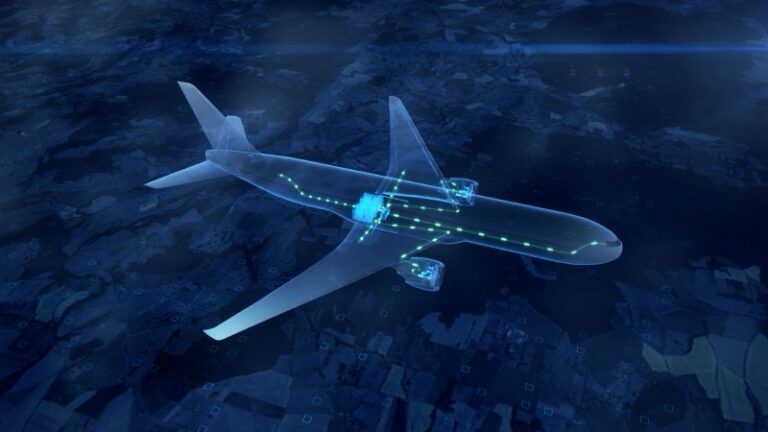
Airbus and Collins Aerospace are moving hybrid-electric power systems from the test bench toward full aircraft-level integration, targeting future short- and medium-range commercial airliners.
The two companies are partners on the Large Scale Integration Demonstrator of Hybrid Electrical Architecture (LEIA), a European Union-funded Clean Aviation project that follows the recently completed SWITCH program. LEIA is intended to bridge the gap between component-level innovation and aircraft-level maturity, preparing high-voltage generation and distribution for future integration and certification.
SWITCH program builds into LEIA
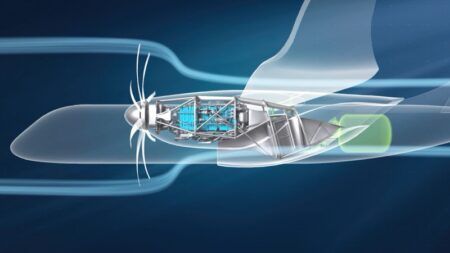
SWITCH focused on hybrid-electric powertrain subsystems and reached a milestone in July, when Collins completed integrated laboratory testing at The Grid, its electric power systems lab in Rockford, Illinois. The tested powertrain subsystems, which ran alongside simulated aircraft and engine systems, are built for a hybrid-electric Pratt & Whitney geared turbofan engine and use two Collins megawatt-class motor generators and controllers.
Pratt & Whitney handled powertrain integration and supplied the engine controller, Airbus provided the aircraft interface controller and GKN Aerospace delivered the high-voltage wiring, while MTU Aero Engines coordinates SWITCH. The subsystems are now moving to Airbus’s Sustainable Technology and Engineering Projects (STEP) laboratory in Ottobrunn, Germany, for aircraft-level integration testing covering design, battery interfacing and energy management.
Karim Mokaddem, Airbus’s head of aircraft of tomorrow research and technology, said, “Our progress in developing hybrid-electric technologies and our move into the LEIA demonstrator marks a pivotal shift in how we design the future of flight.
“By moving to integrated, intelligent hybrid-electric architectures, we are actively laying the physical and digital foundation for the next generation of aircraft. This evolution demonstrates that the future of aviation is about more than just new power sources; it is also about the new ecosystems that will manage them.”
LEIA to integrate hybrid-electric systems into larger aircraft
Under LEIA, Airbus is leading the aircraft-level integration of the advanced electrical components alongside other aircraft systems, with validation through a test program building to a ground demonstration by 2027.
Collins is the technical lead for energy sources and will supply four scalable motor generators, next-generation electronic controllers, power distribution equipment, and cabin pressure and ventilation control systems.
Its site in Nördlingen, Germany, will provide solid-state power controllers and distribution panels to replace mechanical circuit breakers and relays, cutting weight and improving reliability. Testing will run across several sites, including The Grid and Collins facilities in Toulouse, Frankfurt, Cork, Rome and Solihull.
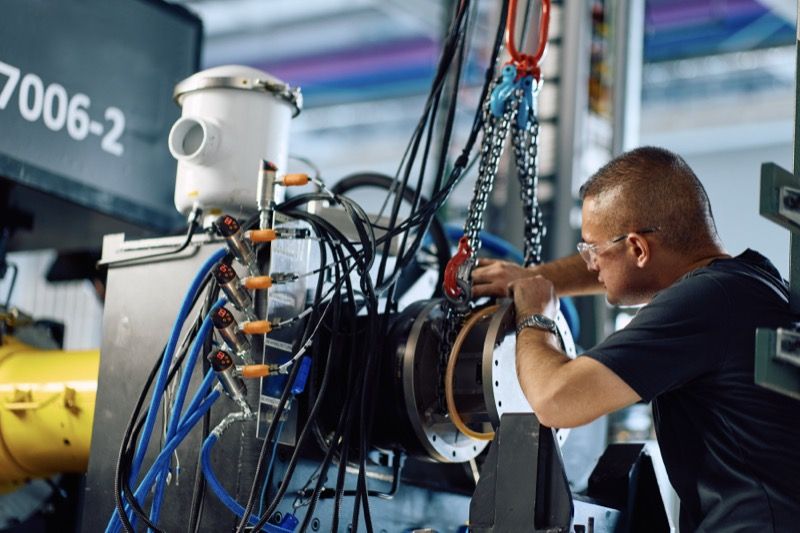
Kristin Smith, vice president of electric power systems at Collins Aerospace, said, “This is the largest integrated systems test conducted at The Grid since its opening in 2023. By combining our technology expertise with industry collaboration, we are demonstrating how hybrid-electric systems can significantly reduce fuel consumption for next-generation aircraft.”
The project targets a 30% cut in carbon dioxide emissions at short- and medium-range aircraft level against a 2020 reference, and aims to reach Technology Readiness Level 5 (TRL5) for an integrated energy system by 2027. Clean Aviation and its partners see the work as strengthening Europe’s electrical-systems supply chain for the next generation of aircraft.