

Aerospace has more to test than it has the capacity to test. Airbus closed 2025 with a record backlog of 8,754 commercial aircraft, around 11 years of deliveries at current rates, while Boeing’s stood at 6,713. EU-27 defense spending reached €418bn in 2025, a rise of 20% year-on-year, and is projected to reach €454bn during 2026.
Meanwhile, the GCAP fighter program moved into detailed design and test in July on an 18-month, £4.6bn (US$6.1bn) contract. Space has shifted to constellation-rate production. And an entire generation of electric, hybrid-electric and hydrogen aircraft is arriving with scant test precedent to draw on.
Every one of those aircraft, satellites and systems must be verified for flight. But rigs, environmental chambers, engine cells, telemetry bandwidth, instrumentation supply and – most acutely – experienced test engineers are a finite resource. Verification, not design, is increasingly the constraint on delivery.
Those are the questions the Aerospace Test & Development Show 2026 has been built around. Can test keep pace with the demands being placed on it? What must change for it to do so? And how does the industry make those changes while maintaining safety? Taking place September 29-30, 2026, in Hall 7 at MEETT, Toulouse, the fourth edition of the event is the most comprehensive yet, with more than 150 exhibitors expected, over 70 speakers and three free-to-attend forum stages. The location puts the show in the middle of its own subject – Toulouse is the European heartland of aerospace research, development and rate increase, and delegates will arrive already aware of the challenge.
Hit the link below for more information and to register for the event:

Technology showcase
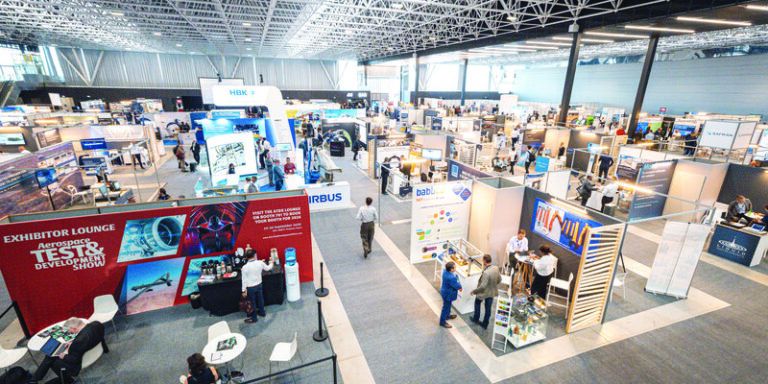
At the heart of the show is an exhibition spanning the entire development cycle across the aviation, space and defense sectors. From NDT specialists and avionics experts to developers of simulation software, environmental chambers, data acquisition hardware and propulsion test systems, the exhibition floor brings together the tools that determine how quickly and how rigorously aerospace products can be verified.
Industry leaders will exhibit alongside startups and specialized service providers, creating an environment where established qualification methods sit next to newer approaches and the two can be compared directly. Event partners Airbus and Aerospace Valley are joined by supporters including NI, HBK, AVL and Farnell.
Following the main theme, the 2026 exhibition places emphasis on throughput. Expect data acquisition systems that handle more channels for less setup time, instrumentation that cuts installation effort, test benches designed for reuse across programs, and software that shortens the distance between a completed run and a usable result.
New aircraft configurations remain prominent too, with environmental testing, structural validation and flight test instrumentation for eVTOL aircraft, high-aspect-ratio wings and hybrid-electric powertrains all represented. Visitors will have hands-on access to equipment that could change the pace of their own test campaigns.
Defence Testing Forum
The most substantial addition to the 2026 show is the Defence Testing Forum, a third conference stage covering the test and evaluation of military aircraft and equipment from R&D through to certification and operations. Topics to be addressed range from autonomy and unmanned aerial systems to fighter jets and directed-energy weapons, including dual-use products that cross between the civil and military worlds.
European rearmament has made defense the sharpest expression of the show’s theme. Programs are being asked to field capability in months rather than years, and test and evaluation must absorb that pressure without loosening the standard of proof. Thomas Grohs, head of unmanned aerial systems at Airbus Defence and Space, will examine what testing looks like in an age of system-of-systems concepts, unmanned platforms with far faster development cycles than manned aircraft, and software-driven autonomy – and why live, virtual and constructive setups are becoming essential to prove full performance criteria.
Chris Shaddick of Amentum will describe validation and test planning for the UK’s hypersonics technology capability development program, and Simon Sparkes of the Norwegian Defence Materiel Agency will draw lessons in agility from the joint test team assembled for the AW101 performance improvement program. Evanthia Pappa will present the R&D work of the Leonardo Innovation Hub, and a panel discussion with Helsing and DeltaQuad tackles the integration of UAS and counter-UAS into the modern battlespace.
Future Propulsion Forum
The Future Propulsion Forum returns for a second year, focused on new fuels, emissions reduction, electrification and next-generation engine concepts. Where much of the show deals with extracting more from existing capability, test engineers working in propulsion face a different problem: for hydrogen, cryogenic and high-voltage systems, there is a need for facilities and tools that may not even exist yet.
Roel van Benthem of NLR (Royal Netherlands Aerospace Centre) will give an overview of the technologies, facilities and standards being developed for hydrogen-electric propulsion, while on the Testing Forum his colleague Arne te Nijenhuis describes the ICEFlight project’s test benches for cryogenic aircraft equipment. Maria Cortes of DLR and Hicham Benmar of RENK Test Systems will present their brush seal test rig, which supports the higher operating temperatures of the next generation of jet engines and power turbines.
Jean Botti, CEO and CTO of VoltAero, opens the forum with an assessment of propulsion’s long journey toward a technology winner that has yet to emerge, and Douglas Costa of Vaeridion sets out an alternative to distributed propulsion. The forum closes with a panel on the certification bottleneck – the friction between commercial programs demanding ever-higher battery energy density and the grueling testing hours required to demonstrate flight-safety compliance.

Insights and dialogue
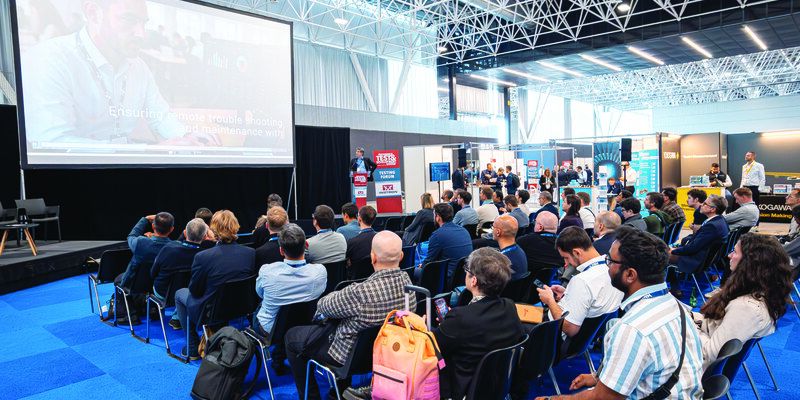
Both specialist forums run alongside the established Testing Forum, whose agenda is curated by the editorial team behind Aerospace Testing International magazine. Across two days it covers flight test, certification, data, instrumentation, structures and emerging aircraft technologies, and returns repeatedly to the methods that create capacity.
Adrian Neve, head of the QinetiQ flight test organization, will explain operating under permit to fly for the test and evaluation of new technologies. Carlos Santos of GE Aerospace describes the acquisition and conversion of a former Japan Airlines 747 into the company’s new flying test bed.
Kristof Risse of DLR’s Virtual Product House sets out the digital design and testing of high-aspect-ratio wing moveables, and Helen Leadbetter of the UK Civil Aviation Authority (CAA) returns to detail the CAA’s Hydrogen Challenge, the cross-industry program working to close safety and certification gaps around hydrogen propulsion.
Standardization and reuse, often the quickest and most productive route to throughput, also feature. Bertrand Riveill of EUROCAE will explain how consensus standards are supporting new types of aircraft, and Dušan Kalanj will make the case for openDAQ as a route to genuine interoperability between test and measurement hardware and software.
Data, automation and AI
Automation and AI are rapidly becoming part of the answer to the capacity question, and the 2026 program covers progress in their adoption into aerospace testing.
Austin Spiegel, CEO of Sift, will show how automated data infrastructure is compressing hardware-in-the-loop and flight test review timelines, in an environment where engineers have historically moved between disconnected tools and reconstructed context after every run. Carlos Lagoa and Matthias Baert of Marple present a modern data lake approach for flight test and certification flights, and Jean-Frédéric Gauvin of Dolphin Interconnect Solutions shows how PCIe expansion and networking underpin the scalable, low-latency test architectures that AI and hardware-in-the-loop applications demand.
Jon Eklof, chief data and analytics officer at GKN Aerospace, opens the Testing Forum by asking how teams capable of supporting AI development are actually built. This is followed by an NI-hosted panel on the first afternoon that brings test engineers together to examine what AI means for the discipline.
Test is an evidence-based discipline and a safety barrier that the aviation, space and defense industries depend upon. AI, machine learning and other forms of automated analysis ask it to accept inference. The questions of what an automated system does not flag, and who remains accountable for it, are the ones worth being in the room for.
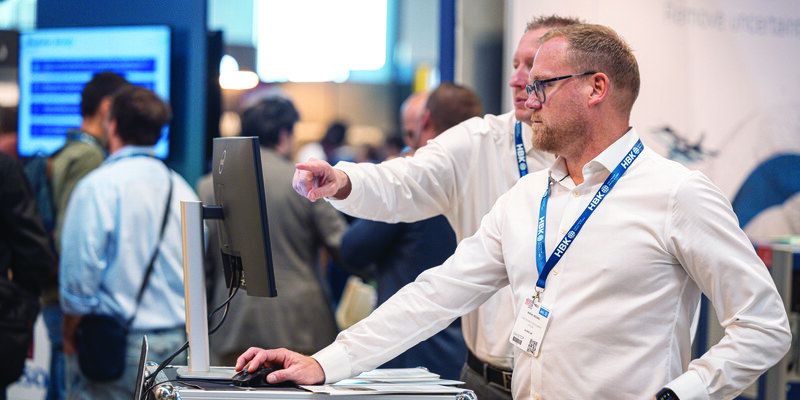
Looking toward the future
The Aerospace Test & Development Show 2026 is more than an exhibition and a conference. It is the world’s preeminent event for aerospace testing, a space where the industry works out whether the machinery of verification can keep pace with what is being asked of it. The demand is arriving whether test is ready or not, and the answers are spread across several fronts: capacity and infrastructure, methods and certification, automation and data, people and knowledge, and standardization and reuse. None of them closes the gap alone, and safety is the one thing in the equation that does not scale down.
For anyone working in aerospace test, two days in Toulouse this September is the most efficient way to see all five at once, learn from the engineers already doing it, and contribute to a conversation the industry cannot afford to get wrong. Make sure you are part of it.
The Aerospace Test & Development Show 2026 takes place September 29-30, 2026 in Hall 7, MEETT Toulouse, Concorde Avenue, 31840 Aussonne, France. The three forums are free to attend for readers and industry professionals; register at www.aerotestdevelopmentshow.com.
Agenda highlights
- Jon Eklof, chief data and analytics officer, GKN Aerospace, will ask how the industry builds the high-performing engineering teams needed to support AI development.
- Carlos Santos, chief consulting engineer for flight test, GE Aerospace, will describe the acquisition and conversion of a former Japan Airlines 747 into the company’s new flying test bed.
- Helen Leadbetter, technical strategy lead – zero emission flight, UK Civil Aviation Authority, will detail the CAA’s Hydrogen Challenge and the safety and certification gaps it is working to close.
- Thomas Grohs, head of unmanned aerial systems, Airbus Defence and Space, will explain how test must change for system-of-systems concepts, unmanned platforms, autonomy and AI-enabled functions.
- Austin Spiegel, CEO, Sift, will show how automated data infrastructure is compressing hardware-in-the-loop and flight test review timelines.
Exhibitor highlights
datatel Telemetry
Stand 710
Demanding aerospace testing requires more than off-the-shelf hardware. At the Aerospace Test & Development Show, datatel Telemetry highlights its tailor-made telemetry solutions designed for use in extreme environments.
Datatel has 50 years of engineering experience and deep expertise delivering customized solutions for the most challenging of aerospace tests. The company’s hardware portfolio uses a modular and sustainable architecture to give maximum flexibility for customers and ensure systems adapt to future testing needs.
With the ability to deliver advanced project management, datatel’s engineers are able to thoroughly understand a client’s requirements from the initial design phase. Meanwhile the seamless technical support they deliver goes well beyond system delivery, offering lifelong partnership. The company’s team is ready to help you reduce validation cycles and guarantee reliable rotating sensor-data transmission. Datatel Telemetry is offering live demonstrations at their booth, with experts available to discuss your specific requirements.
AVL List
Stand 315
AVL List, headquartered in Graz, Austria, is one of the world’s leading mobility technology companies for engineering, simulation, and testing across the aerospace, automotive, marine, and energy sectors.
Based on extensive in-house research, AVL develops innovative technologies and development tools for green, safe, and sustainable mobility. AVL supports international partners and customers in their sustainable and digital transformation – with a clear focus on electrification, software, artificial intelligence, and automation.
With 12,000 employees, more than 90 locations, and over 45 tech and engineering centers worldwide, AVL is shaping the future of mobility.
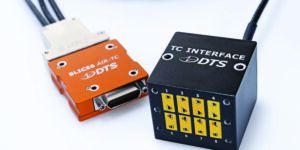 DTS – SLICE6 AIR-TC
Stand 509
Visit DTS at the Aerospace Test & Development Show to see the SLICE6 AIR-TC, a thermocouple-specific acquisition system offering more channels in less space at a lower cost per channel. SWaP-optimized, the SLICE6 AIR-TC packs 24 thermocouple channels into a 42 x 42mm footprint, ideal for flight test applications, including hypersonic programs where size and weight are critical.
The system features three 8-channel interface blocks supporting Type K, S, T, and E thermocouples, each with onboard signal conditioning, cold junction compensation, Butterworth filtering, and 16-bit A/D conversion. Data output is IRIG 106-compliant, including Chapter 10, simplifying integration with existing flight test systems.
The SLICE6 AIR-TC operates within the SLICE6 AIR platform or integrates with existing flight instrumentation, offering flexibility for new and legacy programs.
Head Acoustics
Stand 502
Acoustics and structural dynamics are key factors in developing modern aerospace systems. Whether analyzing vibrations and structure-borne noise, optimizing sound characteristics in aircraft cabins and cockpits, or evaluating perceived sound quality, precise measurement data provide the foundation for high-performance, safe, and comfortable products. At the same time, increasing demands on development efficiency require a holistic understanding of acoustic and structural dynamic behavior.
For 40 years, Head Acoustics has developed hardware and software for sound and vibration analysis as well as psychoacoustics. Development and test engineers can objectively capture acoustic and structural dynamic behavior, analyze complex sound and vibration phenomena, and optimize acoustic performance with Head Acoustics’ products. By combining highly accurate measurement technology with psychoacoustic evaluation methods, the company translates objective measurement data into meaningful insights into human sound perception.
From aircraft manufacturers and suppliers to research institutions, leading organizations across the aerospace industry rely on Head Acoustics’ measurement and analysis expertise.
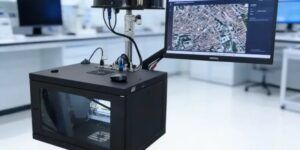 NOFFZ
NOFFZ
Stand 117
As drones become increasingly common across commercial, industrial, and military applications, protecting airspace from unauthorized unmanned aerial vehicle (UAV) activity has become a critical priority. Effective drone detection systems must identify, track, and classify drones accurately, even in complex operational environments.
RF-based detection has emerged as a reliable approach, providing early warning capabilities without direct visual contact. By monitoring drone communication signals, these systems can detect both the drone and its operator. The solution combines wideband RF monitoring, real-time signal analysis, and FPGA-accelerated processing to deliver precise drone identification. Covering frequencies from 70MHz to 6GHz, the solution provides 360° situational awareness and supports protocol decoding, including DJI telemetry data.
To address evolving UAV threats, NOFFZ is expanding detection capabilities through sensor fusion, integrating technologies such as radar and acoustic cameras. This multi-layered approach enhances detection reliability and ensures readiness for future drone technologies.
Rumul
Stand 1007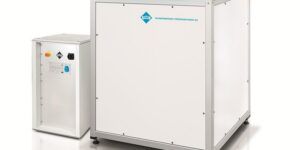
For more than 60 years, Rumul has provided resonant fatigue testing machines for fast, efficient and precise fracture toughness and fatigue testing of material coupons and components. The machines cover load capacities from 5kN to 750kN and testing frequencies from 40 to 260Hz, rising to 1,000Hz with the Gigaforte.
The Swiss company has built more than 700 new resonant machines and modernizations in that time, among them upgrades to legacy Amsler and Schenck pulsators. The range spans the Mikrotron, Testronic and Vibroforte machines, the Cracktronic torsional system, Fractomat crack-length measurement and temperature chambers, and is headed by the Gigaforte 50, the first resonant machine to reach 1,000Hz.
High testing frequency means fast results. Low energy consumption, combined with no wear parts and no maintenance, means low running costs. And honest customer support means low blood pressure.
 Averna Powered by Spherea
Stand 401
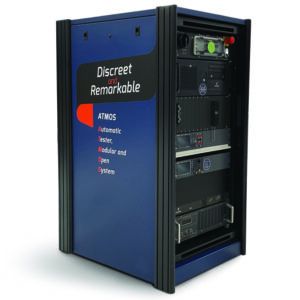
ATEC ATMOS is a compact, open, and modular avionics test platform designed for both production and maintenance environments. Engineered for flexibility, ATEC ATMOS enables seamless integration with existing systems while supporting third-party hardware and software, helping organizations maximize the value of their test investments.
Built with an open, non-proprietary architecture, the platform supports the reuse of legacy test programs, reduces vendor lock-in, and provides a future-proof foundation for evolving test requirements. Its scalable design delivers a lower total cost of ownership, optimized spares management, and reliable, repeatable testing across a wide range of avionics, sensor, and actuator applications.
Stop by for a closer look at how ATEC ATMOS can streamline test operations, improve efficiency, and support long-term modernization strategies. The company’s experts will be available to discuss your specific challenges and show how this versatile platform can help accelerate your testing capabilities while maximizing ROI.
Micro-Measurements
Stand 522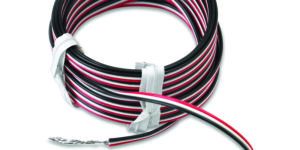
Micro-Measurements enables aerospace engineers to obtain reliable strain data to validate airframes, propulsion systems, and critical flight components. The company’s precision strain measurement solutions support a range of aviation, space and air defense applications, including aircraft wing and fuselage structural validation, engine and propulsion system stress testing, composite material performance analysis, flight test instrumentation, and structural load monitoring.
Micro-Measurements offers precision strain gages, high-temperature sensors, rosette configurations, and data acquisition systems for experimental stress analysis, component testing, and structural validation in demanding conditions. Used in laboratories, production facilities, and extreme operating environments, its solutions provide critical data that supports regulatory compliance and certification, help improve safety and performance, extend asset life, and increase service intervals.
With decades of expertise, Micro-Measurements delivers repeatable accuracy, robust sensor performance, and engineering-level support trusted by aerospace OEMs and research laboratories.
 Dewesoft
Stand 412
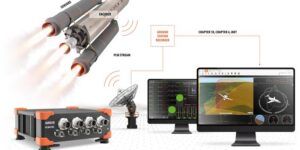
Dewesoft makes rugged instruments for testing spacecraft and aircraft, including VTOLs, eVTOLs, and drones. The company will present its line of DAQ instruments that record high- and low-speed analog data, digital data, video, telemetry data, ARINC 429, MIL-STD-1553, IRIG, inertial navigation systems (INS), and GNSS systems.
Dewesoft offers a software solution for any Chapter 10/11 file or data stream, supporting Chapter 7, iNET, TMoIP, and Ethernet streams, and provides a turnkey ground station solution with server/workstation capabilities. Dewesoft KRYPTON modules are shock-, water-, and dust-resistant and operate in environments from -40 to 185°F (4.4 to 85°C).
SIRIUS XHS samples up to 15MS/s per channel for transient and high-speed applications. The embedded Linux-based OBSIDIAN line runs without intervention for extended periods, combining 20kS/s acquisition with real-time control, EtherCAT, XCP over Ethernet, OPC UA, plus remote monitoring and control via the free DewesoftX tablet and smartphone app.
 dSPACE
Stand 510
Around the world dSPACE is involved in the entire development process for electronic control systems. Hardware and software tools from dSPACE play a vital role in giving aerospace engineers the required tools to set up high-performance development environments and test benches.
Whether it is function development via rapid control prototyping, code generation, software-in-the-loop and hardware-in-the-loop testing, or system integration on test benches, dSPACE offers powerful solutions. Typical use cases range from controllers for electric or hybrid propulsion, flight control, more electric aircraft systems, AI-based functions for autonomous systems, satellites, or launch vehicles.
dSPACE products make it easy to integrate code as well as simulation models. This way unit or system testing can be executed earlier in the development process with the support of a comprehensive workflow and easy test system configuration.
EvoMesure/Scanivalve
Stand 410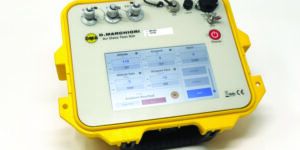
Redefining portable air data testing, the MPS63 is the latest evolution of DMA Aero’s trusted MPS43 Air Data Test System (ADTS). Developed for today’s aerospace professionals, it delivers exceptional performance in a compact, lightweight design that simplifies transport and operation without compromising capability.
Built for demanding aerospace environments, the MPS63 offers measurement capability up to Ps ≥ 55,000 ft and Pt ≥ 700 knots. A hermetically sealed power switch enhances environmental protection and long-term reliability, while its rugged construction is designed to withstand the rigours of daily maintenance operations. An extended two-hour internal battery provides greater flexibility for field and hangar testing, and its compact footprint delivers a level of portability rarely found in conventional ADTS equipment.
Combining precision, durability and ease of use, the MPS63 helps maintenance teams improve efficiency while meeting the highest aerospace standards. Compact, capable and cost-effective, it sets a new benchmark for portable air data testing.
 HBK
HBK
Stand 608
HBK empowers engineers to design, test, and validate with speed and precision. The company’s advanced sensors, DAQ systems, and analysis tools support every stage of the product life cycle – from concept and simulation to certification and maintenance. HBK helps reduce time-to-market through simulation and hardware-in-the-loop testing, while ensuring compliance with evolving noise, vibration, and emissions regulations. Its solutions enable predictive maintenance, structural integrity testing, navigation and real-time monitoring.
Whether you’re developing electric propulsion systems, eVTOLs, or enhancing lightweight composite structures, HBK delivers the precise data and insights needed to lead the market. Its technologies support everything from vibration and noise certification to electric power testing, FMEA and inertial and wireless sensing solutions.
Trusted by global aerospace leaders, HBK can help you reduce costs, improve performance, and bring high-quality, reliable aerospace products to market with confidence.
 Kistler
Stand 419
As aerospace structures become lighter and increasingly performance critical, precise acceleration measurement is essential to ensure reliability and safety. Kistler delivers advanced solutions tailored to these challenges, enabling aerospace engineers to capture highly accurate data with confidence.
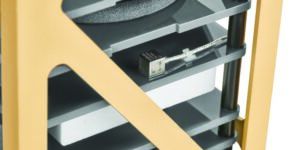
At the forefront is KiVibe, the world’s lightest triaxial accelerometer. With a mass of just 0.9g and an ultra compact 6mm cubic design, KiVibe minimizes mass loading while offering measurement ranges down to 100 g and a broad frequency response. Features such as ground isolation, a low outgassing integral cable, and TEDS simplify integration and ensure reliable operation. Powered by Kistler’s in-house grown PiezoStar crystal, KiVibe delivers market-leading thermal stability, making it ideal for environmental testing and sensitive structures such as satellite solar panels.
For cryogenic applications, the 8796A sets new standards. This 11mm cube triaxial accelerometer combines robust performance with easy mounting and outstanding thermal stability, also enabled by PiezoStar technology. Completing the portfolio, the proven 8763B and 8766A sensors provide dependable performance across a wide range of aerospace testing scenarios, ensuring engineers have the right solution for virtually any challenge.
Torquemeters
Stand 305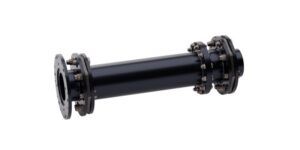
Celebrating its 75th anniversary in 2026, Torquemeters continues to support its global aerospace, automotive and industrial clients, providing customized high-precision torque measurement, high-performance driveline, and turnkey test-rig solutions.
A serial innovator since 1951, this year Torquemeters launched a range of high-speed flywheels (rated to 35,000rpm) as drop-in legacy replacement systems for existing helicopter turboshaft engine testbeds and a new standardized configurable TorDrive discpack coupling range rated to 26,000Nm and 57,000rpm, complementing its long-established high-performance TorDisc diaphragm coupling product (100,000Nm and 85,000rpm). With further new driveline and torque measurement products launching in autumn 2026, Torquemeters is continually expanding its product portfolio to support customers as a trusted, reliable and expert partner for customized test driveline equipment.
This support was recently enhanced through extension of its quick-turnaround ILAC & UKAS-accredited calibration service to calibrate third-party torque sensors, including HBM/HBK models, in the UK and Europe.
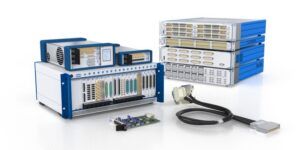 Pickering Interfaces
Stand 317
Pickering Interfaces understands the testing challenges faced by aerospace and defense engineers, where long operating life, high reliability, and harsh environments demand the most robust test solutions.
The company designs and manufactures modular signal switching, sensor simulation, and instrumentation products for electronic test and verification, helping engineers design, deploy, and sustain automated test systems with confidence.
Offering the industry’s broadest range of PXI, PCI, LXI, and USB switching and simulation products, backed by 20 years of product support and custom design capabilities, Pickering helps reduce test system complexity, accelerate development, and deliver reliable, future-ready test solutions.