

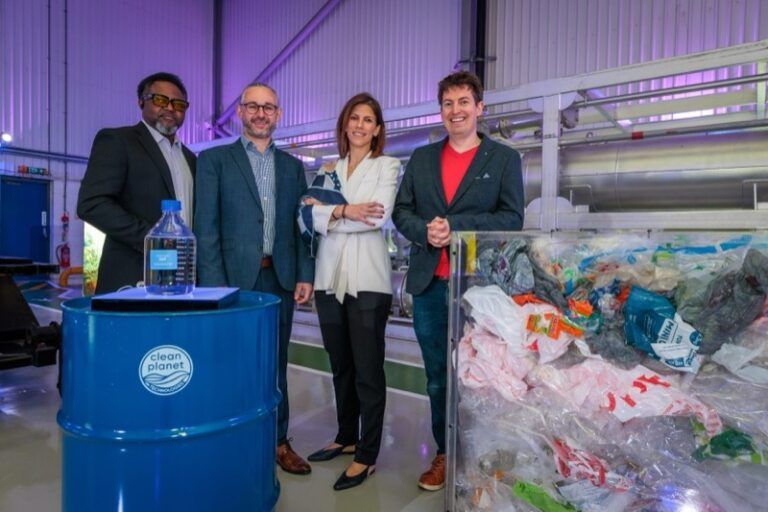
A pilot facility designed to convert hard-to-recycle waste plastic into sustainable aviation fuel has opened in the United Kingdom, in what the operator describes as the world’s first plant of its kind.
The Sustainability Innovation Centre, operated by Clean Planet Technologies, is based at Discovery Park in Sandwich, Kent. The plant will research and develop conversion technologies for non-recyclable plastic waste, beginning with a process that converts waste plastic into sustainable aviation fuel (SAF).
The pilot facility integrates the main process stages into a single controlled system optimized to transform hard-to-recycle plastics into SAF. It has been designed to support fuel and feedstock testing, validation and progression through the American Society for Testing and Materials (ASTM) qualification process, with funding already in place from the Department for Transport-funded UK SAF Clearing House.
Katerina Garyfalou, chief operating officer at Clean Planet Technologies, said, “The Sustainability Innovation Centre is set up to demonstrate our patented waste-plastics-to-SAF process at pilot scale, supporting fuel testing, validation and progression.”
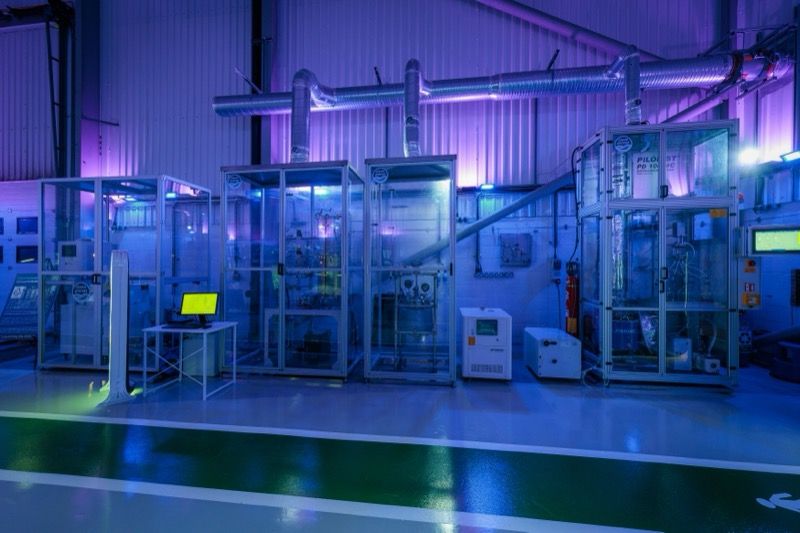
Clean Planet Technologies’ process shreds and pre-processes the waste plastic before feeding it into one of the facility’s two pyrolysis units. Inside an oxygen-free environment, the plastic is thermocatalytically converted into a synthetic crude oil.
The crude is then purified, distilled and upgraded through a patented hydroprocessing system that uses hydrogen to remove impurities and bring the fuel within SAF specifications.
The larger of the centre’s two pyrolysis units can process up to 1 ton of plastic per day, according to the company.
Andrew Odjo, CEO at Clean Planet Technologies, said, “Our process first heats the waste plastic with a chemical reaction to turn it into a liquid, rather than burning it. This is then treated with our patented process to remove impurities and create SAF that meets stringent commercial aviation specifications.”
The fundamental parts of the process, which are pyrolysis, purification, distillation and hydroprocessing are already in independent commercial use elsewhere, said Clean Planet Technologies, meaning scaling up the integrated system should not present a major hurdle.
Garyfalou added, “The important thing is that our pilot facility will support the growth of others, helping the UK to meet its SAF mandate. UK government policy to decarbonize aviation fuel states that 2% of UK jet fuel demand must be SAF, increasing to 10% in 2030 and 22% in 2040.”