

Stratasys has been awarded funding to develop technology that captures quality and process data while a part is being produced, an in situ process monitoring technology it belives will help manufacturers scale additive manufacturing production and reduce reliance on costly post-build inspection.
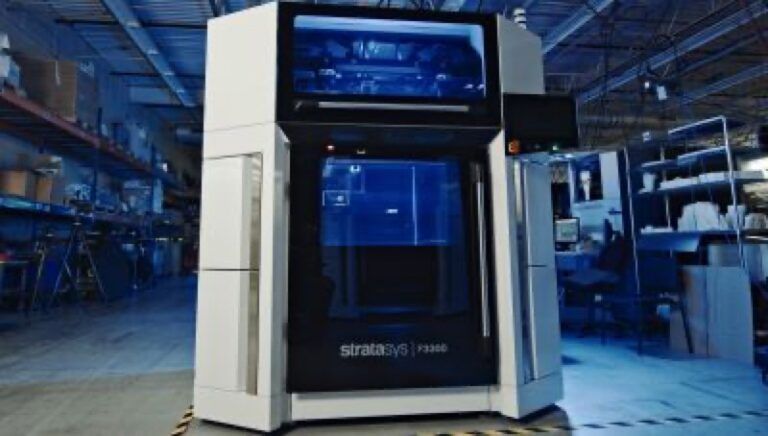
The two year, US$7.8m award comes through the 2026 America Makes and Department of War (DoW) Organic Industrial Base (OIB) Modernization Challenge, which supports manufacturing technology advances for the US defense industrial base. It will fund development of on-site quality assurance capabilities for Stratasys’ F3300 and F900 industrial fused deposition modeling (FDM) platforms.
Manufacturers in regulated industries such as aerospace and defense currently rely on extensive post-print inspection and qualification before parts can be deployed, one of the main barriers to wider adoption of additive manufacturing in production environments. Capturing quality data during the build process is intended to help reduce inspection burdens, compress qualification cycles and add production capacity with greater confidence.
“Stratasys’ work to advance in situ monitoring on established polymer production platforms addresses a critical part of that challenge, building greater trust in the manufacturing process and generating the data needed to support qualification,” said John Wilczynski, executive director of America Makes.
The resulting capabilities are expected to support manufacturers across defense, aerospace, commercial aviation and other regulated industrial markets where traceability, process control and part qualification are critical. For commercial aviation manufacturers, in situ quality assurance could provide a clearer route to scaling production while reducing the cost and complexity of traditional inspection workflows.
Development work will focus on improving visibility into the additive manufacturing process, including the ability to identify potential anomalies during production. The resulting documentation is intended to help manufacturers improve production consistency, reduce qualification bottlenecks and accelerate adoption of additive manufacturing for production applications.
Rich Garrity, chief business unit officer at Stratasys, said, “When production teams have access to quality data during the build process, they can qualify applications with less friction, expand production capacity more efficiently and integrate additive manufacturing more effectively into demanding production environments.”
The availability of real-time, in-process quality data could help shift additive manufacturing from an application-by-application qualification approach to a more scalable production model, enabling manufacturers to add capacity faster.