

The European Space Agency has signed the first contracts under its European Launcher Challenge, an initiative to expand launch service supply and strengthen Europe’s independent access to space.
A European Space Agency (ESA) evaluation board assessed each company’s financial and technical proposals before the contracts were awarded. The agreements let the providers unlock funding in stages as they meet defined milestones.
Géraldine Naja, ESA’s director of space transportation, said, “This milestone kicks off the European Launcher Challenge, encouraging competition among European launch providers. Through this funding, ESA is supporting the development of European launch capabilities, helping to strengthen Europe’s competitiveness and broaden the range of launch services available to institutional and commercial customers.”
Three providers have signed contracts so far, with a fourth award nearing completion. Germany-based Rocket Factory Augsburg (RFA) is developing its three-stage RFA One vehicle for launch from a pad at SaxaVord in the UK.
About 98ft (30m) tall and 7ft (2.15m) in diameter, RFA One targets up to 1,100lb (500kg) to a 311-mile (500km) sun-synchronous orbit in its current configuration. The contract is worth €186.9m, mainly funded by Germany with a UK contribution.
Spanish company PLD Space flew its Miura 1 technology demonstrator in 2023 and is using it as the basis for the Miura 5 launcher and its associated infrastructure. Miura 5 will fly from Europe’s Spaceport in French Guiana and is designed to carry up to 1,190lb (540kg) to a sun-synchronous orbit.
The company plans upgraded Miura 5 capabilities for institutional and commercial missions needing greater payload and orbital reach. Its contract amounts to €158.9m, mainly funded by Spain with a German contribution.
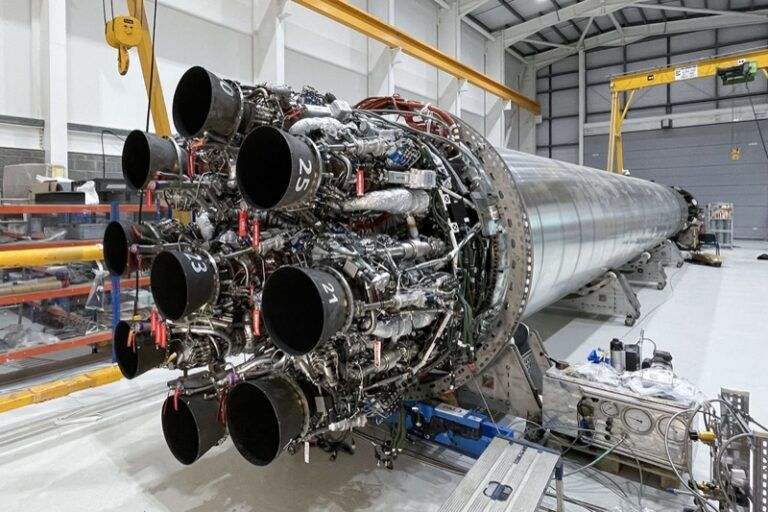
Germany-based Isar Aerospace is developing its Spectrum launcher, which first flew in 2025 for 30 seconds from a dedicated pad at Andøya Spaceport in Norway. The two-stage vehicle is 92ft (28m) tall and 6.5ft (2m) in diameter and, with 10 engines in its current configuration, targets up to 2,200lb (1,000kg) to low Earth orbit.
A second Spectrum vehicle is preparing to launch from Andøya, carrying the payloads the company aims to place in orbit on the qualification flight. Isar Aerospace’s contract totals €197.8m, mainly funded by Germany with contributions from Austria and Norway.
The award process with MaiaSpace is nearing completion and is expected to resume in the coming weeks, with ESA to provide an update once it concludes. Under the challenge, each provider must achieve an orbital launch before 2028 to demonstrate its ability to deliver.
Lucia Linares, ESA’s head of strategy and launches for space transportation, said, “With these contracts, ESA is turning ambition into action. ESA has set the Challenge and created the conditions for new European launch providers to accelerate their ramp-ups and grow. Now it is up to the challengers to prove they can deliver reliable launch services for Europe and compete: getting to space is not easy and never guaranteed.