

Imagine operating your personal VTOL from your driveway and transitioning seamlessly to open skies. With the FAA Modernization of Special Airworthiness Certification (MOSAIC) ruling, the dream of taking off from your home, avoiding road congestion, and flying directly to your destination is one step closer to reality.
The MOSAIC rule changes how VTOLs can be certified for personal use. The ruling, finalized in July last year, removes older maximum weight limits for Light Sport Aircraft (LSA) in favor of performance-based metrics, paving the way for owner-operated VTOLs. The MOSAIC ruling allows for the certification, production, and operation of personal VTOLs as LSA, offering a faster, simpler route to market.
MOSAIC significantly expands the definition of an LSA and widens pilots’ privileges. The previous 1,320 lbs (600kg) maximum take-off weight (MTOW) restriction for LSAs is eliminated. The aircraft’s eligibility is instead based on performance criteria such as a higher maximum airspeed of 287mph (460km/h) and a higher maximum stall speed of 70mph (112km/h).
Crucially, the inclusion of powered-lift aircraft into the MOSAIC ruling allows eVTOLs, multi-copters, and e-helicopters to be certified within the LSA category.
The ruling allows personal VTOLs designed for up to two occupants to obtain Special-LSA Certification if they meet industry standards. Under the new ruling, the pilot privileges and operational changes took effect on October 22, 2025, while new aircraft certification provisions for manufacturers go into effect on July 24, 2026.
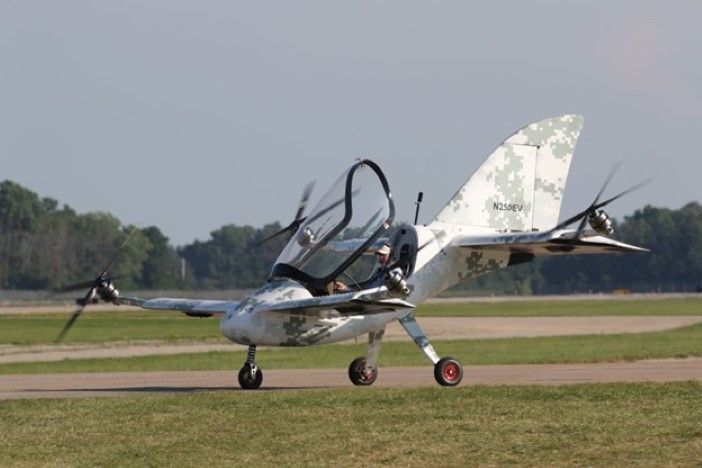
Rather than the standard Production Certification (PC) and Type Certification (TC) required for commercial air taxis, manufacturers can use a Statement of Compliance (SOC) process under the new 14 CFR Part 22 code for personal VTOLs. Sport pilots will be eligible to fly new LSA-certified aircraft, enabling a much larger market for recreational flying.
Another pathway for personal eVTOLs is the FAA’s Part 103 regulations, offering a faster, non-certified approach. A single-seater VTOL certified under Part 103 must have an empty weight of less than 254 lbs (115kg), a maximum fuel capacity of 5 US gallons, and a maximum speed of 63mph (101km/h) in level flight. The eVTOL must adhere to daytime (VFR -visual flight rules) regulations and be used for recreational or sport purposes.
You do not require a pilot license, certificate, or aircraft registration to operate an ultralight vehicle that meets FAA Part 103 regulations in the USA.
Flight testing personal VTOLs
Several manufacturers, such as Israel’s AIR, the UK’s Skyfly, and California, USA-based Pivotal, are testing their VTOLs to meet the updated requirements, avoiding complex flight test programs in favor of faster and simpler criteria.
Apart from structures and critical control systems, a range of flight characteristics must be tested for certification of personal VTOLs. Some of the key elements that must be flight tested under the MOSAIC rule include:
Validation of control systems
Simplified vehicle operations enabled on personal VTOL aircraft allow control systems to handle aircraft stability. The MOSAIC ruling requires the eVTOL aircraft to be consistently and predictably controllable and maneuverable under all loading conditions during all phases of flight.
The systems must be validated across the flight envelope and a range of parameters to ensure the aircraft remains stable even if one motor fails. With the loss of a power source, the aircraft should not require exceptional piloting skill, alertness, or strength to maintain directional control.
Moreover, control surfaces must adhere to permissible aircraft weight and center of gravity combinations, particularly during complex hovering routines. The ASTM consensus standards provide foundational guidance crucial for safe operations during vertical and forward flight.
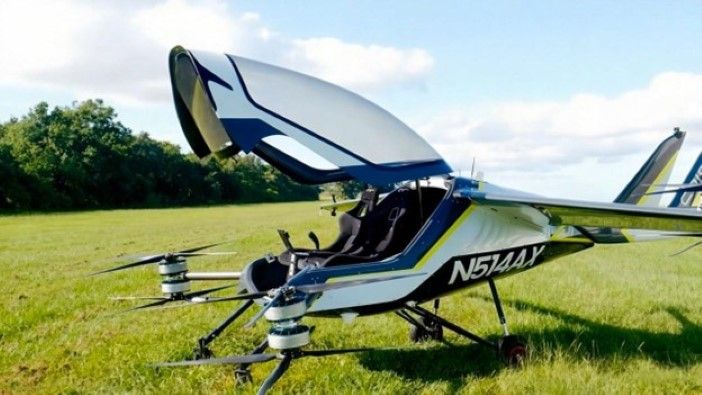
Manufacturers also demonstrate that the VTOL aircraft can land safely even with the failure of multiple propellers or motors. A VTOL aircraft certified in the LSA category must have all instruments and equipment necessary for safe flight, including those necessary for systems control and management.
Battery performance and reliability
Many personal VTOL aircraft feature distributed electric propulsion to achieve sufficient power while ensuring safety through redundancy. The propulsion system must feature intuitive, simple, and non-confusing controls to allow safe and continued flight even if a component or a system fails.
The aircraft’s battery management system (BMS) is thoroughly tested for consistent performance across all phases of flight. The tests verify battery voltage, temperature, and output power to prevent in-flight failures.
The reliability of the BMS relies on endurance testing through reproducibility and repeatability. Manufacturers must develop standards for energy storage systems to ensure safe, continuous power during all phases of flight. Battery drain testing proves that sufficient power is provided for the specified flight time and that a sufficient safety margin is available. The tests must show a safety margin for hover-landing, as mandated for LSA certification.
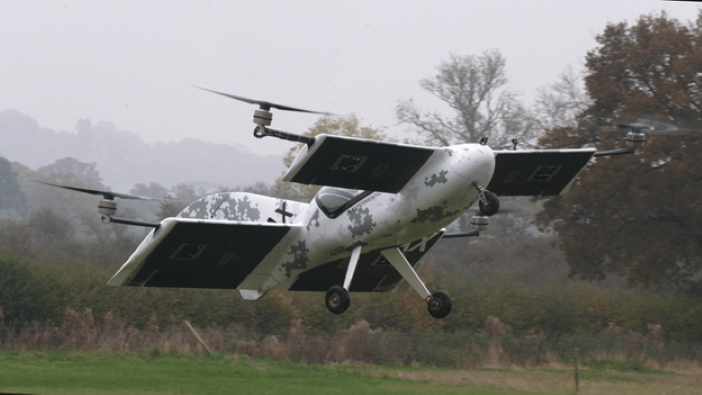
Transition from hover to forward flight
This is one of the most critical parameters for VTOL flight testing under the new pathway. The certification criteria require powered-lift to have a known minimum safe speed for each flight condition encountered in normal operations to maintain controlled flight.
Whether automated or pilot-commanded transitions, the design must comply with appropriate speed regulations for different flight conditions. The ruling requires manufacturers to conduct transition corridor mapping – finding a precise transition corridor for safe operations.
The speed, altitude, and power at which the aircraft can safely transition from vertical thrust flight to wing-based forward flight are rigorously tested. Similarly, parameters to revert from forward flight to vertical thrust must be defined and tested. Fail-safe mechanisms are put in place and tested to ensure flight control systems follow the precise transition routine.
Structural integrity of aircraft and systems
Extensive ground and flight testing is conducted to validate that the aircraft structures, including materials, can withstand varying flight parameters. The design and construction of the VTOL must provide sufficient structural integrity to enable safe operations within the aircraft’s flight envelope throughout its intended life cycle.
The structure must also withstand ground loads during the towing of the aircraft. Moreover, the structural integrity of rotors and control systems during high-load hovering must also be tested, specifically in reference to impact with foreign objects, including bird strikes.
Infrastructure support for personal VTOLs
The new testing standards also take into account infrastructure requirements such as location, capability, and environment for vertical take-off and landing. The design, planning, and operational performance of areas that support personal VTOL operations are tested for conformance.
Where applicable, landing areas, terminal facilities, charging stations, and maintenance facilities are standardized for safe Advanced Air Mobility (AAM) operations. Moreover, the VTOL design must safely accommodate all environmental conditions likely to be encountered during its intended operations.
Market leaders leveraging MOSAIC
Companies in the personal VTOL market are leveraging the interim, experimental, and impending LSA certification status to conduct testing on their eVTOL aircraft. These are some of the leaders in this nascent market.
Air
Last year, Israel-based Air secured the FAA experimental airworthiness certificate for its personal VTOL under the MOSAIC framework. The company is leveraging the new ruling to fast-track the certification of its two-seater Air One eVTOL and is conducting flight testing at its Florida, USA, facility.
Air aims to be the company to certify its eVTOL first under the LSA category, validating flight performance, safety, and real-world operability. Results from the tests will be implemented into the production model to ensure compliance with new regulations.
The Air One will feature a 110 mile (177km) range and a maximum speed of 155 mph (250 km/h), enabling a one-hour flight time per battery charge. Its “Fly-by-Intent” control system, a variant of fly-by-wire electronic control, allows a more intuitive flight experience for pilots.
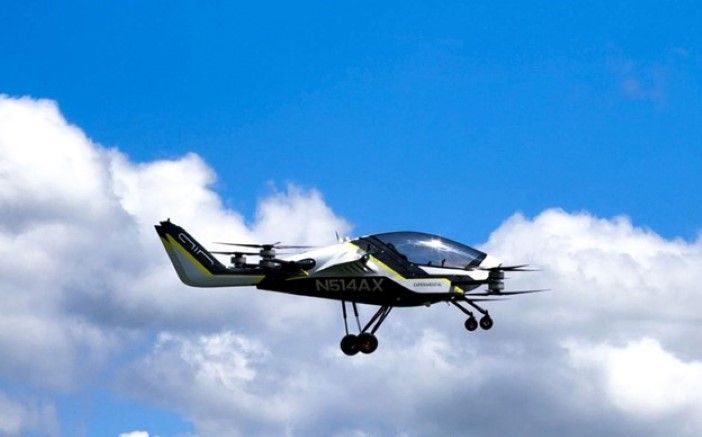
Capable of both vertical and horizontal take-off and landing, the aircraft features wings that are foldable for storage in a domestic garage and is targeting a personal use, leisure, and private ownership market, positioning itself as a “flying sports car” for individuals.
Despite a crash in October 2025 that resulted in the loss of its prototype, Air expected to resume flights at the beginning of this year and to begin customer deliveries later in 2026.
Skyfly
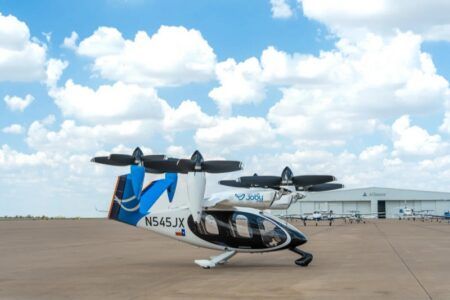
Meanwhile, Skyfly is progressing tests of its two-seat Axe eVTOL aircraft using the new regulations to bypass the intensive Type Certificate process required for air taxis. The MOSAIC ruling aligns with the Axe’s capabilities, allowing for higher stall speeds and no weight limits for the LSA category aircraft.
The tricycle-wheeled Axe has an all-electric range of 100 miles (160km) and an estimated top cruise speed of 100 mph (161 km/h). A hybrid option is under development, which will offer a 300 mile (480km) range.
The two-seat aircraft is powered by eight electric motors – two on each wingtip within a single nacelle and is powered by swappable lithium batteries housed within the fuselage.
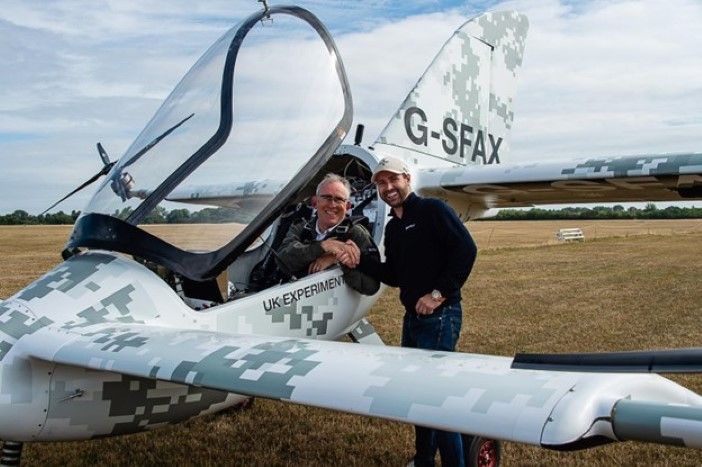
Skyfly relocated Axe testing to the USA last October to benefit from better year-round weather and accelerate the test program. The company is running verification flights to test the aircraft’s propulsion system reliability as well as validate the control systems and onboard safety systems.
At the time of writing, the testing of fly-by-wire and automation systems is well underway, evaluating handling qualities, control-law behavior, and safety-critical flight-control integration. Under the new certification pathway, Skyfly aims to offer Axe to those holding a Sports Pilot Certificate and full pilot licence holders.
Pivotal
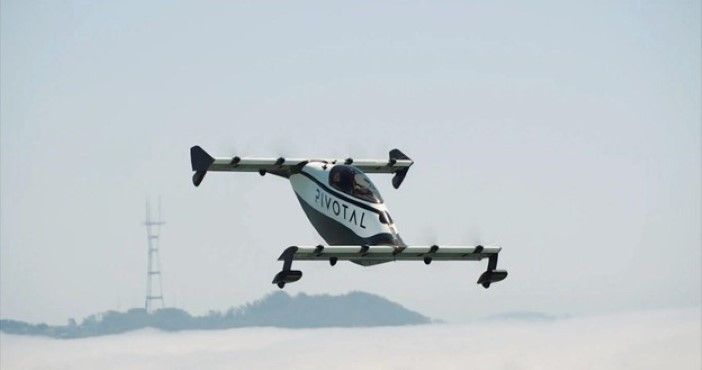
USA-based Pivotal is testing its Helix ultra-light VTOL under the FAA Part 103 pathway and is conducting flights to validate flight control systems, battery performance, and automated landing capabilities for single-seat, daytime, visual (VFR) operations.
The single-person, tilt-rotor aircraft design features fly-by-wire controls and an 8 kWh battery and carbon fiber design, offering 20 miles (32km) of range and a top speed of 63mph (100km/h). While training on the aircraft is mandatory, the ultralight aircraft does not require a pilot’s license.
Jetson
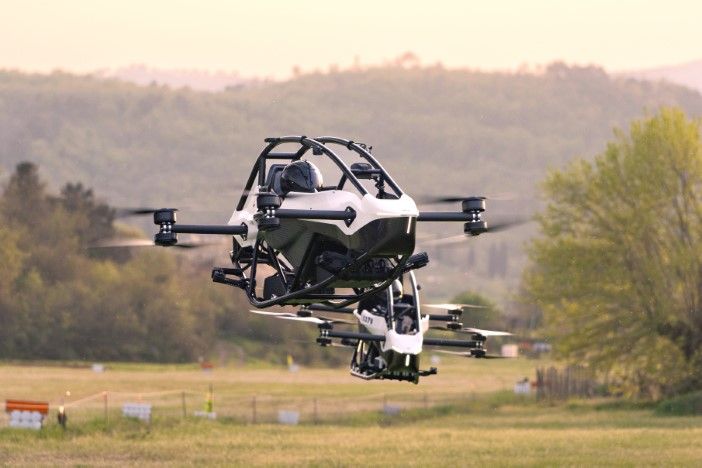
Perhaps the furthest forward company is Jetson with its One multi-rotor eVTOL, which features a distinctive crash-cage design and is aimed at the experience leisure market. The 253 lbs (115kg) Jetson One also falls under FAA Part 103 regulations, and the manufacturer has verified safety systems through a series of ground and flight tests, including controlled flight if one out of its eight motors fails.
Moreover, the fly-by-wire controls with auto-land and the ballistic parachute system have undergone multiple test deployments. The aircraft is capable of a 20-minute flight time, a maximum speed of 63mph (100km/h), and a 2,000 feet per minute vertical ascent rate.
The Jetson One was developed in Poland and Italy. The first vehicle was delivered to high-profile US entrepreneur Palmer Luckey last October, and Jetson says it is sold out of delivery slots for the aircraft until 2028.
Personal eVTOLs developed under new FAA regulatory pathways offer increased accessibility, allowing pilots to operate high-performance, electrically-powered aircraft. MOSAIC expands light-sport aircraft definitions to allow higher-performance, multi-seat, electric-powered aircraft, Part 103 provides a no-license path for ultra-light, single-seat electric aircraft. These regulations enable faster market entry for personal recreation and travel VTOL aircraft, and look set to lead the wider market acceptance of this new aircraft type.