

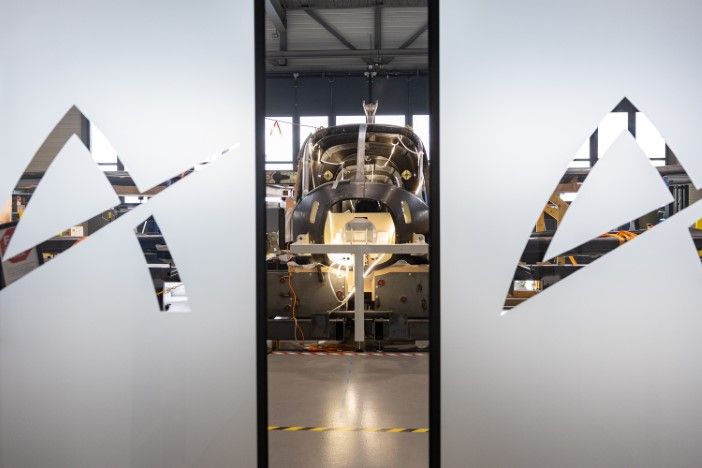
Ascendance has begun final integration of its hybrid-electric propulsion system and avionics suite on the ATEA VTOL aircraft at its facility in Toulouse, France.
The integration phase follows completion of the demonstrator’s composite structure, which was manufactured by aeronautical partner Duqueine Group. The work marks the transition from engineering development to physical assembly of the aircraft’s core systems for Ascendance, which was founded in in 2018 by a team of former Airbus E-Fan project members.
Propulsion and avionics testing
The ATEA’s Sterna hybrid-electric propulsion system, which uses Safran’s ENGINeUS electric motor, has undergone more than 500 hours of bench testing over four years. Ascendance said the testing program validated the architecture’s reliability and performance ahead of integration into the airframe.
Avionics systems and flight control laws were tested through advanced flight simulations incorporating a complete cockpit, integrated onboard systems and ground communications. The simulation campaigns involved both Ascendance test pilots and EASA-certified pilots, contributing to the validation of the fly-by-wire control architecture.
Jean-Christophe Lambert, CEO of Ascendance, said, “ATEA’s entry into its final integration phase is a particularly significant moment for our teams. It brings to life years of design, hybrid-electric propulsion testing, and avionics validation.
“ATEA is not just an aircraft — it is the demonstrator of a complete architecture combining hybrid-electric propulsion, distributed propulsion, and fly-by-wire flight controls.”
Ascendance VTOL applications
The aircraft features a distributed propulsion architecture designed for both civil and defense applications, with potential mission profiles spanning passenger transport, cargo, medical logistics and security operations.
Alongside the ATEA program, Ascendance is applying its Sterna hybrid-electric technologies with partners in the drone sector and civil aviation, validating the hybrid architecture across diverse operational environments.