

A new laboratory for developing and testing electric propulsion systems for satellites and spacecraft has opened at Harwell Science and Innovation Campus in Oxfordshire, UK.
The £3.8 million (US$5.2 million) Disruptive Experimental Electric Propulsion (DEEP) Lab was built by UK-based space technology company Magdrive and partially funded by the UK Government with £1.8 million (US$2.4 million).
While Magdrive will be the lab’s largest user, the facility is open to aerospace companies and academic researchers. Individual rooms and capabilities can be rented separately under pricing models designed to cover operational costs rather than generate profit.
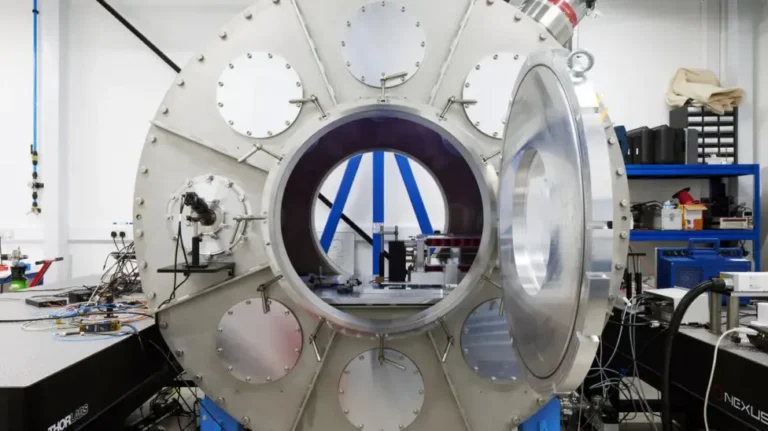
The 10,000ft² laboratory features cleanroom assembly areas, a mechanical prototyping workshop and advanced plasma diagnostic testing chambers. Its centerpiece is a 6.6ft (2m) diameter vacuum chamber for comprehensive thruster testing and validation.
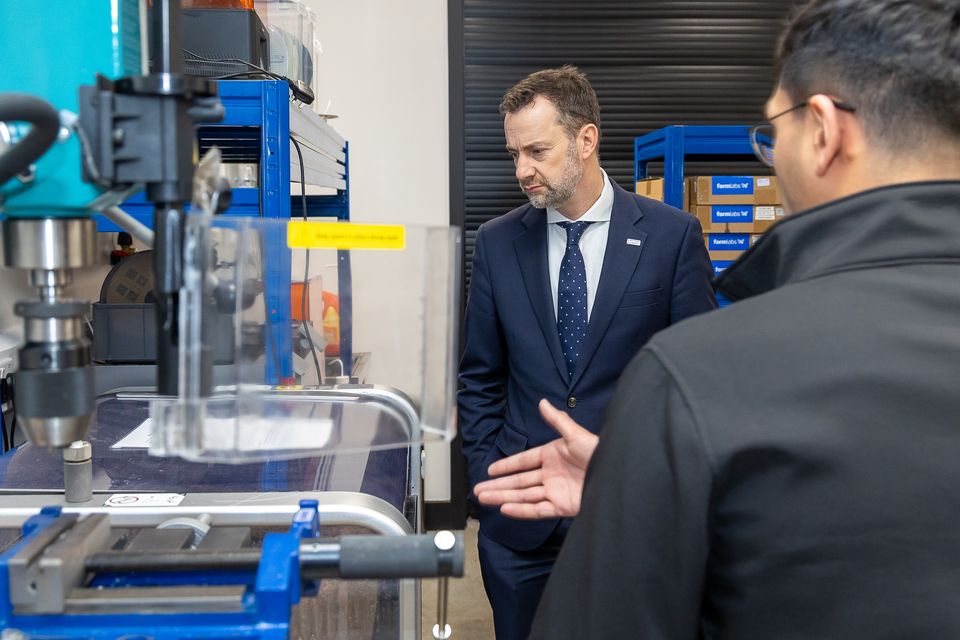
An on-site workshop equipped with a Hurco five-axis machine and 3D printers enables rapid prototyping and iteration. A full-time machinist supports users in operating the specialist equipment, which Magdrive said reduces development timescales.
Magdrive has adapted plasma diagnostics commonly used in the fusion energy industry for electric propulsion applications, enabling users to image and monitor plasma evolution from multiple angles.
Mark Stoker, CEO and co-founder of Magdrive, said, “A huge thanks goes to the UK Space Agency for supporting us setting up a world-class R&D facility. This milestone accelerates the commercialization of our next-generation thrusters.”
Dr Paul Bate, CEO of the UK Space Agency, said, “Electric propulsion is fundamental to the future of satellite technology, and by providing accessible testing capabilities, DEEP Lab will accelerate innovation across the industry. We’re particularly pleased to see this facility supporting startups and smaller companies who previously faced barriers to testing and developing their technologies.”
Founded in 2020, Magdrive has attracted over £10m in funding and is developing next-generation spacecraft propulsion systems. The DEEP Lab is expected to create 50 jobs.