

Lyssandre Rammos won best paper at this year’s Society of Flight Test Engineers (SFTE) European symposium by showing how it can be done well on a general aviation budget.
There are few words in aerospace engineering that focus minds quite like flutter. Flutter is an aeroelastic instability and destructive feedback loop in which aerodynamic forces, structural stiffness and inertia conspire to drive an oscillation that feeds on itself. Left unchecked, it can rip a wing, a tail or a control surface apart in just a few seconds.
Every aircraft that goes to market must prove it is free from the phenomenon across its whole flight envelope. The flight test campaign that delivers that proof is one of the riskiest and most complex exercises the industry undertakes.
Rammos knows the subject well enough to be wary of it. As head of flight test at Aircraft Design Certification (AirDC), a Germany-based, manufacturer-independent design organization, Rammos spends a good deal of time every year chasing down and testing flutter on aircraft that other people have built.
AirDC has no products of its own. It certifies aircraft for customers, mostly in general aviation, where the budgets are nothing like those enjoyed by the makers of airliners or fast jets. The paper Rammos delivered at the 2026 SFTE European symposium, which the chapter voted its best of the year, set out how to test for flutter properly without expensive instrumentation.
Certification campaigns
AirDC’s solution is demonstrated by two real certification campaigns flown last summer and provides a lesson in pragmatism.
Flutter analysis starts on the ground. A structural model predicts the natural vibration modes of the airframe and how each behaves as airspeed climbs. The certification standards, in this case EASA’s CS-LSA for light sport aircraft and CS-23 for normal category types, then require the manufacturer to show that no flutter occurs up to the dive speed (VD), with a sensible margin in hand. The bigger and faster the aircraft, the more the rules ask for. CS-25 and the higher amendments of CS-23 demand that engineers consider failures such as jammed surfaces and adverse conditions on top of the baseline case.
For light aircraft the requirements are fewer, and that, Rammos argues, is where the danger lies. “Flutter flight testing is a very complicated matter, and at the same time a topic that tends to be overlooked or underestimated,” Rammos says. “Especially as you go down to general aviation, to homebuilts and kit planes, it tends to be underestimated.”
An aircraft that comes apart in flight is a bad outcome whatever its category, and the regulators recognize as much. EASA applies what Rammos calls risk-based proportionality, so the lower the category, the simpler the certification basis, but the consequence of getting it wrong never changes.
The trickiest situations arise when the analysis cannot reassure you on its own. That was the case in the first of Rammos’s two campaigns, where the original modal data from an earlier certification was not available to the team.
With the model rebuilt from scratch and carrying unknown amounts of conservatism, the only way to clear the aircraft was to fly it, carefully, in small steps. That meant a build-up approach, edging the envelope outward in speed increments and watching the structural damping at each point before committing to the next. To do that safely you need data, and data needs instrumentation.
The ControlFish
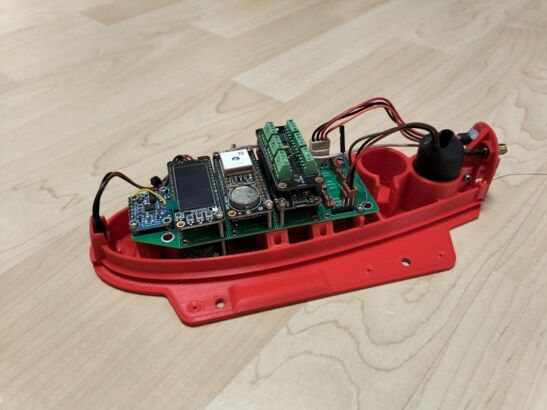
The instrument AirDC reaches for to measure flutter is a compact, self-contained data acquisition unit the team calls the ControlFish. It is about the size of a paperback book and will take almost any sensor you care to bolt to it.
On a flutter campaign that means an inertial measurement unit for accelerations and attitudes, and GPS. The fish can also accommodate strain gauges for stick forces, potentiometers for control positions and pressure ports for airspeed and altitude. For flutter, the GPS clock matters more than the position, because it gives the team a clean way to synchronize everything, even at the high sample rates aeroelastic work demands.
The fish itself is too bulky to sit on a control surface, so AirDC 3D-printed a small clip that attaches a sensor directly to the surface, with the fish tucked nearby to gather the signals. Trigger buttons let the crew mark the start and end of each maneuver, so that finding the right slice of data afterward is straightforward. Run hard, the system reaches about 140Hz, which in practice means reliable identification of modes up to roughly 40Hz once you allow for some variation.
Whether 40Hz was sufficient was not left to assumption. Rammos went back to first principles. The aerodynamic response to a structural deformation lags behind the motion, and that lag depends on airspeed, on a representative length and on the frequency itself, bundled together in a dimensionless quantity called the reduced frequency.
Push that parameter high enough and the aerodynamics can no longer pump energy into the structure, at which point classical flutter cannot occur. Working the relationship backward for the size and speed of the test aircraft, and checking the result with an aeroelasticity specialist, Rammos concluded that modes above about 24Hz were unlikely to be excitable.
The modal analysis had put the modes of interest in the region of 8Hz. The fish, in other words, had bandwidth to spare.
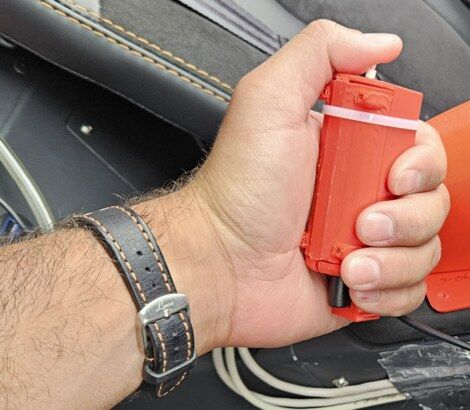
Then came the ground test. The team shook the wings by hand, banged the fuselage, the wings and the tail, and hit the structure with a hammer. They also loaded surfaces and released them in a snap to see what the system could read. It read plenty.
In the air they tried the same ideas, exciting the structure with control doublets and rudder kicks, and found that even through propeller noise and the general hammering of powered flight the excitation came through cleanly.
Rammos is candid about the compromise. “This instrumentation was not the dream instrumentation I would use if someone told me we had a flutter campaign with a blank check,” he says. “We would use different sensors, in different places, and approach it in a very different way. But that was not the campaign. We didn’t have that option, so we used what we had and tweaked it to make it as safe as possible.”
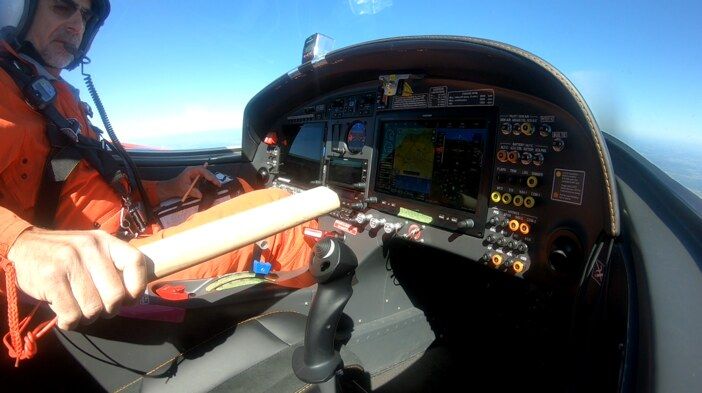
The Lightwing AC4-GT
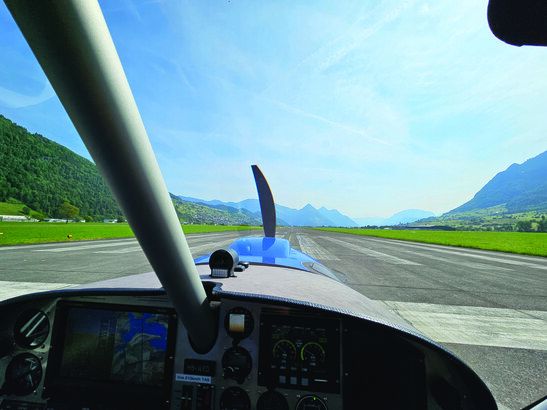
A Swiss-built CS-LSA two-seater that AirDC had helped certify in 2014, the Lightwing AC4-GT is a glider-towing variant with a bigger engine, a different propeller, a higher maximum take-off weight and a higher tow altitude. Each of those was reason enough to re-examine flutter.
A complication was the missing data. Without the original modal analysis, the engineering company running the project had to build a fresh one, and the new analysis threw up several hump modes in the aileron. A hump mode is one that never quite tips into explosive divergence but fails to settle either, sitting at marginal damping across a band of airspeeds.
There was reason to think the new model was conservative in places, given how much had been rebuilt from incomplete information, but the ailerons were not mass balanced, and a marginal mode on an unbalanced surface is not something you wave through on a hunch. It had to be flown.
The build-up ran through 10 speed increments: slow, faster, faster still and fastest. The fish data told the story plainly. At the middle speeds the aileron response was already stretching out, closer to a full period and a half, a sign the team was approaching trouble. By the top speed, though, the damping was still within acceptable ranges, and the aircraft had met the requirement.
The finding came with a warning attached, which Rammos was careful to record. Anyone who later raises this aircraft’s speed or altitude limits should think seriously about balancing that aileron before they do.
The Bristell B23
A few hundred miles away during the same summer, AirDC was flying a Bristell B23 915iS, a Czech-built CS-23 IFR tourer. The job here was very different. Compared with its nearest predecessor, the only real change was the heavier propeller on the tourer, and the flutter-relevant task was to fly to VD and confirm that nothing shook that should not.
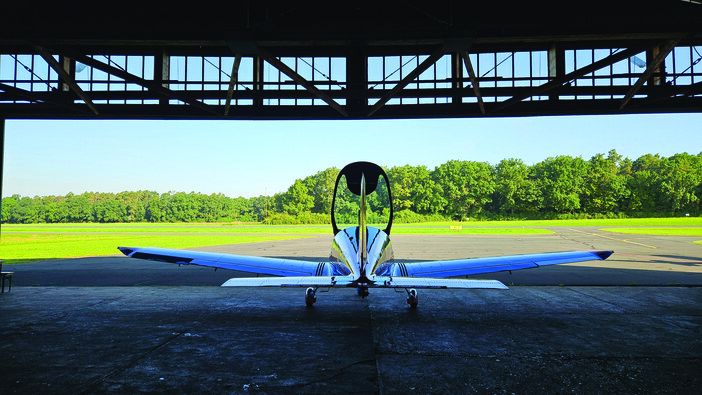
You do not reach VD often, and the equipment from the Lightwing campaign was sitting there, easy to install. So the team brought it along.
The result was undramatic in the best way. Across every speed the team flew there was essentially no difference in the structural response, and the propeller change was cleared with clean data to back it. The value lay less in any surprise than in being equipped to catch one had it appeared.
Lessons learned
For both aircraft the team stayed above 10,000ft (3,050m), both pilots wore parachutes, and bailout drills were rehearsed before the first flight rather than trusted to memory.
On the Lightwing that meant fitting a length of PVC tube beside the door so a foot could not snag on the way out. On the Bristell, where opening the canopy disables the ballistic recovery system, the order of operations was spelled out in advance: release the canopy first, fire the ballistic chute if you still can, jump if you cannot. “It does break fast,” Rammos says of flutter onset, and the planning reflected it.
Out of all this Rammos describes three key lessons. The first is to use what you have, adapted with care. The dream rig is rarely on offer in general aviation, but a modest system you understand thoroughly can still add a real layer of safety to a dangerous test point.
The second gave the paper its title. At an airshow a visitor watched AirDC’s structural test work, saw the sandbags being used to apply load and suggested that a professional outfit might use something more sophisticated. A reply made at the time has stuck: “Sometimes sandbags are sophisticated enough.” Matching the tool to the job, without gilding it and without skimping, is itself an engineering skill.
The third lesson arrived disguised as a problem. During the Lightwing’s penultimate speed point the pilot lost power, came back and reported a fault with the turbocharger pop-off valve. The whole team duly converged on the pop-off valve and pored over the data trying to work out why it had blown.
The real cause was found by a mechanic who had been away that day and walked in fresh, glanced at the engine and asked what the disconnected intake hose hanging loose beside the turbo was supposed to be attached to. Everyone else had been looking straight past it. “We had tunnel vision,” Rammos admits.
The wider point is that when the workload is high and someone offers a plausible answer, the team locks on, and the obvious answer may go unseen. Keeping one eye on everything, not just the failure you expect, is a habit worth building into every debrief.
It was, on the evidence of the award, a message the audience recognized. Flutter testing will always be expensive, dangerous and complex. Rammos’s paper was a reminder that doing it well is as much about judgment, discipline and a willingness to improvise as it is about the size of the budget.