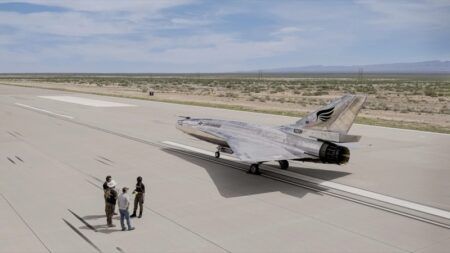


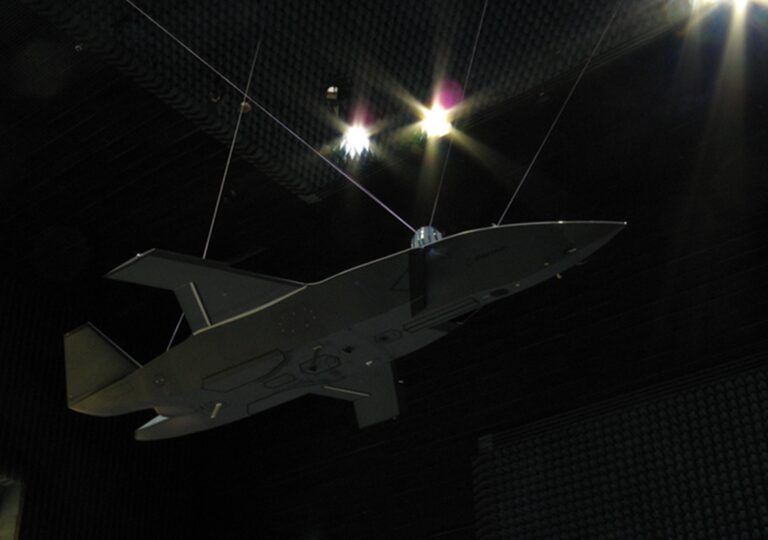
Boeing has completed radar testing that validates the stealth performance of its MQ-28 Ghost Bat, the autonomous combat aircraft developed and built in Australia to fly alongside crewed fighters.
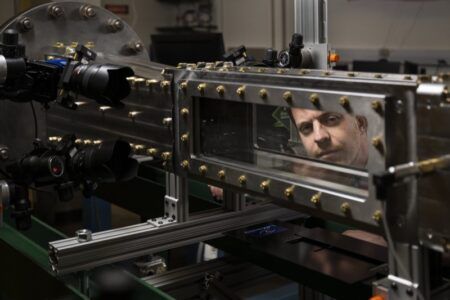
The testing measured the aircraft’s radar cross section (RCS), the standard engineering benchmark for how detectable an aircraft is to enemy radar. A reduced RCS shortens the range at which hostile radars can detect and engage the aircraft, which Boeing said enhances survivability in contested environments.
RCS testing was conducted on an MQ-28 to provide customers with objective, repeatable data about survivability and detection risks, supporting design validation, procurement and certification, and tactical planning. Boeing said the result confirms the effectiveness of the aircraft’s design, production and material choices in minimising radar detection.
Brad Thompson, director for Phantom Works Australia said, “The combination of a highly capable platform, stealth features, advanced autonomy and artificial intelligence provides unprecedented ability for air forces to extend their mission effectiveness and operational flexibility.”
The Ghost Bat is designed to complement crewed aircraft across surveillance, electronic warfare and force-multiplication roles while maintaining a low radar profile. Boeing did not disclose specific RCS figures or further detail of the test campaign.
The milestone follows the aircraft’s first flights outside Australia. In late May, Boeing confirmed the MQ-28 had completed three operational flights from the Point Mugu Sea Range at US Naval Base Ventura County in California, validating autonomous operations and rapid deployment to an allied location.
The MQ-28 began development in 2017 and made its first flight in 2021. It has since completed more than 150 flights, having passed 100 flights in early 2025.
Earlier milestones include teaming two airborne MQ-28s and a digital aircraft with an E-7A Wedgetail against an airborne target, and a December 2025 demonstration in which an MQ-28 teamed with an E-7A and an F/A-18F Super Hornet to autonomously engage and destroy an airborne target with a missile.
The aircraft is being developed by Boeing in partnership with the Royal Australian Air Force, with flight testing centred on RAAF Base Woomera in South Australia.