

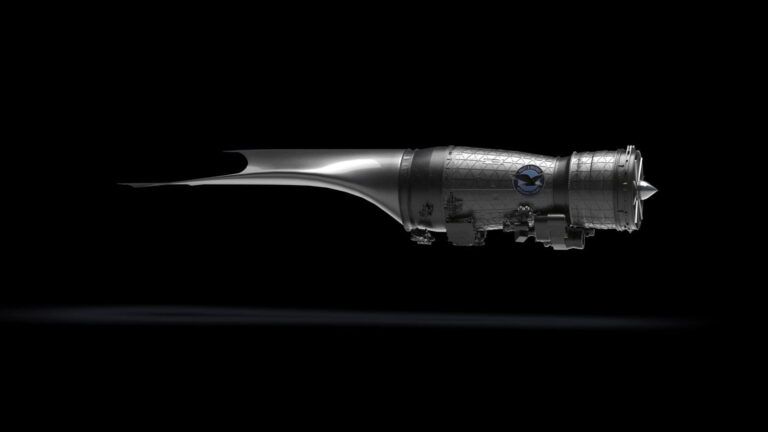
The next-generation engine destined to power future US fighter aircraft has moved a step closer to being built after Pratt & Whitney and GE Aerospace both completed assembly readiness reviews for their competing adaptive-cycle designs.
The two engines, Pratt & Whitney’s XA103 and GE Aerospace’s XA102, are being developed under the US Air Force’s Next Generation Adaptive Propulsion (NGAP) program, which is intended to deliver a propulsion system for sixth-generation combat aircraft including the Boeing F-47.
Pratt & Whitney completed a fully digital technical assessment of the XA103 on May 8, with GE Aerospace announcing the same milestone for the XA102 three days later. Both reviews validate that the engine designs, manufacturing processes and supply chains are ready to support building the prototype.
Adaptive-cycle engines can reconfigure airflow in flight to switch between high-thrust and high-efficiency modes, offering greater range, improved thermal management for advanced sensors and weapons, and reduced infrared signature compared with conventional fighter turbofans.
Jill Albertelli, president of Pratt & Whitney’s military engines business said, “As we move forward with assembling our engine for testing, our NGAP team is simultaneously developing novel digital validation tools. The performance we expect this engine to deliver exceeds anything available today, reinforcing the critical importance of continuous improvement and stable investment in maintaining propulsion as a strategic competitive advantage.”
GE Aerospace said its review confirmed the maturity of a fully integrated digital engine model that spans design, manufacturing and inspection, replacing traditional two-dimensional drawings with a model-based definition approach.
Dr Steve “Doogie” Russell, vice president and general manager of Edison Works at GE Aerospace said, “Our use of a fully integrated digital engine model, which spans design, manufacturing, and inspection, positions us to deliver advanced capability faster and with greater precision for the warfighter.”
Both engines build on lessons from the earlier Adaptive Engine Transition Program, under which Pratt & Whitney’s XA101 and GE Aerospace’s XA100 were developed as candidate replacements for the F135 powering the F-35.
Pratt & Whitney has said it expects to complete assembly of the XA103 prototype in the late 2020s, with ground testing to follow. According to FlightGlobal, that timeline means the initial batch of F-47 fighters is unlikely to fly with an NGAP engine. The USAF has requested almost US$514 million for NGAP in fiscal 2027, around US$187 million more than the previous year, to sustain competitive prototyping between the two suppliers.