

Ground–based test facilities have become indispensable to modern aerospace development programs. Before a new aircraft takes flight, its control, hydraulic, electrical, and landing gear systems must be validated in full, not only in nominal conditions but also under degraded and failure scenarios. Iron birds – comprehensive rigs that replicate these systems on the ground – provide a realistic environment to test those components safely and effectively.
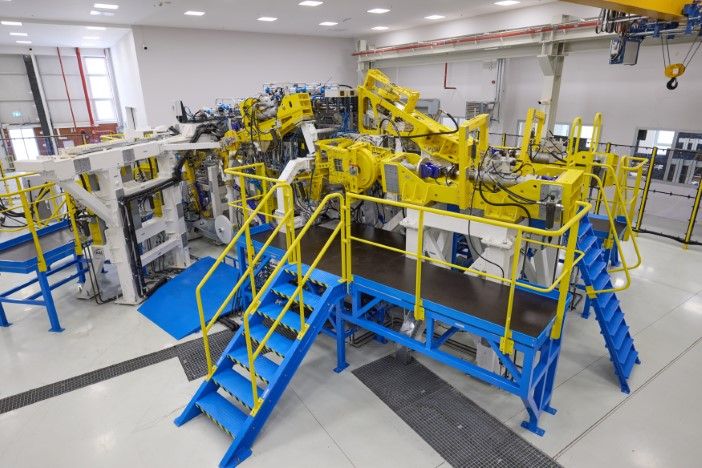
TAAC Aerospace Technologies, a joint venture between Turkish Aerospace (TA) and Altinay Defense Technologies, is providing these capabilities for Türkiye’s indigenous advanced jet trainer and the fifth-generation fighter programs. TA and TAAC have jointly developed state-of-the-art iron bird rigs featuring standardized multi-redundant architectures, flexible simulation capabilities, deterministic bus communication, and advanced fault-injection methods.
To support these capabilities, the rigs use Emerson’s NI System on Demand (SoD) test architecture for reliable closed-loop operation and adaptable system integration. These facilities are designed to reduce program risk, accelerate schedules and provide the robust evidence required for certification.
Replicating complex aircraft on the ground
Iron birds are not new, but their role has expanded significantly. Once primarily used to integrate flight-control systems, they are now central to full-aircraft system development. By creating a high-fidelity replica of an aircraft’s critical subsystems in a controlled environment, engineers can rehearse mission profiles, test redundancy management, and validate actuation behaviour long before the first prototype leaves the ground.
The benefit is both technical and programmatic. Safety margins are increased because failure cases can be explored without putting an aircraft at risk. Development schedules are shortened because design iterations can be tested immediately on the bench. Certification processes are supported by the repeatability and traceability of laboratory testing.
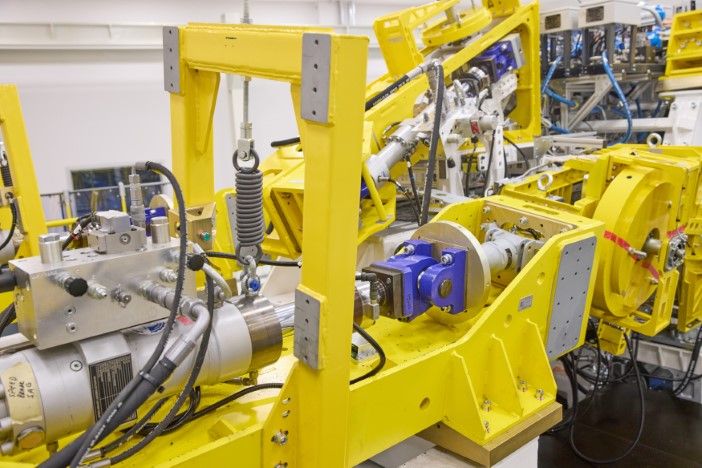
Multi–redundant architecture
TA/TAAC’s rigs use a fault-tolerant, multi-redundant architecture that mirrors modern combat aircraft. Each flight-control computer (FCC) lane can be exercised independently or as part of a fully integrated closed loop. This allows engineers to run isolated controller tests or to bring the entire control system into operation with actuators and representative loads.
The rigs are used progressively across the lifecycle. Early work may be model-in-the-loop or software-in-the-loop, relying on simulations of actuators and sensors. As hardware matures, controllers and actuators are introduced one by one, until the full flight–control system is operating on the rig. By the time the aircraft is cleared for first flight, the system has already accumulated thousands of test hours under realistic conditions.
The role of System on Demand
A distinguishing feature of TAAC’s approach is Emerson’s NI SoD architecture. Positioned between flight-control computers, cockpit equipment, avionics, and actuators, SoD maintains closed-loop integrity even in the absence of valid flight-condition data. It generates deterministic signals across ARINC 429, MIL-STD-1553, analogue and digital buses, allowing systems to operate as if in flight.
SoD also provides the infrastructure for controlled fault insertion. Engineers can introduce shorts, opens, or timing anomalies at the bit and line level, deliberately stressing redundancy management and built-in test routines. This level of access is rarely possible in flight and enables rigorous evaluation of degraded-mode performance.
Another key capability is hybrid representation. Emerson’s NI SoD allows any component – controller, actuator, or subsystem – to be either real hardware or a simulated element. Programs can therefore start testing early with simulated models and gradually substitute hardware as it becomes available, moving naturally from model-in-the-loop to hardware-in-the-loop campaigns.
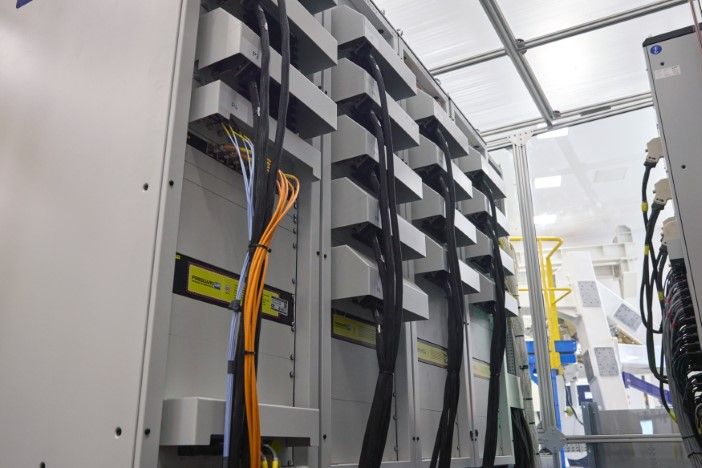
Comprehensive system coverage
TA/TAAC’s iron birds cover a broad spectrum of systems, far beyond primary flight controls.
The hydraulic power system is extensively tested for functional behaviour and performance. Engineers validate analytical predictions, assess demand and pressure-drop characteristics, and confirm system sizing and stability. Specialized campaigns focus on pump ripple, cold-start behaviour, and leakage investigations, all carried out in an environment where risk is contained.
The rigs also support landing gear and utility testing. Complete extension and retraction cycles are executed under realistic loads, including doors and locking mechanisms. These tests ensure compliance with safety requirements before the aircraft is exposed to flight loads.
Increasingly, the electrical system is also represented. With the shift toward “more electric” aircraft architectures, it has become essential to validate switching transients and momentary power interruptions on the ground. Iron bird testing provides early visibility into these behaviours, preventing late–stage surprises that could compromise avionics or flight–control performance.
Application to current programs
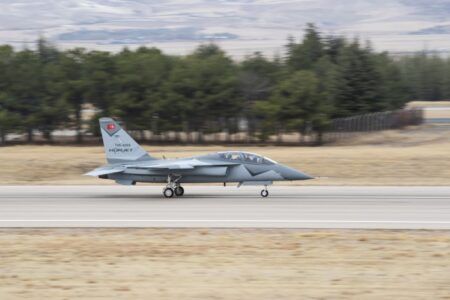
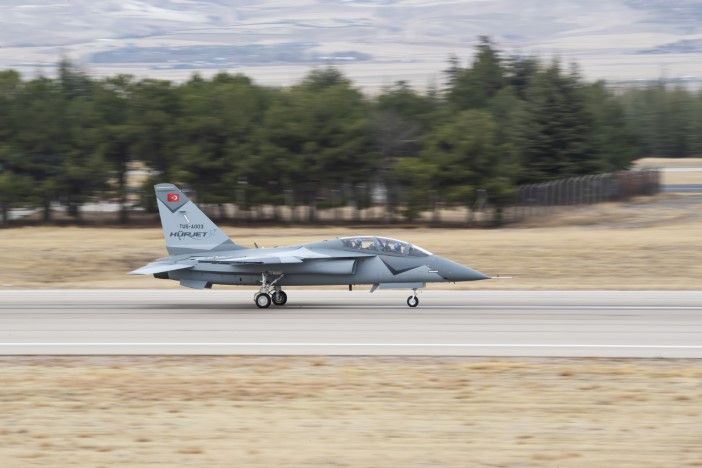
For the indigenous advanced jet trainer program, the iron bird located at TA’s facilities has already played a decisive role. Engineers used the rig to verify control logic, assess redundancy strategies, and practice failure-management routines before the aircraft’s first flights. Fault scenarios, including resets and degraded–mode transitions, were rehearsed repeatedly in the laboratory, providing both evidence and confidence.
The iron bird developed for the indigenous fifth-generation fighter program represents an even greater step forward. Designed to handle high channel counts and simultaneous loads, it enables the concurrent testing of dozens of actuators while simulating hydraulic and electrical dynamics. A notable feature is the ability to prototype actuation controllers directly on the bench, iterating algorithms and configurations rapidly before freezing designs for flight. This approach reduces development cost and compresses schedules while delivering higher-quality designs.
Strategic value and adaptability
TA and TAAC engineering cooperation teams have deliberately designed their rigs to serve as long-term assets rather than one-program tools. Modular structures and extensive use of digital simulation make them adaptable to future platforms or upgrades of existing ones. This strategy aligns with an industry trend towards reconfigurable test environments that can be applied across multiple aircraft types.
For Türkiye’s aerospace sector, the strategic implications are significant. Sovereign control over test infrastructure means national programs are not dependent on proprietary external solutions. Open architectures and commercial off-the-shelf components ensure maintainability and upgradability over decades of service life. And the knowledge gained through these iron bird campaigns feeds directly back into design and certification expertise for future platforms.
Looking Ahead
TA/TAAC’s next-generation iron birds demonstrate how ground-based test systems have become central to aerospace innovation. By combining TA/TAAC’s integration expertise with NI SoD test architectures, the rigs are positioned to support today’s aircraft while remaining adaptable for future platforms. This ensures sustained technical value for engineers and long-term strategic capability for the aerospace sector.
For Türkiye’s advanced jet trainer, they have already ensured safer first flights and smoother development. For Türkiye’s indigenous fighter, they are enabling one of the most sophisticated iron bird campaigns yet undertaken for a fifth-generation fighter. And for Türkiye’s aerospace sector, they represent a step toward enduring capability in the design, testing, and sustainment of advanced aircraft.
This article is based on a presentation given at the Aerospace Test & Development Show 2025, in Toulouse, France. For more information and to visit next year go to https://aerotestdevelopmentshow.com/