

Boom Supersonic has run the integrated core of Symphony, the engine it is developing for its Overture supersonic airliner, for the first time.
The company fired its prototype Sprint Core on 21 November, the first time the compressor, combustor and high-pressure turbine ran together, with about 2,000 sensors recording temperature, pressure and vibration data. The test took place at the Colorado Air and Space Port in Watkins, Colorado, and Boom founder and CEO Blake Scholl announced the milestone on X.
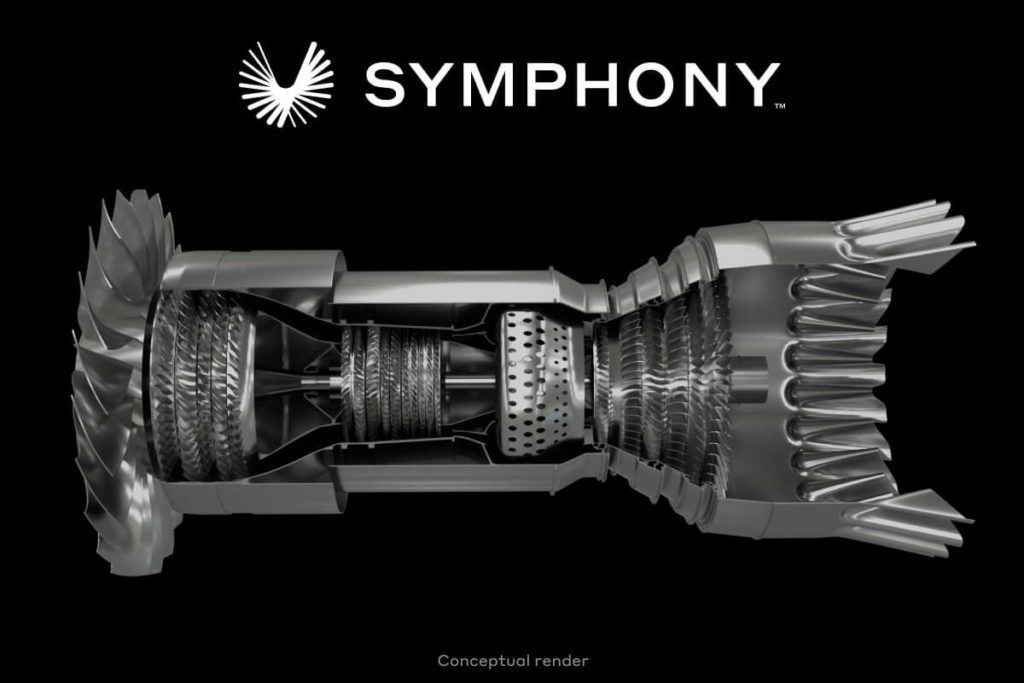
Symphony is a medium-bypass turbofan optimized for supersonic flight and designed specifically for Overture, Boom’s planned Mach 1.7 airliner. The Sprint Core measures 12ft (3.6m) long and 4ft (1.2m) in diameter and forms the engine’s high-pressure spool, comprising the compressor, combustor and turbine.
The same core also underpins Superpower, an industrial gas turbine Boom is aiming at AI data centers from mid-2027, giving the program a second commercial application alongside the aero engine.
Boom has used heavily instrumented test rigs through the core’s development, including combustion tests that used lasers and high-speed cameras to visualize fuel spray from the injector and assess its uniformity, which is critical for stable combustion and consistent turbine temperatures.
To build a complete Symphony turbofan, Boom must still add the fan and low-pressure stages, with further core testing to follow before production and, for Symphony, aircraft certification. The first firing comes about a year later than an earlier target of a full-scale core running in late 2025.
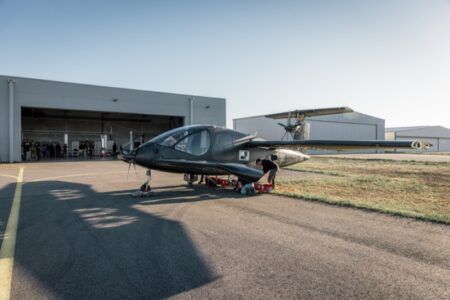
The milestone follows Boom’s January 2025 first supersonic flight of its XB-1 demonstrator, as the company works toward the larger Overture, for which it reports a backlog of orders and pre-orders from airlines including United Airlines and American Airlines.
Overture is a Mach 2.2-capable airliner able to carry up to 88 passengers with a range of 4,890 miles (7,870 km). The aircraft will be powered by three non-afterburning, medium-bypass turbofan engines, two under the wings and one in the tail.