
Aerospace Testing InternationalAerospace Testing International
  • News
    • A-E
      • Acoustic & Vibration
      • Avionics
      • Data Acquisition
      • Defense
      • Drones & Air Taxis
      • Electric & Hybrid
      • EMC
      • Engine Testing
      • Environmental Testing
    • F-L
      • Fatigue Testing
      • Flight Testing
      • Helicopters & Rotorcraft
      • High Speed Imaging
      • Industry News
    • M-S
      • Materials Testing
      • NDT
      • Simulation & Training
      • Software
      • Space
      • Structural Testing
      • Supplier News
    • T-Z
      • Technology
      • Telemetry & Communications
      • Weapons Testing
      • Wind Tunnels
  • Features
  • Magazines
    • Showcase 2027
    • September 2026
    • June 2026
    • March 2026
    • Dec 2025 / Jan 2026
    • Showcase 2026
    • Archive Issues
    • Subscribe Free!
  • Opinion
  • Webinars
  • Events
    • All Events
    • Aerospace Test & Development Show
  • Podcasts
  • Videos
  • Suppliers
    • Supplier Spotlights
    • Press Releases
    • Technical Papers
LinkedIn YouTube X (Twitter)
Subscribe to magazine Subscribe to email newsletter Media Pack
Aerospace Testing InternationalAerospace Testing International
  • News
      • Acoustic & Vibration
      • Avionics
      • Data Acquisition
      • Defense
      • Drones & Air Taxis
      • Electric & Hybrid
      • EMC
      • Engine Testing
      • Environmental Testing
      • Fatigue Testing
      • Flight Testing
      • Helicopters & Rotorcraft
      • High Speed Imaging
      • Industry News
      • Materials Testing
      • NDT
      • Simulation & Training
      • Software
      • Space
      • Structural Testing
      • Supplier News
      • Technology
      • Telemetry & Communications
      • Weapons Testing
      • Wind Tunnels
  • Features
  • Magazines
    1. Showcase 2027
    2. September 2026
    3. June 2026
    4. March 2026
    5. Dec 2025 / Jan 2026
    6. Showcase 2026
    7. Archive Issues
    8. Subscribe Free!
    Featured
    4th November 2026

    In this issue – Showcase 2027

    Online Magazines By Web Team
    Recent

    In this issue – Showcase 2027

    4th November 2026

    In this issue: September 2026

    2nd September 2026

    In this issue: June 2026

    16th June 2026
  • Opinion
  • Webinars
  • Events
    • All Events
    • Aerospace Test & Development Show
  • Podcasts
  • Videos
  • Suppliers
    • Supplier Spotlights
    • Press Releases
    • Technical Papers
LinkedIn YouTube X (Twitter)
Aerospace Testing InternationalAerospace Testing International
Drones & Air Taxis News

Beta wins first US approval to carry passengers in eVTOL aircraft

Ben SampsonBy Ben Sampson21st October 20262 Mins Read
Share LinkedIn Twitter Facebook Email
Beta's Alia in the air en route from Stavanger to Bergen during flight trials in February 2026 (Image: Avinor/Margareth Aske)

Beta Technologies has become the first company cleared to carry passengers in an eVTOL aircraft in the USA under an authorization from aviation regulator the FAA.

The Federal Aviation Administration has issued Beta’s Alia VTOL, designated the A250, a Special Airworthiness Certificate for market surveys – the first such certificate granted to an eVTOL, said Beta.

Issued under Part 21 of the FAA’s regulations the authorization lets Beta fly passengers such as prospective customers and train crew, short of the fare-paying commercial service that will require full type certification.

The A250 is an all-electric vertical take-off and landing (VTOL) aircraft with dual pilot controls, designed to carry up to five passengers or more than 1,200lb (540kg) of cargo, and to operate from sites with or without a runway.

Beta says it shares its propulsion, flight-control computers, batteries and charging systems with the company’s Alia conventional take-off and landing (CTOL) aircraft, and has a range of about 287 miles (460km).

In its first flight under the authorization, the A250 took off vertically from Plattsburgh International Airport in New York, transitioned to wing-borne flight and landed vertically at Patrick Leahy Burlington International Airport in Vermont, covering 40 miles (63km) in 20 minutes.

The certificate follows Beta’s earlier market-survey approval for the CTOL. Combined, the aircraft have flown more than 250,000 miles (288,000km) combined. Beta completed its first crewed eVTOL transition flight in 2024.

Kyle Clark, founder and CEO of Beta, said, “Operators can now experience the VTOL firsthand and begin planning how it fits into their businesses, from connecting communities to moving people and goods at a lower cost. This is an important step toward commercial adoption, and we’re grateful to the FAA for developing the regulatory framework that makes these operations possible.”

FAA administrator Bryan Bedford said, “The FAA is committed to working with American innovators to safely integrate these new aircraft into our national airspace, while maintaining the rigorous safety standards that have made the United States a global leader in aviation.”

The Alia has been through a six-month Bristow flight-test campaign in Norway and a US Air Force deployment under which it became the first crewed electric aircraft to receive military airworthiness approval. Beta says it is continuing to expand operations as it works toward full type certification and commercial service.

Share. Twitter LinkedIn Facebook Email
Previous ArticleBoeing certifies 737 Max 10 after years of delays
Next Article GKN Aerospace validates hydrogen fuel cell powertrain for aircraft at IAAPS test center
Ben Sampson

Ben has worked as a journalist and editor, covering technology, engineering and industry for the last 20 years. Initially writing about subjects from nuclear submarines to autonomous cars to future design and manufacturing technologies, he was editor of a leading UK-based engineering magazine before becoming editor of Aerospace Testing in 2017.

Related Posts

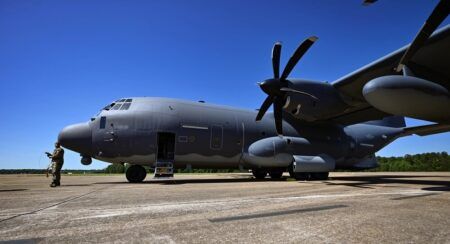
Merlin wins contract to install autonomy on C-130J Hercules Standfirst: A US Special Operations Command task order advances Merlin’s self-flying technology for the military transport aircraft STARTS Autonomous flight company Merlin has won a new contract to prepare its self-flying technology for installation on the US military’s C-130J Super Hercules transport aircraft. The US$8.9 million task order from US Special Operations Command (USSOCOM) funds the next phase of Merlin’s C-130J autonomy program, following completion of its preliminary and critical design reviews. The phase covers system integration, ground-test preparation, cybersecurity approval and airworthiness acceptance to support future flight demonstrations. Merlin’s technology, the Merlin Pilot system, is designed to reduce crew workload across all phases of flight. The company says the work will show how the system can ease the demands on C-130J aircrews and expand the aircraft’s operational capacity. The task order advances integration and validation through flight control law tuning, human factors evaluations, failure mode testing and simulated flight-test dry runs to verify how the system behaves and whether it is ready before installation on the aircraft. It also updates test plans, procedures, verification matrices and safety assessments for government review ahead of ground testing. The work further advances the cybersecurity assessment and documentation required for an Interim Authorization to Test (IATT), and delivers an updated airworthiness plan to support the flight-test demonstrations. Matt George, CEO and founder of Merlin, said, “This next phase puts our design to the test, validating how the system performs, how crews interact with it, and how it responds in off-nominal conditions. Through our work with USSOCOM, we’re building a path from autonomy development to practical mission capability, giving aircrews greater support and commanders more flexibility in how they employ their aircraft.” The C-130J program sits under an indefinite-delivery, indefinite-quantity contract with USSOCOM worth more than US$100 million, which opens the way for Merlin to integrate its system across the wider special operations fixed-wing fleet. Merlin completed the preliminary design review in March 2026 and the critical design review in June 2026, moving the program from design development toward aircraft integration. Merlin describes itself as building “the operating system of record for autonomous flight” and says the Merlin Pilot system has flown hundreds of autonomous flights across a range of aircraft types and mission profiles. The company has also partnered with Honeywell on autonomy for fixed-wing military aircraft. The C-130J is one of the most widely exported military aircraft in service, flown by around 23 operator nations, including the US, UK, Australia, India, Italy, Canada, Israel and Egypt, which joined the fleet in 2024. Lockheed Martin has delivered more than 500 of the aircraft.
Avionics

Merlin wins contract to install autonomy on C-130J Hercules

11th November 20263 Mins Read
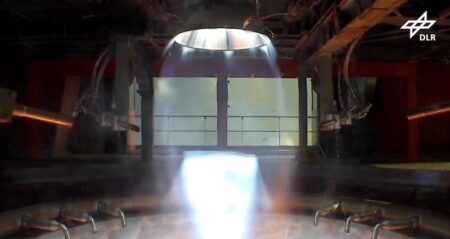
a rocket during a ground test
Engine Testing

DLR’s Prometheus engine completes multiple ignitions on upgraded test stand

11th November 20263 Mins Read
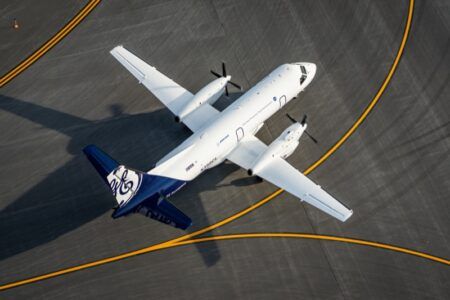
An overhead view of the white Saab 340B hybrid-electric testbed with GE Aerospace tail markings parked on a ramp, its two propellers visible
Electric & Hybrid

Beta and GE Aerospace achieve first hybrid-electric assisted takeoff

10th November 20262 Mins Read
Latest Posts
Merlin wins contract to install autonomy on C-130J Hercules Standfirst: A US Special Operations Command task order advances Merlin’s self-flying technology for the military transport aircraft STARTS Autonomous flight company Merlin has won a new contract to prepare its self-flying technology for installation on the US military’s C-130J Super Hercules transport aircraft. The US$8.9 million task order from US Special Operations Command (USSOCOM) funds the next phase of Merlin’s C-130J autonomy program, following completion of its preliminary and critical design reviews. The phase covers system integration, ground-test preparation, cybersecurity approval and airworthiness acceptance to support future flight demonstrations. Merlin’s technology, the Merlin Pilot system, is designed to reduce crew workload across all phases of flight. The company says the work will show how the system can ease the demands on C-130J aircrews and expand the aircraft’s operational capacity. The task order advances integration and validation through flight control law tuning, human factors evaluations, failure mode testing and simulated flight-test dry runs to verify how the system behaves and whether it is ready before installation on the aircraft. It also updates test plans, procedures, verification matrices and safety assessments for government review ahead of ground testing. The work further advances the cybersecurity assessment and documentation required for an Interim Authorization to Test (IATT), and delivers an updated airworthiness plan to support the flight-test demonstrations. Matt George, CEO and founder of Merlin, said, “This next phase puts our design to the test, validating how the system performs, how crews interact with it, and how it responds in off-nominal conditions. Through our work with USSOCOM, we’re building a path from autonomy development to practical mission capability, giving aircrews greater support and commanders more flexibility in how they employ their aircraft.” The C-130J program sits under an indefinite-delivery, indefinite-quantity contract with USSOCOM worth more than US$100 million, which opens the way for Merlin to integrate its system across the wider special operations fixed-wing fleet. Merlin completed the preliminary design review in March 2026 and the critical design review in June 2026, moving the program from design development toward aircraft integration. Merlin describes itself as building “the operating system of record for autonomous flight” and says the Merlin Pilot system has flown hundreds of autonomous flights across a range of aircraft types and mission profiles. The company has also partnered with Honeywell on autonomy for fixed-wing military aircraft. The C-130J is one of the most widely exported military aircraft in service, flown by around 23 operator nations, including the US, UK, Australia, India, Italy, Canada, Israel and Egypt, which joined the fleet in 2024. Lockheed Martin has delivered more than 500 of the aircraft.

Merlin wins contract to install autonomy on C-130J Hercules

11th November 2026
a rocket during a ground test

DLR’s Prometheus engine completes multiple ignitions on upgraded test stand

11th November 2026
An overhead view of the white Saab 340B hybrid-electric testbed with GE Aerospace tail markings parked on a ramp, its two propellers visible

Beta and GE Aerospace achieve first hybrid-electric assisted takeoff

10th November 2026
Supplier Spotlights
  • JDA Systems (Europe) GmbH
  • Precision Filters, Inc. (PFI)
  • Evolution Measurement
  • CALCULEX
  • Hottinger Brüel & Kjær
  • AVL List GmbH
  • Tekna
  • InnovMetric
  • SET GmbH
  • Tyto Robotics
    Tyto Robotics Inc.
  • Ametek
    AMETEK Programmable Power
  • Delta Information Systems logo
    Delta Information Systems
  • Helling GmbH
    Helling GmbH
  • Matec Instrument Companies, Inc.
    Matec Instrument Companies, Inc.
  • Endevco
  • Ipetronik
    IPETRONIK GmbH & Co. KG
  • VJ Technologies
  • Durr NDT
    DÜRR NDT GmbH & Co. KG
  • Dewesoft
  • Bruker Alicona Dimensional metrology & surface roughness measurement
    Bruker Alicona
  • ATG Advanced Technology Group
    ATG – Advanced Technology Group
  • Dytran Instruments, Inc.
  • Kistler Group
    Kistler Group
  • Diversified Technical Systems (DTS)
  • Scanivalve Corporation
  • G Systems
  • CEC Vibration Products LLC.
  • dSPACE
  • Safran Data Systems
  • Photron
  • YXLON International
  • Telspan Data
  • TotalTemp Technologies, Inc.
  • Vector Informatik GmbH
  • Vibration Research
  • TEST-FUCHS
  • Siemens Digital Industries Software
    Siemens Digital Industries Software
  • PCB Piezotronics, Inc.
  • Testia
  • Treo – Labor für Umweltsimulation GmbH
  • W5 Engineering
  • National Institute for Aviation Research
  • North Star Imaging
  • MK Test Systems Ltd.
  • Intertek
  • I.N.C.A.S. – NATIONAL INSTITUTE FOR AEROSPACE RESEARCH “ELIE CARAFOLI”
  • FMV Test & Evaluation
  • Glenn L Martin Wind Tunnel
  • GRAS Sound & Vibration
  • Elsys AG
  • EMCCons DR. RAŠEK GmbH & Co.KG
  • European Test Services (ETS) B.V.
  • Curtiss-Wright
  • Data Physics Corporation
  • AOS Technologies AG
  • Airmo Inc. Pressure Technologies
    Airmo Inc.® Pressure Technologies
Our Social Channels
  • Twitter
  • YouTube
  • LinkedIn
Getting in Touch
  • Subscribe To Magazine
  • Contact Us
  • Meet the Team
  • Media Pack
Related Topics
  • Aircraft Interiors
  • Business Jet Interiors
FREE WEEKLY NEWS EMAIL!

Get the 'best of the week' from this website direct to your inbox every Wednesday

© Copyright 2026 Mark Allen Group. All rights are reserved, including those for text and data mining, AI training, and similar technologies.
  • Cookie Policy
  • Privacy Policy
  • Terms & Conditions

Type above and press Enter to search. Press Esc to cancel.