
Aerospace Testing InternationalAerospace Testing International
  • News
    • A-E
      • Acoustic & Vibration
      • Avionics
      • Data Acquisition
      • Defense
      • Drones & Air Taxis
      • Electric & Hybrid
      • EMC
      • Engine Testing
      • Environmental Testing
    • F-L
      • Fatigue Testing
      • Flight Testing
      • Helicopters & Rotorcraft
      • High Speed Imaging
      • Industry News
    • M-S
      • Materials Testing
      • NDT
      • Simulation & Training
      • Software
      • Space
      • Structural Testing
      • Supplier News
    • T-Z
      • Technology
      • Telemetry & Communications
      • Weapons Testing
      • Wind Tunnels
  • Features
  • Magazines
    • September 2026
    • June 2026
    • March 2026
    • Dec 2025 / Jan 2026
    • Showcase 2026
    • August / September 2025
    • Archive Issues
    • Subscribe Free!
  • Opinion
  • Webinars
  • Events
    • All Events
    • Aerospace Test & Development Show
  • Podcasts
  • Videos
  • Suppliers
    • Supplier Spotlights
    • Press Releases
    • Technical Papers
LinkedIn YouTube X (Twitter)
Subscribe to magazine Subscribe to email newsletter Media Pack
Aerospace Testing InternationalAerospace Testing International
  • News
      • Acoustic & Vibration
      • Avionics
      • Data Acquisition
      • Defense
      • Drones & Air Taxis
      • Electric & Hybrid
      • EMC
      • Engine Testing
      • Environmental Testing
      • Fatigue Testing
      • Flight Testing
      • Helicopters & Rotorcraft
      • High Speed Imaging
      • Industry News
      • Materials Testing
      • NDT
      • Simulation & Training
      • Software
      • Space
      • Structural Testing
      • Supplier News
      • Technology
      • Telemetry & Communications
      • Weapons Testing
      • Wind Tunnels
  • Features
  • Magazines
    1. September 2026
    2. June 2026
    3. March 2026
    4. Dec 2025 / Jan 2026
    5. Showcase 2026
    6. August / September 2025
    7. Archive Issues
    8. Subscribe Free!
    Featured
    2nd September 2026

    In this issue: September 2026

    Online Magazines By Ben Sampson
    Recent

    In this issue: September 2026

    2nd September 2026

    In this issue: June 2026

    16th June 2026

    In this issue: March 2026

    24th March 2026
  • Opinion
  • Webinars
  • Events
    • All Events
    • Aerospace Test & Development Show
  • Podcasts
  • Videos
  • Suppliers
    • Supplier Spotlights
    • Press Releases
    • Technical Papers
LinkedIn YouTube X (Twitter)
Aerospace Testing InternationalAerospace Testing International
EMC Space

Meet the radiation measuring mannequins on their way to the moon

Ben SampsonBy Ben Sampson6th May 20225 Mins Read
Share LinkedIn Twitter Facebook Email

Two mannequins made by researchers from DLR in Germany have been supplied to NASA in Florida, USA so they can be launched on board NASA’s Artemis I lunar mission later this year.

Artemis I will send a spacecraft capable of supporting a human crew to the Moon for the first time in almost 50 years. The test flight, which is plannd to launch this summer will be uncrewed, apart from the twin measuring mannequins Helga and Zohar on board the Orion capsule.

The two identical female mannequins are part of the MARE experiment developed by engineers at the German Aerospace Center (Deutsches Zentrum für Luft- und Raumfahrt; DLR). They will measure radiation exposure during the six week flight – NASA plans to send the first woman to the Moon during the Artemis program this decade.
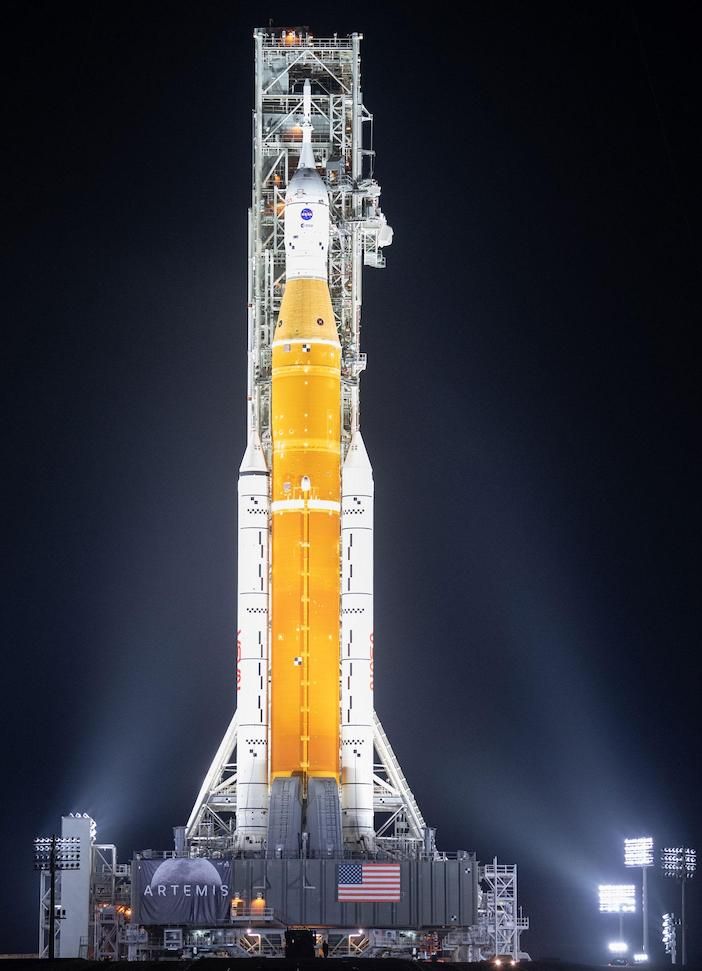
The Space Launch System (SLS) (Image: NASA)

Researchers at the  in Cologne developed the experiment and have now delivered it to NASA’s Kennedy Space Center (KSC) for installation.

As well as measuring radiation Helga and Zohar will test a new radiation protection vest as part of the experiment. The mannequins are made from materials that mimic the human bones, soft tissues and organs of an adult woman and have more than 10,000 passive sensors and 34 active radiation detectors inside them.
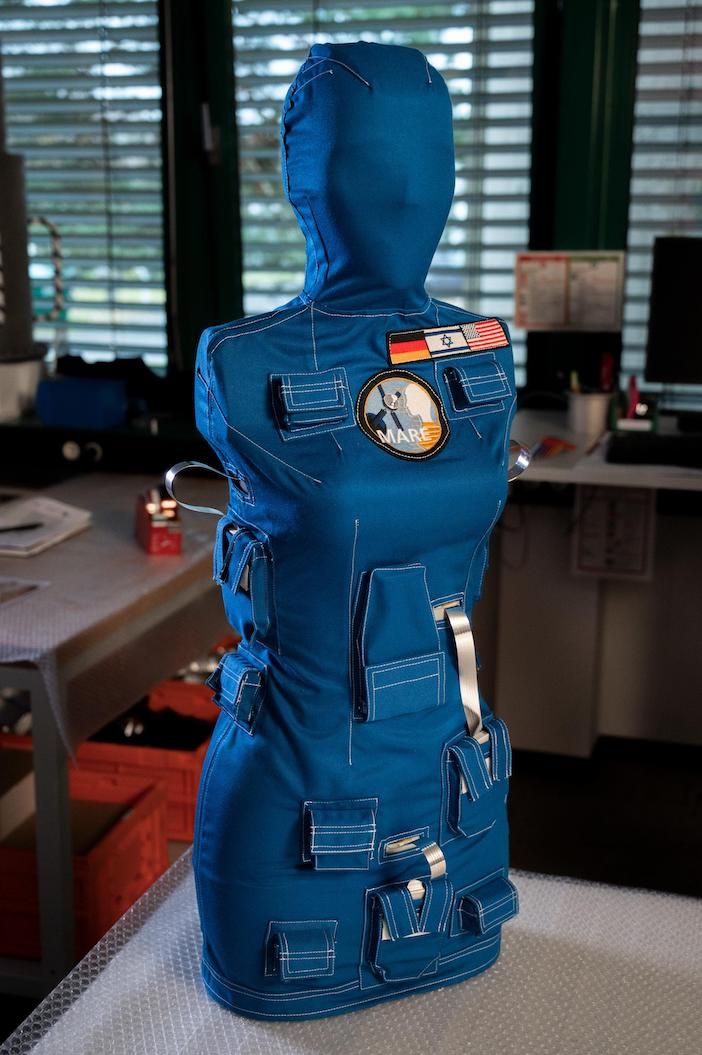
Mea­sur­ing man­nequin Helga (Image: DLR, CC BY-NC-ND 3.0)

Both phantoms are 95cm tall and weigh 36kg. Helga will fly unprotected to the Moon, while Zohar will wear the newly developed radiation protection vest, called the AstroRad, which has been developed by Israeli company Stemrad. By comparing the two sets of data, it will be possible to determine the extent to which the vest protects an astronaut from harmful radiation exposure.

Thomas Berger, head of the biophysics working group at the DLR Institute of Aerospace Medicine and head of the MARE project said, “MARE is the largest radiation experiment ever to be flown beyond low Earth orbit. We are looking to find out exactly how radiation levels affect female astronauts over the course of an entire flight to the Moon, and which protective measures might help to counteract this.

“Over the past few months at the DLR sites in Cologne and Bremen we have been studying Helga and Zohar thoroughly, including conducting tests to determine the effects of the vibrations that they will be subjected to during the launch of the Artemis I mission. The aim is to ensure that everything runs smoothly later at the Kennedy Space Center.”

Artemis I is now planned to launch in summer 2022. The assembly and installation of the measuring mannequins is scheduled to take place four weeks before the launch.

The female body is more sensitive to this radiation than the male body in organs such as the breasts and different radiation boundary values apply to female astronauts than to their male colleagues. However, so far there have been no sex-specific measurements using mannequins in space.
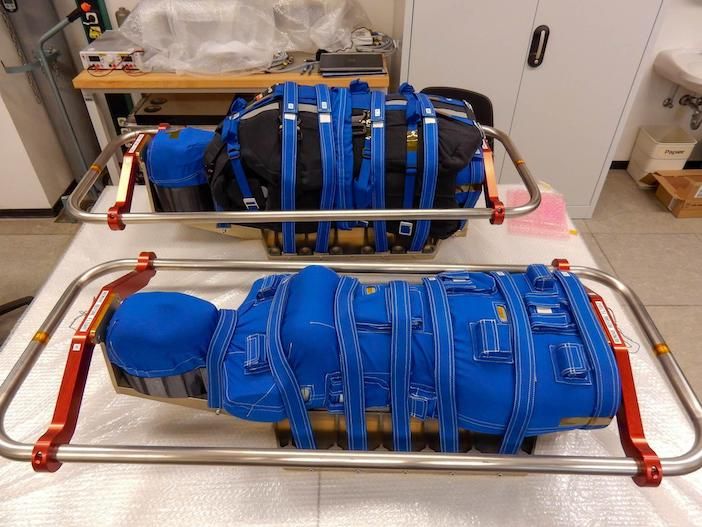
MARE man­nequins Hel­ga and Zo­har ready for transport (Image: DLR, CC BY-NC-ND 3.0)

Cosmic radiation in space

When astronauts leave Earth, they are exposed to the full spectrum of radiation found in space. The Orion spacecraft will experience two periods of intense radiation as it flies through the Van Allen Belt – once in the first few hours after launch and upon its return to Earth – which harbours charged particles trapped by Earth’s magnetic field.

Beyond the protection of Earth’s magnetic field, Orion will face a harsher radiation environment than the crew of the International Space Station (ISS), which is in low Earth orbit. Outside the Van Allen Belt, the space radiation environment includes energetic particles produced by the Sun in solar flares as well as galactic and extragalactic cosmic ray particles that originate from outside the Solar System.
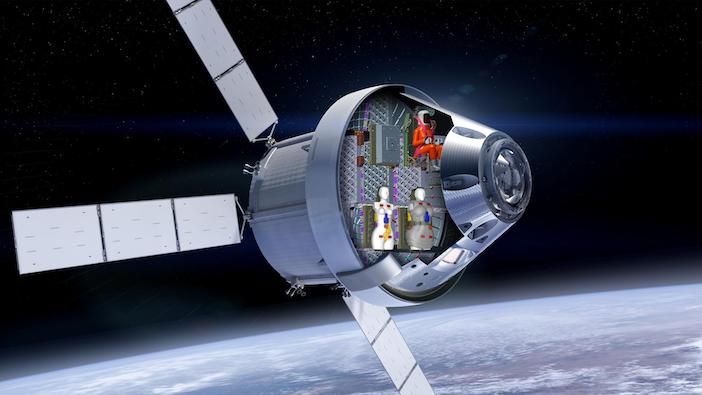
Mock-up of Orion with mannequin crew on board during flight (Image: DLR, CC BY-NC-ND 3.0)

“Cosmic rays are a particular challenge for long missions in open space, because they deliver a continuous level of high-energy ionised particles,” said Christine Hellweg, head of the radiation biology department at the DLR Institute of Aerospace Medicine. “Particles in cosmic rays range from hydrogen to iron and uranium.”

Anthropomorphic phantoms 

Helga and Zohar are anthropomorphic phantoms – measuring bodies modelled on a human torso. DLR’s Institute of Aerospace Medicine has previously conducted experiments including a phantom called Matroshka, which was deployed on the ISS between 2004 and 2011.

Matroshka was mounted to the exterior of the ISS and gathered radiation readings representative of those experienced by an astronaut performing a spacewalk. The phantom was also placed in different parts of the Space Station to measure radiation exposure.

“Astronauts on the ISS are exposed to radiation levels that are approximately 250 times higher than that experienced by people on Earth. Radiation exposure during exploration missions further from Earth’s magnetic field or in interplanetary space could be much higher – in fact, our estimates predict up to 700 times higher,”said Berger.


This article has been edited from its original form on the DLR website.

Share. Twitter LinkedIn Facebook Email
Previous ArticleBoeing rolls out first production Red Hawk T-7A trainer jet
Next Article Cessna Citation XLS Gen2 achieves FAA certification
Ben Sampson

Ben has worked as a journalist and editor, covering technology, engineering and industry for the last 20 years. Initially writing about subjects from nuclear submarines to autonomous cars to future design and manufacturing technologies, he was editor of a leading UK-based engineering magazine before becoming editor of Aerospace Testing in 2017.

Related Posts

Venus Aerospace and Texas Space Commission representatives cut a ribbon in front of the new propulsion test stand at the Houston Spaceport
Engine Testing

Venus Aerospace opens rotating detonation engine test stand in Houston

14th September 20262 Mins Read
News

SaxaVord Spaceport gets £60 million launch boost

9th September 20262 Mins Read
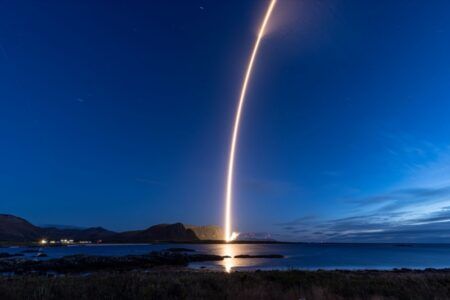
Alt text: A long-exposure night photograph of the Spectrum rocket rising from the Andøya coast, its bright arcing exhaust trail reflected in the water below against a deep blue twilight sky
Engine Testing

Europe’s Isar Aerospace delivers satellites to orbit on second flight

7th September 20263 Mins Read
Latest Posts

Electra selects Atlas to supply EL9 test airframes

16th September 2026
A solar-powered PHASA-35 uncrewed aircraft with a long slender wing flying in the stratosphere high above the Earth, with the curve of the planet and cloud layers below

ARIA invests £70m in stratospheric aircraft projects

16th September 2026

An open Python API for AI-ready aerospace test automation

16th September 2026
Supplier Spotlights
  • Precision Filters, Inc. (PFI)
  • Evolution Measurement
  • CALCULEX
  • Hottinger Brüel & Kjær
  • AVL List GmbH
  • Tekna
  • InnovMetric
  • CGM CIGIEMME S.p.A.
  • SET GmbH
  • Tyto Robotics
    Tyto Robotics Inc.
  • Bartington Instruments
    Bartington Instruments
  • Ametek
    AMETEK Programmable Power
  • Delta Information Systems logo
    Delta Information Systems
  • Helling GmbH
    Helling GmbH
  • Matec Instrument Companies, Inc.
    Matec Instrument Companies, Inc.
  • Endevco
  • Ipetronik
    IPETRONIK GmbH & Co. KG
  • VJ Technologies
  • Durr NDT
    DÜRR NDT GmbH & Co. KG
  • Dewesoft
  • Bruker Alicona Dimensional metrology & surface roughness measurement
    Bruker Alicona
  • Vzlu
    VZLU – Czech Aerospace Research Centre
  • ATG Advanced Technology Group
    ATG – Advanced Technology Group
  • Dytran Instruments, Inc.
  • Kistler Group
    Kistler Group
  • Diversified Technical Systems (DTS)
  • Scanivalve Corporation
  • G Systems
  • CEC Vibration Products LLC.
  • dSPACE
  • Safran Data Systems
  • Photron
  • YXLON International
  • Telspan Data
  • TotalTemp Technologies, Inc.
  • Vector Informatik GmbH
  • Vibration Research
  • TEST-FUCHS
  • Siemens Digital Industries Software
    Siemens Digital Industries Software
  • PCB Piezotronics, Inc.
  • Testia
  • Treo – Labor für Umweltsimulation GmbH
  • W5 Engineering
  • National Institute for Aviation Research
  • North Star Imaging
  • MK Test Systems Ltd.
  • Intertek
  • I.N.C.A.S. – NATIONAL INSTITUTE FOR AEROSPACE RESEARCH “ELIE CARAFOLI”
  • FMV Test & Evaluation
  • Glenn L Martin Wind Tunnel
  • GRAS Sound & Vibration
  • Elsys AG
  • EMCCons DR. RAŠEK GmbH & Co.KG
  • European Test Services (ETS) B.V.
  • Chemetall GmbH logo
    Chemetall GmbH
  • Curtiss-Wright
  • Data Physics Corporation
  • AOS Technologies AG
  • Airmo Inc. Pressure Technologies
    Airmo Inc.® Pressure Technologies
Our Social Channels
  • Twitter
  • YouTube
  • LinkedIn
Getting in Touch
  • Subscribe To Magazine
  • Contact Us
  • Meet the Team
  • Media Pack
Related Topics
  • Aircraft Interiors
  • Business Jet Interiors
FREE WEEKLY NEWS EMAIL!

Get the 'best of the week' from this website direct to your inbox every Wednesday

© Copyright 2026 Mark Allen Group. All rights are reserved, including those for text and data mining, AI training, and similar technologies.
  • Cookie Policy
  • Privacy Policy
  • Terms & Conditions

Type above and press Enter to search. Press Esc to cancel.